
The MME (Ministry of Mines and Energy) held a webinar this Tuesday (7) with the aim of expanding the debate on offshore wind farms in the country, focusing on the construction of public policies and strategies for their implementation.
During the event, the approval of the resolution establishing guidelines for the regulation of Law No. 15.097/2025, concerning offshore wind farms, gained prominence. The measure was deliberated by the CNPE (National Council for Energy Policy) last Wednesday (1st).
The resolution defines guidelines aligned with the new legal framework, as well as the deadlines established by the GT-EO (Offshore Wind Energy Working Group), coordinated by the MME (Ministry of Mines and Energy).
Among the main points of the guidelines, the definition of an initial minimum distance from the coast for the installation of projects stands out, set at 12 nautical miles (approximately 22 km) from the coast. This criterion may be revised in the future, according to the evolution of technical studies.
During the webinar, the director of the Energy Transition Department at the Ministry of Mines and Energy (MME), Karina Araújo, highlighted the strategic role of this energy source in the country's energy transition process.
“In addition to reinforcing security in the energy supply, the sector has been attracting investments and driving technical studies. Growing in recent years, this new source can contribute to diversifying and strengthening the country's renewable electricity matrix,” he stated.
The event brought together experts who discussed international experiences in offshore projects, marine environmental licensing, legal and regulatory aspects in Brazil, as well as topics such as technical feasibility, investment decisions, connection to the electricity grid, and market development.
What are offshore wind turbines?
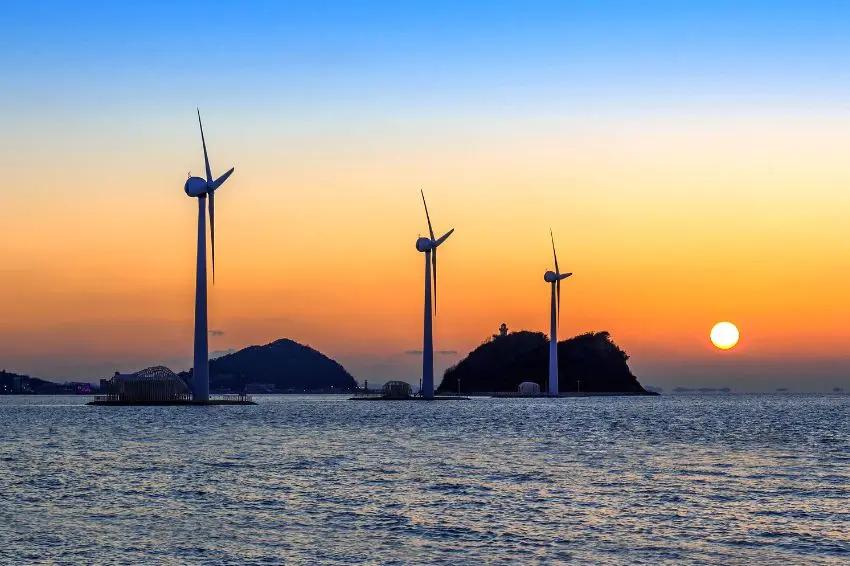
Offshore wind farms are wind farms installed at sea, where wind turbines harness stronger and more consistent winds to generate clean, renewable energy. Unlike onshore units, these fixed or floating structures produce energy more efficiently, without occupying land space and with reduced visual impact.
all the content of Canal Solar is protected by copyright law, and partial or total reproduction of this site in any medium is expressly prohibited. If you are interested in collaborating or reusing part of our material, please contact us by email: redacao@canalsolar.com.br.