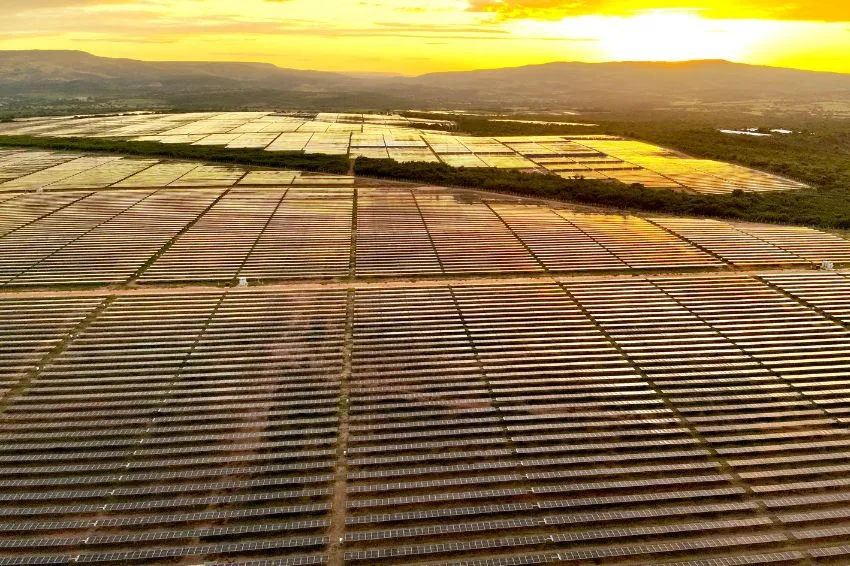

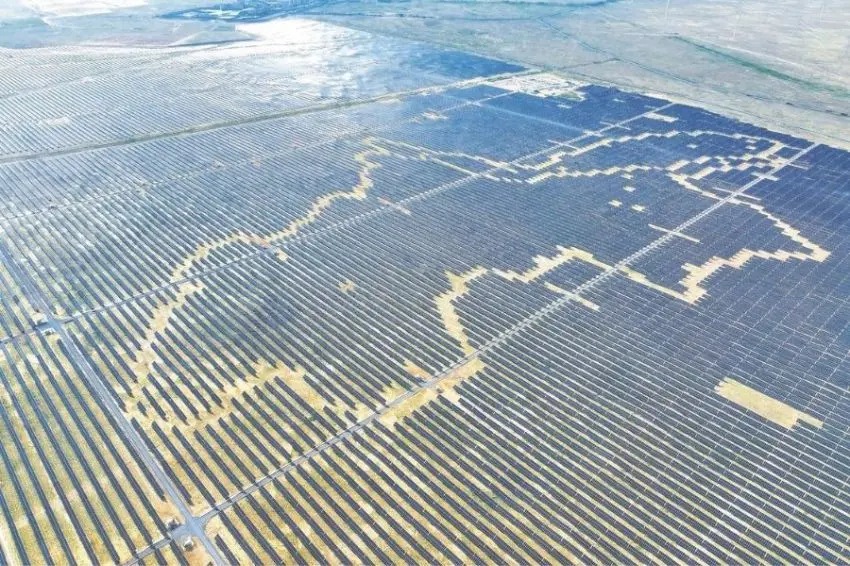
One of China's largest solar energy projects has started operating, with over 1,5 GW of installed capacity and the potential to generate approximately 10,8 billion kWh per year. The project occupies an area of 12,7 hectares (18 football fields) between the Ningxia and Inner Mongolia regions, expanding the supply of renewable energy in the country.
The photovoltaic project utilizes AI (artificial intelligence), big data, and cloud computing, and is being installed in an area that was previously dedicated to coal mining. To mitigate the intermittency of solar generation, the plant also has a 600 MW storage system.
The photovoltaic plant also has two 330 kV transmission lines, responsible for transporting electricity for approximately 3.000 km and connecting to a 750 kV substation. All this infrastructure enables the flow of energy generated in the West to the main load centers in East China.
The construction of the new power plant faced significant geological challenges, given that the plant was built in an area of subsidence resulting from coal mining, a condition that increases the risk of soil instability.
To overcome the problem, specific engineering solutions were adopted, including different types of foundations and adjustments to the panel layout. From an operational standpoint, the project relies on digitalization and automation.
Intelligent systems perform continuous monitoring, fault prediction, and generation optimization. Module cleaning is done by robots, while drones equipped with optical and infrared sensors identify anomalies such as hotspots and microcracks.
all the content of Canal Solar is protected by copyright law, and partial or total reproduction of this site in any medium is expressly prohibited. If you are interested in collaborating or reusing part of our material, please contact us by email: redacao@canalsolar.com.br.