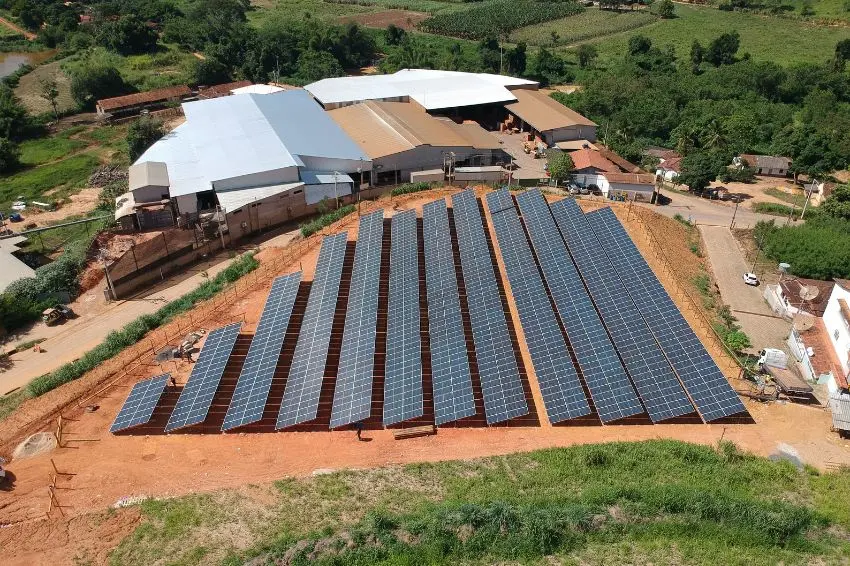

Brazil has surpassed the historic mark of 9 GW of operational solar power in large-scale plants and small and medium-sized systems installed on roofs, facades and land. The survey was conducted by ABSOLAR (Brazilian Association of Photovoltaic Solar Energy), based on data from ANEEL (National Electric Energy Agency).
According to the study, the DG (distributed generation) segment has 5,7 GW of installed solar energy power, currently used in 99,9% of all own generation connections in the country, easily leading the segment.
In the centralized generation segment, Brazil has 3,3 GW of installed power in photovoltaic solar plants, equivalent to 1,9% of the country's electrical matrix. In 2019, solar energy was the most competitive among renewable sources in the two New Energy Auctions, A-4 and A-6, with average prices below US$21,00/MWh.
Currently, large solar plants are the seventh largest source of generation in Brazil, with projects in operation in nine Brazilian states, in the Northeast (Bahia, Ceará, Paraíba, Pernambuco, Piauí and Rio Grande do Norte), Southeast (Minas Gerais and São Paulo) and Central-West (Tocantins).
For ABSOLAR, the advancement of solar energy in the country – via auctions for large plants or through self-generation in homes, small businesses, rural properties and public buildings – is essential to reduce the so-called “Brazil cost”, with more competitive electricity for Brazilians, reducing the occurrence of red flags on the population's electricity bill and diversifying the country's electricity supply.
6th place in the Brazilian electrical matrix
When adding the installed capacities of large plants and own solar energy generation, the photovoltaic source occupies sixth place in the Brazilian electrical matrix, behind hydroelectric, wind, biomass, natural gas thermoelectric and diesel thermoelectric sources and other fossil fuels. .
Furthermore, solar energy already represents more than the sum of the entire installed capacity of coal-fired thermoelectric plants and nuclear plants, which totals 5,6 GW, according to data from SCG (Superintendence of Generation Concessions and Authorizations) of ANEEL, consolidated this Monday (7).
GD Legal Framework
A ABSOLAR points out that the creation of a legal framework for self-generation of energy, as proposed in PL 5829/19 (Bill No. 5.829/2019), authored by federal deputy Silas Câmara and reported by federal deputy Lafayette de Andrada, currently under consideration in the Chamber of Deputies, is a priority in the current scenario. According to the association, the approval of this proposal will strengthen socioeconomic and sustainable development during the pandemic.
According to the CEO of ABSOLAR, Rodrigo Sauaia, the growth of renewable energy will strengthen the diversity and security of Brazil's electricity supply, relieving pressure on water resources, which are increasingly scarce and valuable, as well as reducing the use of fossil fuels, which are expensive, polluting and responsible for the terrible red flags on Brazilians' electricity bills.
“The three-year technical study, entitled 'Integration of Variable Renewable Sources in Brazil's Electrical Matrix', with the participation of the Ministry of Mines and Energy (MME), Energy Research Company (EPE) and National System Operator (ONS), in partnership with the German government entity Deutsche Gesellschaft für Internationale Zusammenarbeit (GIZ), proved that it is possible to increase the participation of clean, renewable and competitive solar and wind sources by more than four times, with reliability, security and stability of the matrix national electricity”, he explains.
The executive also highlights that this study debunked the old myth that the country would depend on thermoelectric plants to support the growth of renewables. “On the contrary: in reality, it showed that the balance of the system when there are variations in wind and sun is provided mainly by renewable hydroelectric plants, not by fossil thermoelectric plants. Therefore, the evolution towards a 100% clean and renewable electricity matrix is possible and depends more on political will and leadership than on technical and economic conditions”, adds Sauaia.
Another point highlighted by the association is the financial return for the country that the Legal Framework for DG can provide. “In self-generation of energy alone, the solar sector can bring more than R$139 billion in investments and generate more than 1 million new jobs in Brazil by 2050, with the legal framework proposed by PL 5829/19”, says Ronaldo Koloszuk, Chairman of the Board of Directors of ABSOLAR
“The benefits of the modality total more than R$ 173 billion in the period, with the reduction of costs in the use of thermoelectric plants and reduction of electrical losses, responsible for the tariff increases in the electricity bill and the emissions of pollutants and greenhouse gases in the sector electric”, he concludes.