
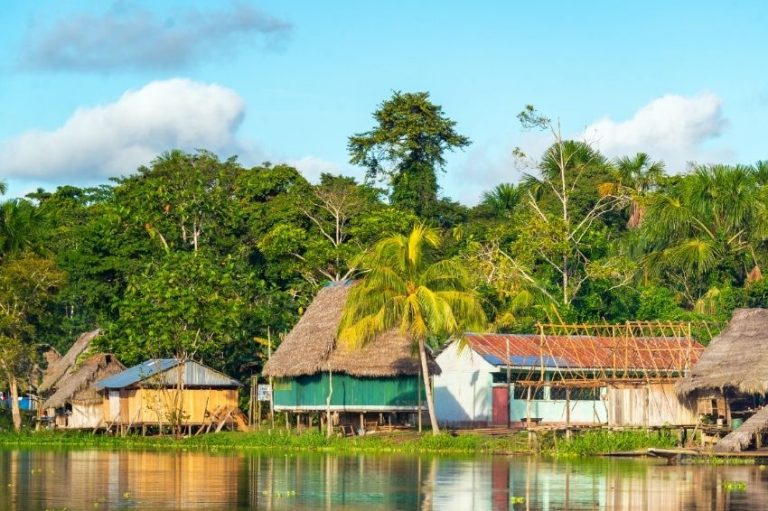
The Amazon is characterized by its size, its biodiversity and its range of natural resources.
Its population is largely made up of traditional and rural communities, which are dispersed throughout the forests, mainly close to river channels, which provide the inhabitants with the possibility of transportation and food.
Many of these communities, due to their geographic isolation, are also isolated from the point of view of electrical supply, with low demand for energy for production purposes and residential use, making service unattractive or unfeasible for service. by electricity concessionaires, due to the high cost of power transmission lines.
Consequently, these populations are deprived of all the benefits of electrical energy, from simple access to the main means of communication, through precarious education, and even the lack of the minimum housing conditions necessary for every citizen.
These communities still use old kerosene or carbide lamps as their main source of light at night. Although the Federal Government launched the Light for All Program in November 2003, the reality of this population remains almost unchanged on many issues.
Socio-environmental problems occurring worldwide, especially in recent decades, motivated the UN (United Nations) [1] to launch in 2015 a new sustainable development agenda, with 17 objectives to transform the world by promoting justice and social equality.
Among the objectives is SDG-7 (sustainable development goal), which provides for reliable, sustainable, modern and affordable access to energy for everyone.
Countries must, by 2030, expand infrastructure and technology for the provision of modern and sustainable electrical energy services, particularly in least developed countries, small island developing states and landlocked developing countries, in accordance with their respective support programs.
However, the universalization of electricity in Brazil still presents major obstacles to achieving SDG-7. In 2019, the estimated number of people outside the SIN (National Interconnected System) in the Legal Amazon was 990 thousand inhabitants.
That same year, the Ministry of Mines and Energy [2] announced that it would take seven to ten years to serve 72 thousand families in this region and that since the beginning of the program, only 3 thousand families in these areas had been served through of the Green Extractive Reserve for Ever program in Pará.
Policies aimed at providing energy services to isolated communities have many limitations that make any small-scale initiatives unfeasible. Among the possible solutions to the problem are the use of renewable sources, hybrid energy generation and PCHs (small hydroelectric plants), among others.
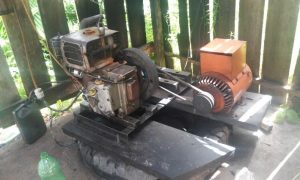
When communities have an energy source, they are generally diesel-powered generators, used collectively by residents for a few hours a day for lighting or watching television.
This system is not available every day. The use of diesel generators promotes environmental and noise pollution, contains obsolete technology, is dependent on continuous maintenance and offers difficult access for specialized technicians to sites.
Among the various problems are the risks of transporting fuel with inadequate containers and flammable cargo to the population on vessels, in addition to the high cost of fuel and the logistical difficulties in supplying it.
But this reality has been changing in recent years, as to meet the basic needs of some communities, solar energy systems for pumping water for domestic supply are being implemented – through private, public and, mainly, non-governmental initiatives. , for public lighting and the electrification of schools, health posts and community centers.
Pilot electrification project
A pilot electrification project was implemented in the Tapajós-Arapiuns Extractive Reserve (Resex), with installations started in 2017 and inaugurated in 2018, specifically in the community of Carão. The Resex territory has an area of almost 650 thousand hectares, located between two municipalities in western Pará – Santarém and Aveiro.
It is the most populous reserve in Brazil, with around 22 thousand inhabitants distributed in 74 communities, the majority of which are low-income traditional agroextractivist populations in vulnerable situations. Its residents generally live from extractivism and subsistence agriculture [3].
Although the presence of the public system has been increasing, it still has insufficient reach, especially in access to basic health, education, sanitation, energy and communication services.
The dimensioning of the isolated rural electrification system was based on the minimum service standards established by ANEEL (National Electric Energy Agency) [4]. SIGFI (Individual Electric Power Generation Systems with Intermittent Sources) 13:
- Reference daily consumption of 435 Wh/day;
- Minimum autonomy 2 days;
- Minimum available power of 250 W;
- Guaranteed monthly availability 13 kWh.
The community of Carão, before receiving the solar energy project, only had the availability of a diesel generator that supplied energy to the community between the hours of 19pm and 22pm.
In addition to the environmental problems caused by the use of diesel, throughout the year the generator spent around three to four months without working due to technical problems or lack of fuel. The result of scaling the photovoltaic system to benefit the community was a project composed of [5]:
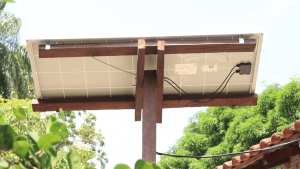
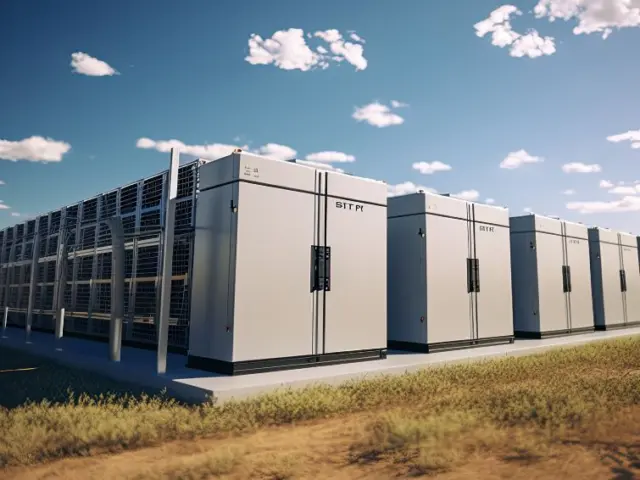
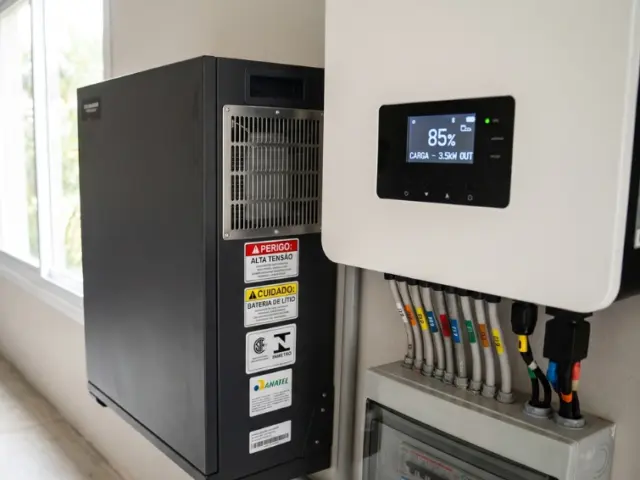
- 2 150 W solar modules;
- 2 stationary 150 Ah lead-acid batteries;
- 1 30 A charge controller with MPPT technology;
- 1 300 W 12 V/127 V DC/AC inverter;
- DC string-box and AC protection box.
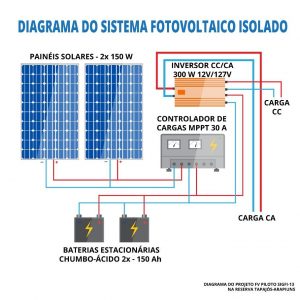
The electrification project presents the necessary protections such as DC and AC protection boxes with circuit breakers, DPS and fuses to protect the equipment, extending the useful life with the aim of increasing the time to change equipment, in addition to protecting users.
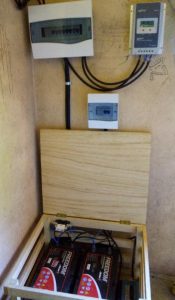
With the implementation of the solar energy pilot project for the electrification of communities, we see that it is possible to provide quality energy in a sustainable way, as happened with the 21 homes in the Carão community.
In this way, the implementation of these systems also contributed to local socio-environmental development, promoting access to a better quality of life for the inhabitants.
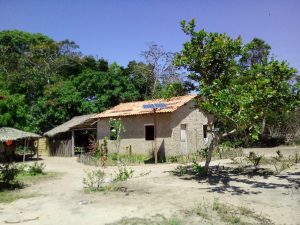
The installations are monitored, with the collection of generation and consumption data for research and study of the performance of the photovoltaic system. All results from this project are used as parameters for replication in other isolated communities in the Tapajós-Arapiuns Resex.
This pilot is part of the Renewable Energy for Tapajós Community Development project – A demonstrative experience in the Tapajós-Arapiuns Extractive Reserve, financed by the Mott Foundation together with the Center for Advanced Studies on Social and Environmental Promotion – Saúde & Alegria Project.
The perspective of this project is the dissemination of solar energy for the sustainable development of communities in the Amazon, in its various applications such as SIGFI, water pumping systems, PV-diesel hybrid systems, internet access and refrigeration.
References
[1] UN. Goal 7: Ensure reliable, sustainable, modern and affordable access to energy for everyone. United Nations Organization. Available in:https://nacoesunidas.org/pos2015/ods7/>.
[2] Câmara de Notícias Agency. The government foresees a period of 7 to 10 years for electricity to reach 72 thousand families in the Amazon. November 2019. Available at:https://www.camara.leg.br/noticias/617876-governo-preve-prazo-de-7-a-10-anos-para-que-luz-chegue-a-72-mil-familias-da-amazonia/>
[3] Costa, TS Study and simulation of hybrid photovoltaic systems for autonomous and grid-connected application. Dissertation. State University of Campinas, 2019.
[4] ANEEL. REGULATORY RESOLUTION Nº 493. National Electric Energy Agency, 2012. Available at: http://www2.aneel.gov.br/cedoc/ren2012493.pdf> [5] Costa, TS et al. Solar energy applications for the sustainable development of communities in the Brazilian Amazon: a case study of the Tapajós-Arapiuns Extractive Reserve. Preprint, 2020.

Comments
Comments are moderated before publication.Comments should be respectful and contribute to a healthy debate. Offensive comments may be removed. The opinions expressed here are those of the authors and do not necessarily reflect the views of the author. Canal Solar.