

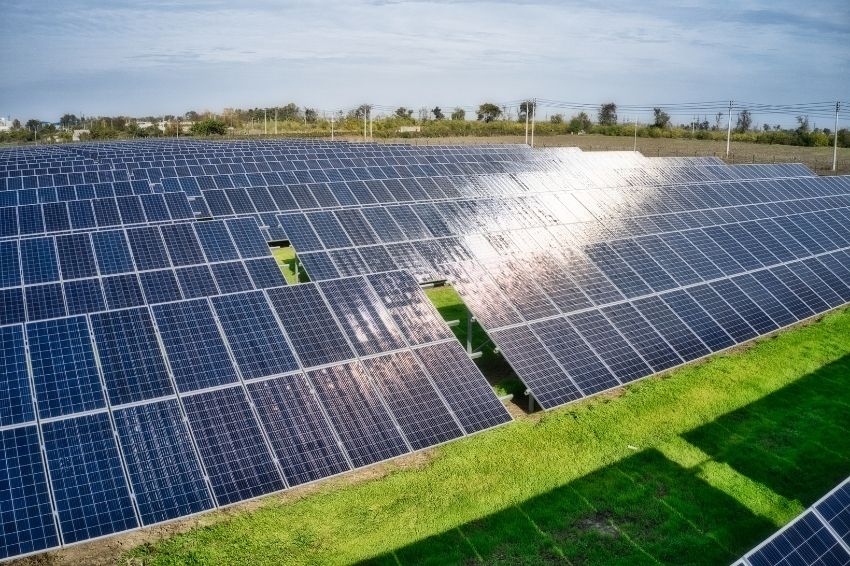
In 2022, the capacity of renewable sources across the world is expected to achieve record growth of 8% compared to 2021, surpassing the 300 GW mark for the first time in a single year, according to estimates from IEA (International Energy Agency).
Of this amount, solar energy will be responsible for around 60% of the increase, reaching its best result in history, with the commissioning of 190 GW and a gain of 25% compared to 2021.
According to the Agency, in addition to the natural expansion of renewables, other reasons explaining the record growth of clean sources are the accelerated energy transition policies adopted by the European Union, China and the United States.
In China, the local government has invested in subsidies for clean energy projects, aiming to reduce carbon emissions in its municipalities to zero. “Outside China, the European Union was the second largest market in terms of capacity increase, with the region surpassing the historical record for the first time in 2011”, highlights the IEA.
“Solar PV alone accounted for the majority of expansion last year due to the acceleration of projects in Spain, France, Poland and Germany, which was driven by a combination of government-led auctions and distributed solar PV incentives.” highlights the entity.
Regarding the United States, the Agency explains that the expansion of renewables, especially solar, continued to increase thanks to investment tax credits, available until 2023-2024. “This provided a relatively stable policy environment, even if the supply chain and logistical challenges prevented much faster growth.”
Solar energy in 2023
Also according to the IEA, unless new and stronger policies are implemented in 2023, global renewable energy capacity additions are expected to remain stable compared to 2022.
However, despite the stagnation scenario, the entity understands that solar must be the only source that will grow and reach the 200 GW barrier. Meanwhile, the expansion of wind energy and bioenergy should remain stable and hydroelectric energy 40% lower.


An answer
Could anyone explain why any country encourages and creates subsidies for the installation of clean energy while in Brazil, instead of encouraging, they are taxing?