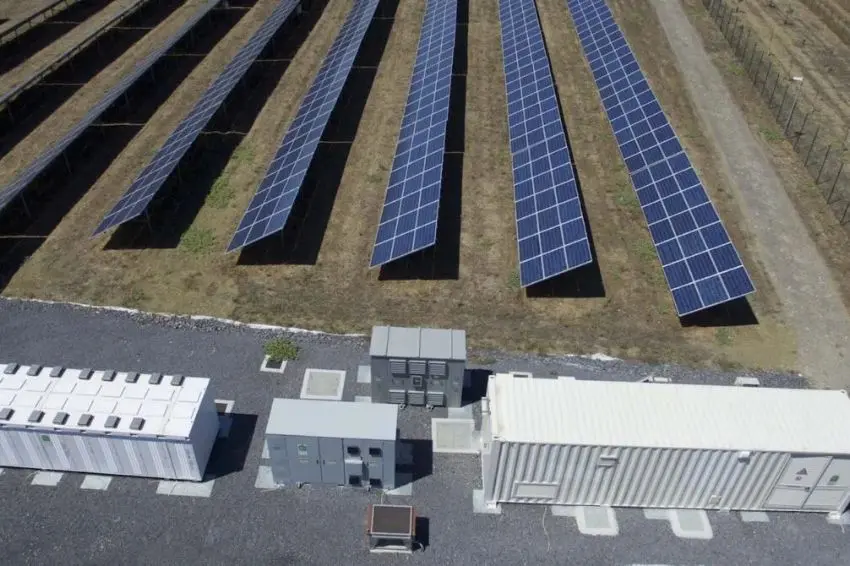

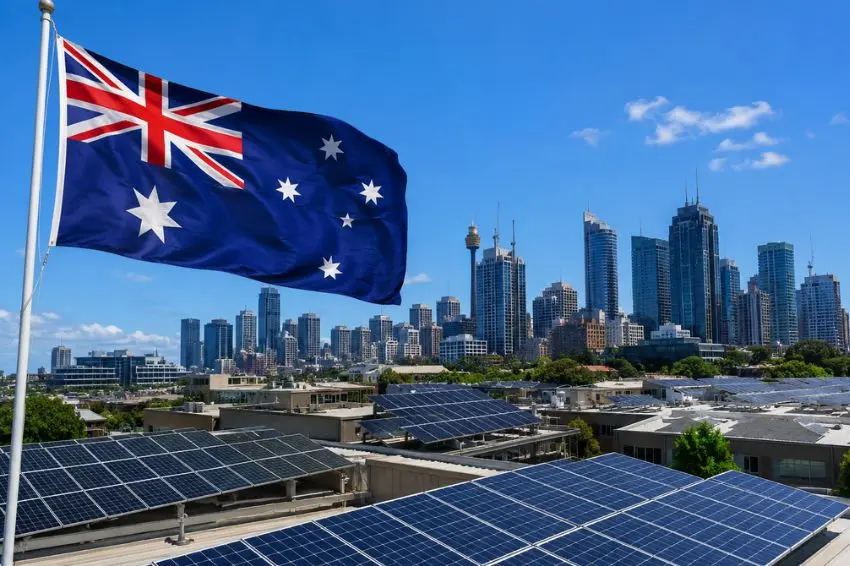
Australia has become one of the world's most important energy markets for observing, in real time, the effects of high solar energy penetration, the expansion of distributed energy resources, and the accelerated entry of batteries into electrical operation.
For Brazil, this case deserves special attention. Not because the two systems are the same—they aren't. The Brazilian energy matrix has a strong hydroelectric presence, sophisticated centralized operation, great regional diversity, significant expansion of renewables, and a free market preparing for full opening.
But Australia It arrived earlier to address some challenges that are already beginning to emerge in the Brazilian electricity sector: excess solar generation at certain times, pressure on distribution networks, the need for storage, negative prices, cuts in renewable generation, revision of tariff signals, and greater consumer protagonism.
The Australian experience indicates that solar energy has ceased to be merely a source of generation. On a larger scale, it is reorganizing operations, the market, regulation, investments, and the role of the consumer.
A rapidly transforming system
Australia's main electricity market, the National Electricity Market, known as NEM, serves the eastern and southern states of the country. According to the Australian Energy Market Operator, AEMO, renewable sources accounted for 46,5% of NEM generation in the first quarter of 2026, the highest share ever recorded for a first quarter.
The data is relevant in itself, but what's most important is the composition of this transformation. During the same period, distributed solar generation reached 15,8% of the total supply of the NEM, equivalent to an average of 4.090 MW, becoming the largest single renewable contribution to the system.
This reveals a structural shift. The Australian transformation is not being driven solely by large renewable energy plants. It is largely happening on the rooftops of homes, small businesses, warehouses, schools, and commercial premises. The consumer has become an active part of the electricity operation.
The power of solar power on rooftops.
Australia has surpassed the milestone of 4 million solar systems installed in homes and small businesses. According to the Clean Energy Council, rooftop solar added 3,2 GW of new capacity in 2024 and already accounts for more than 12% of the electricity generated in the country.
To put this into perspective, the Clean Energy Council notes that the 28,3 GW of rooftop solar exceeds the installed capacity of Australian coal-fired power plants, estimated at 22,5 GW. This comparison needs to be interpreted correctly: installed capacity is not the same as firm energy, dispatch, reliability, or generation available during peak hours.
Nevertheless, the signal is clear. Distributed solar generation has ceased to be marginal and has become a structural component of the Australian electricity system.
This achievement brings an important operational consequence: the system now has a lot of energy available in the middle of the day, precisely when solar production is most intense. At certain times, solar generation significantly reduces the net demand on the grid, putting downward pressure on prices and requiring new flexibility solutions.
Solar power on rooftops reduces bills, increases consumer participation, and accelerates decarbonization. But when it grows in scale, it ceases to be just an individual solution and becomes a systemic variable. This is a central point for Brazil.
Negative prices: when abundance requires flexibility.
One of the most important phenomena in the Australian market is the recurrence of negative or zero prices. In the first quarter of 2026, according to AEMO, 14,9% of dispatch intervals in the NEM recorded negative or zero prices. This data needs to be interpreted carefully.
A negative price doesn't mean renewable energy is a problem. It means that, at that moment, the system had more energy available than it had the capacity to absorb, transport, store, or shift consumption. Abundant energy, when it lacks flexibility, loses value.
Australia: Three hours of free solar electricity starting in 2026
In Brazil, this discussion appears under other names: constrained-off, generation cuts, flow restrictions, curtailment, renewable spillage, and revenue litigation. Although the market models are different, the fundamental principle is similar. Renewable expansion needs to go hand in hand with grid access, storage, demand response, economic signal, and operational planning.
The Australian experience suggests that the challenge of the next decade will not only be generating clean energy. It will be getting that energy into the system at the right time, in the right place, and at the right cost.
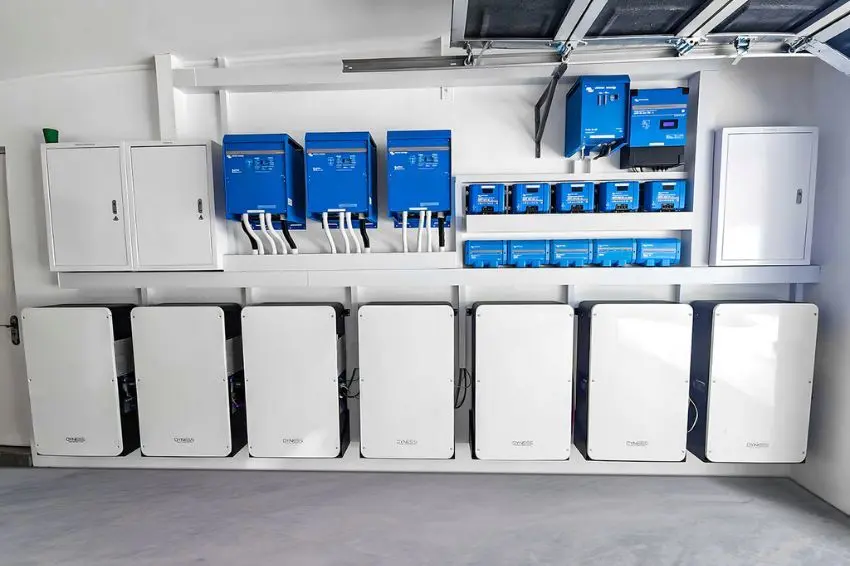
Batteries are no longer just an accessory and are gaining market relevance.
The entry of batteries is one of the most relevant points of the recent Australian experience. In the first quarter of 2026, AEMO recorded that batteries, considering combined charging and discharging, defined prices in 32% of the ranges in the NEM. This qualification is important: the data considers both the time when batteries are charging and the time when they are discharging.
This indicates that batteries have ceased to be a marginal technology and have begun to directly influence price formation.
The effect is both economic and operational. The batteries charge during periods of higher supply and lower prices, especially during the solar season, and discharge during times of greatest system need, reducing dependence on other flexible sources during peak times.
In the same quarter, the average wholesale price of NEM was A$73/MWh, a 12% decrease compared to the first quarter of 2025. AEMO itself attributes part of this dynamic to the increased use of batteries, including reduced prices during peak nighttime hours.
This is perhaps one of the main lessons for Brazil: storage should not be treated merely as a backup. Batteries can act as an instrument for arbitration, modulation, reliability, peak reduction, postponement of network investments, rapid response, and service provision to the system.
The Brazilian debate on reserve capacity auctions with storage, distributed generation with batteries, demand response, and ancillary services needs to start from this systemic perspective.
Encouraging residential batteries
Australia has also decided to accelerate consumer adoption of batteries. The federal Cheaper Home Batteries program grants a discount of approximately 30% on the initial cost of eligible batteries connected to new or existing solar systems.
According to rules published by the Australian government, batteries with a nominal capacity of 5 kWh to 100 kWh may be eligible. However, there is an important rule: Small-scale Renewable Energy Scheme certificates, known as STCs, can only be claimed for the first 50 kWh of usable capacity.
The design is relevant because it signals a phase change. The first stage of distributed solar was generating energy. The second is storing, coordinating, and delivering value to the system.
The Clean Energy Council reported that 183.245 batteries were sold in Australia in the second half of 2025 alone, a number higher than the total for the previous four years combined.
The regulatory question, therefore, changes. It's not enough to know how many batteries will be sold or installed. It's necessary to know how they will be integrated.
A single battery can reduce a household's electricity bill. Thousands of coordinated batteries can form virtual power plants, provide services to the grid, reduce peak loads, support reliability, and transform the consumer into an operational resource.
This is a debate that Brazil needs to anticipate. Without coordination, batteries tend to be underutilized private assets. With coordination, they can become distributed infrastructure for energy security.
The grid has become the center of energy innovation.
The Australian experience also makes it clear that the grid has become one of the major drivers of energy innovation.
The expansion of solar and wind power requires transmission lines. The expansion of distributed solar power requires modernization of the distribution network. The electrification of the economy requires metering, digitization, and tariffs capable of guiding consumer behavior.
In its systemic planning studies, AEMO has indicated that the combination of renewables, transmission, distribution, storage, and gas generation as reliability support appears to be a lower-cost trajectory within the scenarios and public policies considered for the progressive replacement of coal-fired power plants.
This perspective is important because it avoids a simplistic view of the transformation of the electricity sector. There is no renewable, secure, and competitive system without sufficient grid capacity, storage, flexibility, and responsiveness.
In Brazil, this learning process is straightforward. The expansion of renewable energy generation needs to be coordinated with transmission planning, modernization of distribution companies, real-time data, smart meters, demand response, and new tariff models. Without this, renewable abundance can lead to waste, litigation, and inefficient cost allocation.
Tariff fairness and consumer protection
Australia also offers an important warning: putting the consumer at the center does not mean leaving them alone to face complex tariffs, sophisticated technologies, and market risks.
As consumers increasingly generate, store, export, and participate in flexibility programs, the need for clear information, protection against unfair practices, technological interoperability, and transparency in remuneration grows.
Furthermore, there is the issue of tariff fairness. Consumers with roofs, capital, and access to credit can invest in solar and batteries. Consumers without these conditions remain fully dependent on the grid. If regulation is not well designed, some of the common costs may be shifted to those with less investment capacity.
This lesson is especially relevant for Brazil, at a time when the expansion of the free market, the growth of distributed generation, and the discussion about batteries are beginning to reach smaller consumers. Freedom of choice requires governance. Innovation requires protection. Efficiency requires good cost allocation.
What Brazil can learn from Australia.
The Australian experience should not be copied automatically. Brazil has its own electricity grid, institutional design, hydroelectric base, trade rules, and regional challenges. But there are objective lessons to be learned.
The first is that distributed solar needs to be treated as a system resource, not just as individual generation. The second is that storage should have an economic signal, a remuneration model, and a defined regulatory role.
The third point is that negative prices, curtailment, and flow restrictions are not isolated failures. They are symptoms of a lack of flexibility.
The fourth is that the distribution network will be as important as transmission in the next phase of energy innovation. The fifth is that active consumers will need the right information, protection, and incentives.
The sixth point is that energy planning must integrate centralized generation, distributed generation, batteries, demand response, flexible gas, hydropower, transmission, distribution, and digitalization.
Conclusion
Australia is anticipating debates that Brazil will not be able to avoid. The advancement of solar energy, especially distributed solar energy, is an achievement. But when solar gains scale, it changes the logic of the system. It reduces net demand, shifts prices, requires storage, puts pressure on grids, alters tariffs, and transforms consumers into active agents.
The future of the electricity sector will not be defined solely by who generates the cheapest energy. It will be defined by who can deliver flexibility, security, integration, and systemic value.
The Australian experience indicates that the energy of the future begins on the rooftop, but it can only be sustained with a modern grid, a well-designed market, coordinated storage, and mature regulation. For Brazil, the opportunity lies in learning before the challenges become more costly.
Solar energy has already demonstrated its strength. Now, the next cycle will be defined by the ability to transform abundance into efficiency, energy innovation into security, and consumer participation into system-wide value.
Sources consulted
- Australian Energy Market Operator — Quarterly Energy Dynamics Q1 2026.
- Clean Energy Council — Clean Energy Australia Report 2025.
- Clean Energy Council — Rooftop Solar and Storage Report, July to December 2025.
- Australian Government — Department of Climate Change, Energy, the Environment and Water — Cheaper Home Batteries Program.
- Clean Energy Regulator — Solar batteries and Small-scale Renewable Energy Scheme.
The opinions and information expressed are the sole responsibility of the author and do not necessarily represent the official position of the author. Canal Solar.