
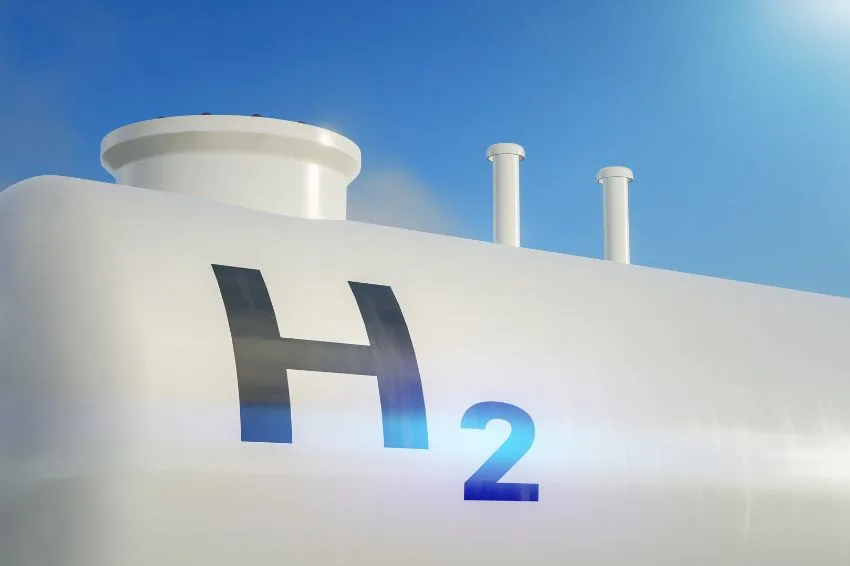
A study suggests that Western Australia could become a renewable hydrogen hub for Europe, with the capacity to supply part of the continent's demand by 2050. The research, called “TrHyHub”, is the result of a partnership between the Port of Rotterdam, the Fraunhofer Institute for Solar Energy Systems (Fraunhofer ISE) and Australian institutions, and analyzes the country's potential to establish itself as one of the main global suppliers of green hydrogen.
The study assessed several factors, such as the most viable export options, the technical project, the strategic location and the feasibility of the necessary infrastructure. From the Oakajee region, in the so-called Mid West Hydrogen Hub, the most promising option for export, at least in the short term, it's ammonia, due to its stability and transport viability.
The report also predicts significant reductions in logistics costs in the future as the supply chain becomes more consolidated. With its strategic location and significant potential for renewables, the Mid West Hydrogen Hub represents a central hub for the growth of the clean energy industry in Western Australia.
According to the study, the region could theoretically generate up to 10.000 TWh of solar energy and 5.700 TWh of onshore wind energy per year. This would allow the production of up to 185 million tons of hydrogen per year from solar energy and 105 Mt per year from wind energy — volumes capable of meeting a significant part of the European demand projected for 2050.
To make this project viable on an international scale, researchers at Fraunhofer ISE analyzed the logistical and technological aspects of exporting green hydrogen. “Our technical-economic analysis of an ammonia supply chain to Germany confirmed that the long distance does not represent a significant cost factor – it only accounts for 9 percent of the total production and delivery costs. The excellent conditions for solar and wind generation can offset some of the higher transport costs,” explains Marius Holst, author of the study.
The report also considered other possible export routes, such as liquid hydrogen and methanol, but both face technical and economic barriers, such as the lack of suitable containers for transporting liquid hydrogen and the absence of economically viable technologies for capturing atmospheric CO₂, essential in the production of green methanol.
“Future cost reductions will only be possible with global scaling and technological advances – not just over time. We need to start now to make this a reality,” says Robert Szolak, head of department at Fraunhofer ISE.
Germany as an importer
In 2022, the European Commission launched the REPowerEU plan, with the goal of importing up to 10 million tons of renewable hydrogen by 2030, gradually replacing fossil fuels in all sectors. In line with this plan, Germany’s national strategy envisages replacing fossil fuels with green hydrogen in industries such as steel and parts of the transport sector.
As domestic production of renewable hydrogen will be limited, Germany will rely heavily on imports. The Port of Rotterdam has been identified as a key hub in this chain due to its logistical connections to strategic German industrial regions such as North Rhine-Westphalia and Ludwigshafen.
In September 2024, Germany and Australia signed a landmark agreement, securing financial support for new green hydrogen export projects. The deal — worth €400 million, co-financed by the two governments — is part of the auction mechanism H2Global, which seeks to boost international supply chains.
all the content of Canal Solar is protected by copyright law, and partial or total reproduction of this site in any medium is expressly prohibited. If you are interested in collaborating or reusing part of our material, please contact us by email: redacao@canalsolar.com.br.


Comments
Comments are moderated before publication.Comments should be respectful and contribute to a healthy debate. Offensive comments may be removed. The opinions expressed here are those of the authors and do not necessarily reflect the views of the author. Canal Solar.