
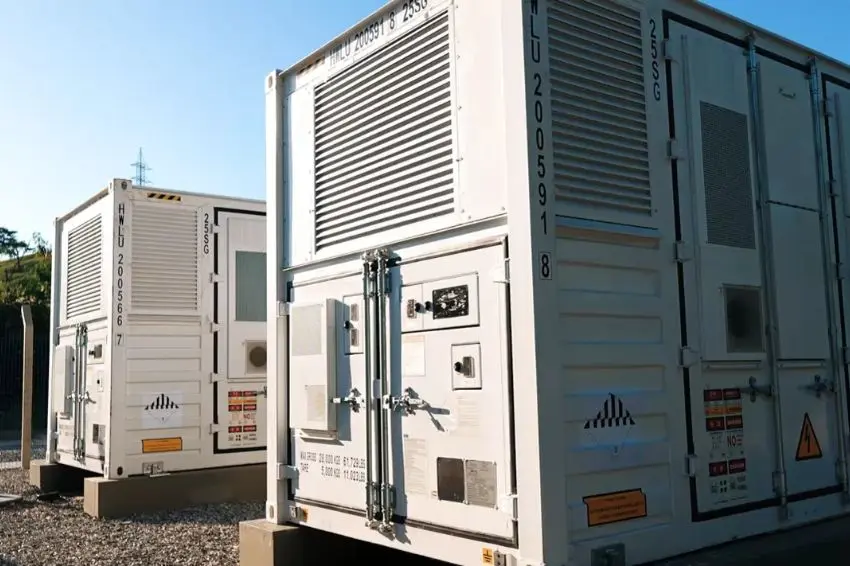
By explicitly including batteries among the alternatives that may be considered in the capacity auctions planned for 2027 to 2029, the Ministry of Mines and Energy is signaling a positive direction.
For INEL, which has long been calling for greater technological openness and transparency in contracting, the measure deserves recognition and monitoring to ensure it translates into concrete benefits for the consumer.
Normative Ordinance MME No. 143, of September 28, 2026, published in the DOU (Official Gazette of the Union) the following day, establishes an estimated schedule that includes batteries, hydraulic storage, hydroelectric and thermoelectric plants among the possibilities for the reserve capacity auctions planned for the second half of each of those years.
This signal aligns with an agenda that the National Institute of Clean Energy has been advocating with the ministry: evaluating different flexibility solutions before committing consumers to long-term choices.
Recognizing this convergence does not mean attributing the merit of the decision to a single institution. It means valuing an approach that can improve the quality of future hiring.
The discussion about capacity needs to begin with defining the service that the electrical system requires. How much power should be available, for how long, in which locations, and with what speed of response?
These answers should guide the evaluation of technologies and combinations capable of meeting demand safely and economically efficiently.
Technological neutrality requires objective criteria. It does not presuppose that batteries replace any other alternative in all circumstances, nor that different solutions receive identical treatment.
Each technology must demonstrate its ability to meet delivery obligations, with its advantages and limitations duly considered.
The economic comparison also needs to be comprehensive. Investment, operation, fuel or recharge energy, losses, useful life, and replacements are components that should be included in the evaluation, as applicable. The calculations need to use compatible time horizons and assumptions.
Comparing only one portion of the cost can lead to erroneous conclusions about the most advantageous alternative for the consumer. For the solar sector, this transparency is particularly important.
Energy storage should also be evaluated for its potential to harness renewable energy that, under certain conditions, would otherwise go unused. The possibility of storing energy for later release deserves to be integrated into planning studies and the analysis of the benefits of each project.
However, this utilization depends on the location, connection conditions, and availability of power for recharging, as well as operational restrictions.
This cannot be assumed for any facility. We argue that reductions in generation cuts should be examined with explicit premises and criteria that allow verification of the expected benefit.
Planning generation, storage, transmission, and consumption in a coordinated manner is essential. An efficient solution for an isolated project may not be the best for the entire system. Similarly, shared benefits need to be identified so that discussions about costs and their allocation are transparent.
The scope of the ordinance must be understood precisely. The schedule is subject to adjustments, and the holding of capacity auctions depends on studies by EPE (Energy Research Company) and ONS (National System Operator).
The regulation does not guarantee that all technologies will compete for the same product, nor does it establish a review of auction contracts. ANEEL No. 2/2026 and No. 3/2026.
Therefore, acknowledging progress in future planning does not end INEL's demands for transparency regarding LRCAP 2026. Clarifying the choices already made and improving future contracts are responsibilities that must go hand in hand.
The next step is to translate openness into verifiable rules. We advocate for the disclosure of hiring needs, methodologies, and calculation details, accompanied by consistent criteria for comparing alternatives. It is also necessary to explain who will pay for the hiring and how the benefits will be distributed.
INEL views the MME's initiative positively and wants to contribute to its development. Our call for modernization has a concrete objective: to better utilize clean energy sources and innovation to offer secure energy at an affordable cost.
The signage deserves recognition. Its effectiveness should be measured by the quality of the competition and the benefits actually delivered to the consumer.
The opinions and information expressed are the sole responsibility of the author and do not necessarily represent the official position of the author. Canal Solar.


Comments
Comments are moderated before publication.Comments should be respectful and contribute to a healthy debate. Offensive comments may be removed. The opinions expressed here are those of the authors and do not necessarily reflect the views of the author. Canal Solar.