
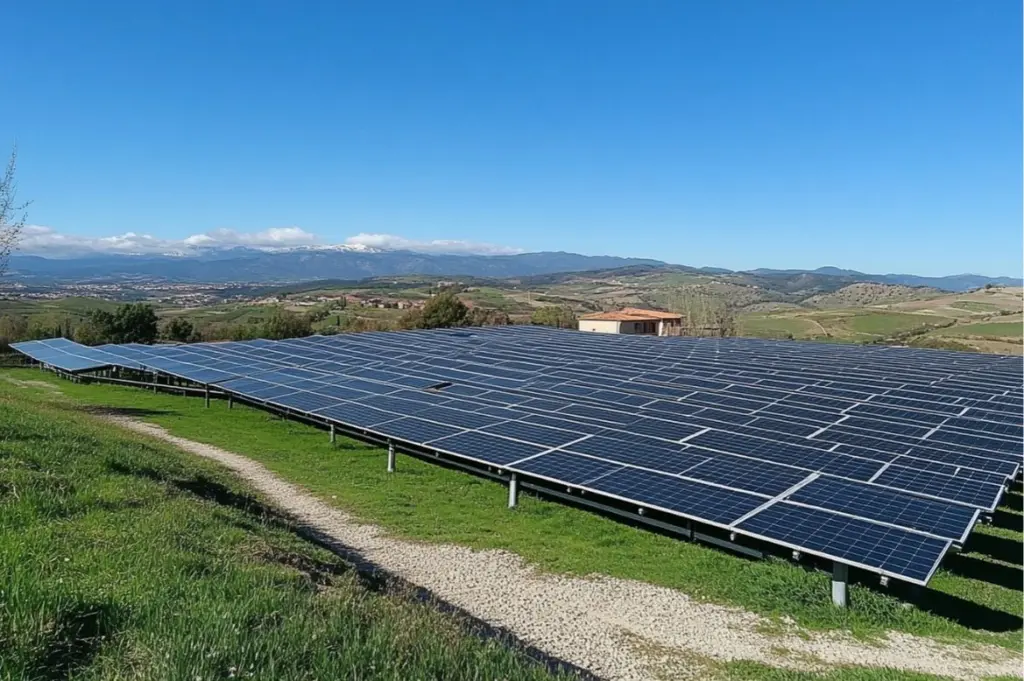
The term "energy by subscription" presents consumers with a promise of savings without the installation of equipment on their property. However, its commercial use does not, in itself, identify the regulatory model adopted. The offer may require joining a collective structure, contracting services, and using third-party infrastructure.
The legal problem lies in determining whether these relationships effectively organize generation for consumption by the participants or merely give an associative appearance to an energy negotiation.
The hypothesis developed is that the distinction requires a joint analysis of the legal organization and the operation. Law No. 14.300/2022 recognizes shared generation, defines the Electric Energy Compensation System, and characterizes micro and mini-distributed generation as production for own consumption.
A balanced reading of these provisions allows us to defend the modality without presuming the regularity of every offer presented under its name.1
This study is legal and qualitative. It does not conduct audits of projects, empirical market research, or an exhaustive survey of administrative decisions. The recommendations stem from normative interpretation and should be applied after examining the documents and facts of each operation.
The debate about the electrical impacts of distributed generation, while relevant, is not a sufficient criterion to classify a given contract as disguised commercialization.
Shared generation in the compensation system
Article 1, X, of Law No. 14.300/2022 allows for the grouping of consumers through the collective forms indicated therein, with service provided by the same distributor. Subsection XIV describes the injected energy as the object of a free loan to the distributor, for subsequent compensation or accounting as a credit. Collective participation is, therefore, expressly recognized; it does not depend on personal proximity to the undertaking.1
A ANEEL It explains that participants can use the energy generated to offset their consumption. This accounting entry should be distinguished from the exclusive physical delivery of electricity from a power plant to a specific participant. The credit is not equivalent to a battery that stores the same electrons for future use. Understanding this difference avoids commercial promises that are incompatible with the system's operation.2
The commercialization governed by Law No. 10.848/2004 and Decree No. 5.163/2004 has its own contracting regime. The existence of private contracts in the shared generation arrangement does not automatically transform it into an operation within the Free Contracting Environment. Qualification requires identifying the object of the obligations and the regime effectively used to fulfill them.3
The bans and their exceptions
Article 655-D, § 5, of the Normative Resolution ANEEL Resolution No. 1.000/2021, as amended by Resolution No. 1.098/2024, prohibits the sale of credits and surpluses and the obtaining of benefits from their allocation to other holders, except in the cases provided for in Article 655-X. This includes public calls by the distributor and sales to public bodies per beneficiary unit of a social or housing program, under the applicable conditions.4
It is not technically appropriate to assert an absolute prohibition on all commercialization of surplus MMGD (Medium-Global Marketing) data. However, exceptions do not generically legitimize subscription contracts either. Their use requires proof of the legal and regulatory prerequisites; the mere reference to an exceptional case does not authorize extending it to different consumers and operations.
The interpretation defended in this article seeks to reconcile the collective generation authorized by law with the regulatory prohibition. Funding infrastructure or actual services is not necessarily the same as trading credits. The examination must verify whether there is a demonstrable autonomous obligation or whether the charge merely remunerates the transfer of credits between holders. This distinction is interpretative and does not constitute prior approval of any remuneration formula.
Compensation and the reality of contracts
In civil law, Articles 112 and 113 of the Civil Code guide interpretation based on the intention embodied in the transaction, good faith, and the conduct of the parties. Article 167 deals with the nullity of a simulated transaction. These provisions support the examination of the effective content of the relationships: the title of lease or contribution does not regularize an operation whose execution is incompatible with it. The conclusion regarding simulation, in turn, requires proof of its elements.5
Outsourcing maintenance, management, or implementation must be examined as a whole. Its mere existence does not allow one to conclude that there has been a sale of energy. Nor does it dispense with demonstrating who uses the asset, what rights have been granted to the participants, how expenses are covered, and what obligation underlies each charge. The contractual structure must remain intelligible when advertising jargon is removed.
Variable compensation demands special attention. If the charge is exclusively linked to the volume of credits allocated to the subscriber, it is necessary to examine whether it corresponds to consideration for an actual service or infrastructure, or to the allocation benefit itself achieved through regulatory restrictions.
Accounting terminology and generic clauses do not resolve this doubt. The conclusion depends on the subject matter, the execution, and the applicable sectoral regulations, without any automatic presumption of validity.
Article 10 of Law No. 14.300/2022 adds a specific limit: it prevents inclusion in the SCEE (Brazilian Electricity Regulatory System) when land, lots, and properties are rented or leased for payment in reais per unit of energy. This should not be confused with any economic reference to performance. Nor can its specificity be used to disregard the analysis of other prohibitions applicable to services, assignments, or rentals of equipment.1,4
Criteria for consistent legal due diligence.
It is proposed to begin the due diligence process with the articles of incorporation, the membership instruments, and the documents of the generating unit. The objective is to identify the declared modality, the owner of the generation, the participating units, and the link that sustains the collective use. The chosen form must respect its own regulations; association, cooperative, and consortium are not interchangeable structures merely for commercial convenience.
The next step should involve comparing documentation and execution. It is recommended to examine proof of participation, allocation criteria, billing records, infrastructure usage, and the composition of charges. The crucial question is whether the participant is integrated into the generation organization for their own consumption or, in practice, only acts as a recipient of negotiated credits. No single document can replace this reconstruction of the operation.
Consumer information and risk sharing
When a consumer relationship is established, the duties of information and the rules on offers and contractual protection of the Consumer Protection Code must be included in the analysis. Article 46 protects prior knowledge and understanding of the instrument. The adoption of a collective entity does not allow for an abstract resolution of the applicability or exclusion of the Consumer Protection Code; it is necessary to examine the effective relationship between the supplier, participant, and entity.6
It is recommended that the proposal explain the basis for calculating the savings and allow verification of the total cost, including charges that remain with the distributor. It should also clarify how the subscriber can track the compensation and dispute discrepancies. The difference between the advertised discount and the actual savings must be verifiable so that the consumer can compare alternatives without relying solely on a commercial simulation.
Regarding risks, it is suggested to contractually distinguish between generation, allocation, and compensation. Each event occurs at its own stage and should not be used synonymously with the others. The instrument should define the event that triggers remuneration and the handling of connection delays, unavailability, billing errors, and default. This is a recommendation for contractual organization, subject to applicable mandatory regulations.
The participant's exit also deserves clear regulation. It is recommended to include notice, proportional penalty criteria where applicable, accountability, and obligations subsequent to termination. The allocation of credits must observe regulatory limits; a private clause cannot guarantee unrestricted reallocation nor transform energy balance into an automatic right to receive payment in cash. The contractual provision must reflect what the system allows.2,4
Conclusion
"Energy subscription" is an insufficient term to determine regularity or illegality. The conclusion depends on the collective agreement, the purpose of self-consumption, and the correspondence between obligations and execution. Not personally knowing the power plant is not an independent basis for disqualifying participation. Knowledge of the contract and the possibility of verifying its execution are much more useful criteria for due diligence.
The legitimacy of shared generation is defended, accompanied by well-founded oversight and transparency. Remuneration for services or infrastructure requires demonstration of its purpose and compatibility with sectoral prohibitions. When the real objective corresponds to the negotiation of credits or energy outside of permitted scenarios, the name given to the business does not eliminate the problem. The legal security of the model depends on structures that can be explained, documented, and verified, including their risks and exit obligations.
Notes and references
- BRAZIL. Law No. 14.300, of January 6, 2022. Legal framework for distributed microgeneration and minigeneration. Updated text. Provisions examined: art. 1, X and XIV; arts. 9, 10 and 28. Chamber of Deputies. Available at: https://www2.camara.leg.br/legin/fed/lei/2022/lei-14300-6-janeiro-2022-792217-normaatualizada-pl.html. Accessed on: October 18, 2026.
- ANEELMicro and Mini Distributed Generation. Institutional page on participation modalities and operation of the SCEE (Brazilian Electricity Regulatory System). Updated on June 9, 2026. The institutional expression comparing the grid to a battery is understood in this article only as an accounting analogy. Available at: https://www.gov.br/aneel/pt-br/assuntos/geracao-distribuida. Accessed on: October 18, 2026.
- BRAZIL. Law No. 10.848, of March 15, 2004, art. 1. Decree No. 5.163, of July 30, 2004, art. 1. Commercialization regime in regulated and free contracting environments. Texts updated in the Chamber of Deputies. Available at: https://www2.camara.leg.br/legin/fed/lei/2004/lei-10848-15-marco-2004-531234-normaatualizada-pl.html
https://www2.camara.leg.br/legin/fed/decret/2004/decreto-5163-30-julho-2004-533148-normaatualizada-pe.html. Acesso em: 18 out. 2026. - ANEELNormative Resolution No. 1.000, of December 7, 2021, art. 655-D, § 5, and art. 655-X, as amended by Normative Resolution No. 1.098, of July 23, 2024. Compare with Law No. 14.300/2022, arts. 24 and 36-A. The exception does not exempt the specific requirements and regulations. Available at: https://www2.aneel.gov.br/cedoc/ren20241098.pdf. Accessed on: October 18, 2026.
- BRAZIL. Law No. 10.406, of January 10, 2002. Civil Code. Articles 112, 113 and 167. Text compiled by the Presidency of the Republic. Available at: https://www.planalto.gov.br/ccivil_03/leis/2002/l10406compilada.htm. Accessed on: October 18, 2026.
- BRAZIL. Law No. 8.078, of September 11, 1990. Consumer Protection Code. Articles 6, III; 30; 31; 46 and 51. Its application depends on the configuration of the consumer relationship. Text compiled from the Presidency of the Republic. Available at: https://www.planalto.gov.br/ccivil_03/leis/l8078compilado.htm. Accessed on: October 18, 2026.
The opinions and information expressed are the sole responsibility of the author and do not necessarily represent the official position of the author. Canal Solar.


Comments
Comments are moderated before publication.Comments should be respectful and contribute to a healthy debate. Offensive comments may be removed. The opinions expressed here are those of the authors and do not necessarily reflect the views of the author. Canal Solar.