
With Raphael Furtado, Senior associate at Tauil & Chequer Advogados associated with Mayer Brown
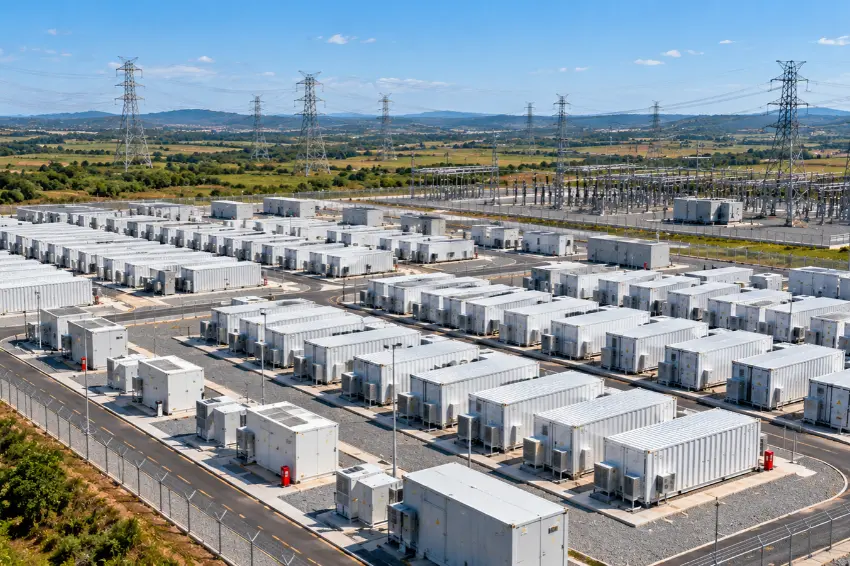
On December 2nd and 4th, 2026, Brazil will hold the first LRCAPS (Reserve Capacity Auctions in the form of power dedicated to battery energy storage systems).battery energy storage system or simply BESS), where the winner will be chosen based on the lowest price and will receive a fixed income over 15 years, in exchange for providing capacity in the form of power.
In an extremely competitive auction, with dozens of interested parties and projects of varying sizes, tax optimization, which should be reflected in the financial modeling, directly affects the implementation cost, the capital structure, and the price that the entrepreneur can offer in the bid.
The proximity of the auction and the interaction between tax and regulatory norms in the energy sector make it likely that investors will approach the bidding process with a certain level of uncertainty, resulting from a situation that combines aspects of the tax reform pending regulation with sectoral uncertainties.
Starting in January 2027, the CBS (Contribution on Goods and Services) will be levied to replace the PIS and Cofins taxes, which will be phased out. In 2029, the IBS (Tax on Goods and Services) will begin to be levied, gradually replacing the ICMS and ISS taxes. Therefore, although the bids for the BESS LRCap are submitted before the new tax system comes into effect, these bids should already reflect the impacts of the new rules.
According to item 10.9 of the auction notice, the bidder, when defining the revenue amount to be presented in the bid, "It must include all costs necessary for the provision of the service and implementation of the SAE, including taxes, except for CBS and IBS which, under the tax reform, are not included in the service's sales prices.".
This clause is important for financial modeling purposes. The bidder may disregard the IBS and CBS taxes on the revenue presented in the bid, but must consider and price in the financial effect of recovering the IBS and CBS taxes levied on their acquisitions.
This presupposes an understanding of two relevant legal issues: (i) the form of exemption from IBS and CBS on acquisitions (CAPEX) of the project itself; and (ii) the taxation, or deferral of taxation, of IBS and CBS on revenue received in exchange for making capacity available in the form of power.
Regarding the first question, it is necessary to consider that Law No. 15.269/2025 expressly included storage systems among the projects eligible for the REIDI of PIS and Cofins, limiting the tax waiver to R$ 1 billion per year, between 2026 and 2030, in addition to conditioning it on its inclusion in the LOA (Annual Budget Law).
It is often stated that REIDI, created by Law No. 11.488/2007, reduces the total cost of the project by up to 11,75%, although the actual value of the reduction depends on the composition between services, national goods, and imported goods.
The limit established by Law No. 15.269/2025 was never effectively applied and is surrounded by controversy regarding the method of calculation.
In fact, since PIS and Cofins will be replaced by CBS starting in January 2027, and Article 106 of Complementary Law (LC) No. 214/2025 created a REIDI for CBS purposes, the legally relevant question has become another. It remains to be seen whether the R$1 billion limit and the requirement for provision in the Budget Law will continue to apply to the new CBS regime or whether they were restrictions specific to PIS and Cofins that do not survive the new tax system.
The doubt arises because the CBS capital goods tax exemption regime is very different from the PIS and Cofins regime in its constitutional archetype. In the case of PIS and Cofins, the exemption was provided for in ordinary law and was always understood by jurisprudence as a tax benefit, so the restrictions and conditions created for its enjoyment were valid.
In the case of CBS and IBS, the Constitution itself, in article 156-A, § 5, item V, determines the exemption of the acquisition of capital goods, which can be implemented through full and immediate credit, deferral, or a 100% reduction in rates.
This creates a certain interpretative clash between the old tax regime of PIS and Cofins and the new tax regime of IBS and CBS. How can one accept the validity of a R$ 1 billion limit for REIDI if the Constitution itself already guarantees the immediate recovery, deferral, or exemption of IBS and CBS?
And how can one argue that the budgetary forecasting requirement guarantees the tax exemption, if the government itself, in the 2027 Annual Budget Law Project, estimates zero tax expenditure on REIDI?
Regarding the second question, Congress had already created, in the original version of Supplementary Law No. 214/2025, a deferral for the electricity sector. The collection was concentrated on the distributor in the regulated market; on the seller in the free contracting environment; and on the purchaser in multilateral transactions.
It was a solution sensitive to the particularities of the sector, which reduces the risks of credit loss throughout the chain. Subsequently, LC No. 226 amended Article 28 of LC No. 214/2025 and established a specific deferral rule for operations with electricity, or with rights related to it, involving import, generation, commercialization, distribution and transmission.
The BESS contracted under LRCap hardly fits into these traditional categories. Although the system consumes (during battery charging) and injects energy (during battery discharge), the object of the tender is the availability of capacity and power. This activity is remunerated by a fixed revenue, and the operation is entirely under the control of the ONS (National System Operator).
Although it benefits the entire system, the availability of capacity does not appear, at least explicitly, in any of the traditional categories of the deferral rule (import, generation, marketing, distribution or transmission).
The uncertainty has a direct effect on cash flow, because the revenue capacity framework defines how long the financial cost of the credits accumulated during implementation will last in operation. If the deferral does not reach this revenue, the project may immediately absorb its own credits. If the deferral does not reach this revenue, the taxpayer will accumulate CBS credits and it will be necessary to model the financial effect of their recovery.
The absence of regulation does not preclude consistent modeling, based on financial and contractual modeling assumptions that consider the uncertainties and ambiguities. The first step is to treat REIDI (Special Regime for Infrastructure Development) as a variable in the model, with CAPEX projected in at least two scenarios: one in which eligibility for the regime eliminates consumption taxes levied on equipment and services, and another in which the project pays the CBS (Contribution on Goods and Services) upon implementation and recovers it as a credit.
Although all scenarios ultimately result in the "recovery" of the CBS and IBS taxes levied, the format and timing of this recovery are different, which affects the project's cash flow and the financial cost of waiting for tax recovery.
Contract structuring is equally relevant, as it must outline the obligations and rights of suppliers in each of these scenarios. Future qualification for REIDI (Special Regime for Infrastructure Development) tends to be a complex process, dependent on supplier cooperation: they are the ones who issue tax documents without highlighting the tax, provide the information required for qualification, and adjust their prices to the tax exemption.
Supply and construction contracts should be drafted from the outset to operate under any of the possible tax relief mechanisms: suspension under REIDI (Special Regime for Infrastructure Development), full and immediate credit, deferral, or reduction of tax rates to zero.
In practice, this means predicting the price with and without the benefit, with automatic transfer of the tax exemption to the project; establishing the supplier's obligation to collaborate with the qualification process and the correct issuance of tax documents; defining who bears the tax burden in case of error or disqualification; and allowing the assignment of the contract to the special purpose entity that holds the qualification.
Advance payments to suppliers, a common practice in the equipment sector, deserve specific attention. As per Law No. 214/2025, unlike the current regime,
IBS and CBS taxes apply to advance payments made before supply, which is common in high-value contracts. Advances made before qualification for REIDI (Special Regime for Infrastructure Development) can generate tax that would not be subsequently covered by the regime. When the manufacturing schedule allows, linking payments to milestones after qualification reduces this exposure.
In the LRCap for batteries, the legal risks described in this article and their probabilities can be reasonably priced in. An overly conservative stance, treating all uncertainties as certain losses, removes competitiveness from the bid.
An overly aggressive approach, which assumes the most favorable solution in all respects, can compromise the project's profitability over the 15-year contract period, given unforeseen adverse tax effects. The balance lies in assigning a well-founded probability to each scenario and reflecting it in both the financial model and the clauses of the contracts with suppliers.
The opinions and information expressed are the sole responsibility of the author and do not necessarily represent the official position of the author. Canal Solar.



Comments
Comments are moderated before publication.Comments should be respectful and contribute to a healthy debate. Offensive comments may be removed. The opinions expressed here are those of the authors and do not necessarily reflect the views of the author. Canal Solar.