
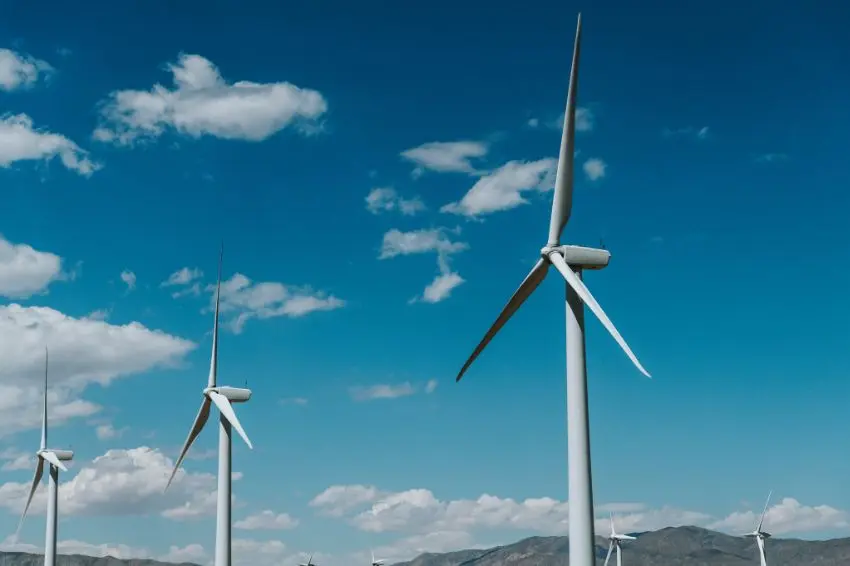
In Preá, Jericoacoara, on the coast of Ceará, and in much of the Brazilian Northeast, it has been blowing long before wind farms, kitesurfing, discussions about energy transition, or expressions like "blue economy" existed.
For decades, however, it was just wind. Landscape. Inconvenience. Weather condition. I remember a time, not so long ago, when talking about wind as a source of wealth caused bewilderment. The question was almost inevitable: wind for what?
Today it seems to belong to another world. But perhaps this age-old question reveals something profoundly relevant today: we don't always lack resources. Often we lack the ability to recognize them.
Having worked in organizational and human development for a long time, we see companies investing fortunes in technology without managing to change. We see others transforming their results almost without altering their assets, simply because they learned to think differently: mindset.
Change begins before technology. It begins with the mental model. Matteo Motterlini, Professor of Philosophy of Science in Milan, proposes in his latest book: "Unfreezing brains, not glaciers." There is something unsettling and true in that statement.
We've spent much of the debate about which model to choose for the future trying to figure out which machines, energy sources, laws, or investments might save us. All of that matters. But perhaps there's a prior step: are we capable of imagining a development model different from the one that brought us to this point?
Before changing the energy matrix, perhaps it's necessary to change the mental matrix. In the last edition of Where the Wind Takes You, we traveled approximately 2.500 kilometers between Salvador and São Luís by kitefoil. Over the sea, we didn't use gasoline to move forward. The fuel was everywhere. Invisible. Available.
Continuously renewed by nature itself. Traveling in this way alters one's perception of things. When one depends on the wind to move forward, one stops treating it as mere background noise. One learns to observe it, respect it, and, above all, understand it.
Along the northeastern coast, we also saw more and more wind farms dotting the horizon. We began to wonder if we are still looking at wind only as a way to produce electricity.
Perhaps that's not enough. For a long time, energy wealth meant searching for something hidden: drilling, extracting, transporting, refining, burning.
Now we have before us a wealth that arrives on its own, clean and unfiltered. Could the wind be a kind of new oil? The comparison is imperfect, of course. And perhaps that's precisely why it's interesting. Oil transformed entire economies because ports, industries, universities, professions, technologies, supply chains, and cities were built around it.
The value was never just in the barrel of oil. It was in the ecosystem built around it. It shouldn't be any different with wind energy. The next chapter for Brazilian wind energy cannot simply be about installing more turbines.
It needs to be transformed into development. Into technology. Into industry. Into knowledge. Into professional training. Into research. Into new businesses. Into tourism. Into sports.
Opportunities arise for those who live in the territories where this wealth is produced. Having an extraordinary resource is an advantage. Knowing how to build a society around that advantage is another matter.
In organizations, a single skill rarely transforms a company. It only becomes strategic when people, processes, decisions, and investments begin to organize around it. Having wind is not enough. A collective vision is necessary.
And perhaps vision is precisely the ability to connect what we do today with what we want to be in twenty or thirty years. This is where the discussion ceases to be merely "energetic".
It becomes a discussion about development. The Northeast can be just a place where energy is produced, or it can be one of the main sources of development to build its own next economy and well-being.
These are different choices. One transforms the territory into a resource provider. The other transforms the resource into knowledge, income, industry, and autonomy. This may be the great opportunity hidden within the wind.
And there is yet another dimension to this choice. For a long time, we have treated development and nature as opposing forces. On one side, preservation.
The Italian artist Michelangelo Pistoletto calls the possibility of overcoming this division the Third Paradise: a meeting point between nature and human intelligence, between what we receive from the planet and what we are capable of creating.
It's not about returning to an untouched nature and rejecting technology or development. Nor does it mean indefinitely repeating a model in which every natural resource must be exploited to its economic limit.
There is a third possibility. To create wealth without destroying the source of that wealth. To use technology to expand humanity's capacity to live within the planet's limitations, and not just to overcome them.
The wind is perhaps one of the best metaphors for this possibility. It moves without needing to be consumed. It produces value without disappearing.
Come back tomorrow. And the day after tomorrow. Perhaps we took so long to realize its importance precisely because it is invisible. But there are many invisible things that sustain a society. Trust. Knowledge. Culture. Vision. And the future.
The wind has always been there. For a long time, sailors and fishermen have known and made a living from it. Now we know. And that also changes our responsibility.
Because the question is no longer what we can do with the wind. The question is bigger: what kind of country are we capable of building from it? The future may not be buried waiting to be found. Perhaps it is blowing before us.
The opinions and information expressed are the sole responsibility of the author and do not necessarily represent the official position of the author. Canal Solar.

Comments
Comments are moderated before publication.Comments should be respectful and contribute to a healthy debate. Offensive comments may be removed. The opinions expressed here are those of the authors and do not necessarily reflect the views of the author. Canal Solar.