
With collaboration from Henrique Hein
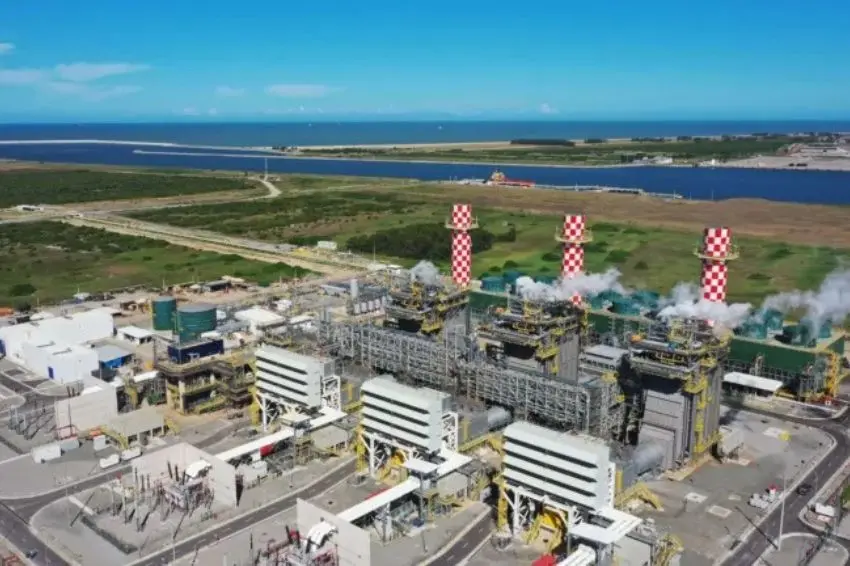
The Brazilian Ministry of Mines and Energy (MME) has authorized the GNA I and GNA II thermoelectric power plants, located in the Port of Açu, Rio de Janeiro, to export electricity to Argentina and Uruguay.
The measure is contained in Ordinance No. 3.262/2026, published in Official Gazette this Wednesday (11). According to the document, the export will be carried out in interruptible mode, that is, the supply may be interrupted according to the needs of the National Interconnected System (SIN).
The operations must also not increase costs for the Brazilian electricity sector or compromise security of supply. The two plants are part of the Açu Natural Gas (GNA) thermoelectric complex, which has an installed capacity of 3 GW.
GNA I has a capacity of 1,3 GW, while GNA II has approximately 1,7 GW. The export model follows guidelines defined by the government in October 2024, according to criteria from the National Electric System Operator (ONS).
Power generators have up to 10 business days to apply for membership in the Chamber of Electric Energy Commercialization (CCEE) and must submit monthly control reports to the National Electric Energy Agency (Aneel). Authorization may be revoked if the rules are violated or by government decision.
What happens now?
To begin shipments, companies need to fulfill various regulatory and contractual steps:
- For Uruguay: The operation is still dependent on authorization or a specific contract for the use of the Rivera and Melo converter stations, located on the border between the two countries.
- For Argentina: Although the ordinance does not mention the use of specific converters, companies need to formalize commercial contracts for the sale and use of the transmission system in the international interconnection, in addition to awaiting operational clearance from the ONS (National System Operator) for each dispatch.
all the content of Canal Solar is protected by copyright law, and partial or total reproduction of this site in any medium is expressly prohibited. If you are interested in collaborating or reusing part of our material, please contact us by email: redacao@canalsolar.com.br.
Comments
Comments are moderated before publication.Comments should be respectful and contribute to a healthy debate. Offensive comments may be removed. The opinions expressed here are those of the authors and do not necessarily reflect the views of the author. Canal Solar.