
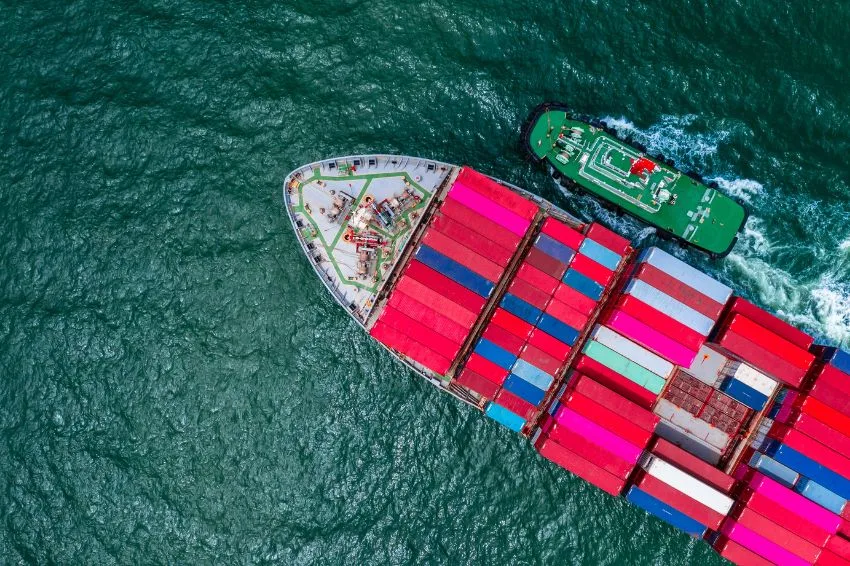
Logistics crises, international conflicts, and highly unpredictable trade routes have put significant pressure on import costs in the Brazilian solar sector. And as the market struggles to adapt, distributors and integrators face an increasingly difficult question: should they build inventory or risk shortages? Should they sign long-term contracts or continue with the on-demand model?
To better understand this scenario of uncertainty, the Canal Solar talked to Lívia Verjovsky, New Business Director at WM Trading, a company specializing in international trade. With extensive experience analyzing global freight behavior, the professional assesses the main factors impacting the logistics flow of the solar supply chain and identifies paths toward a more strategic sector that's less vulnerable to external shocks.
In the following interview, the executive discusses the influence of political conflicts, surtaxes, and exchange rate volatility, and explains how the sector needs to mature its risk management approach to imports to face the "new normal" in logistics.

How do you see the current state of the international freight market, and what are the main geopolitical and logistical factors impacting the segment?
The international freight market is historically volatile, but it becomes even more unpredictable when faced with extraordinary factors. Large-scale commercial shipping is concentrated in a few large players, which operate under a joint alliance regime and, in practice, intensify the sector's monopoly.
As a result, fleets are voluntarily shifting to more profitable routes, reducing supply in markets considered secondary. Geopolitical factors, such as the conflicts in the Middle East, the war between Russia and Ukraine, and the strategic use of passages like the Canal Suez Canal, directly impact the global logistics flow.
These events not only interfere with ship traffic but also alter the allocation of resources by companies, producing indirect effects on the trade balance of the affected countries. Unpredictability has become the norm, and logistical risk must be treated as a strategic component of international operations.
What are the direct consequences of this situation for the Brazilian solar sector's supply chain, especially with regard to the behavior of distributors and integrators?
Distributors and integrators face an extremely volatile environment, marked by severe uncertainty in product pricing. Exchange rate instability, dependence on imported components, and pressure from rising logistics costs make forecasting and strategic decisions difficult.
In this scenario, maintaining inventory is no longer an advantage but a significant risk, given that equipment prices can fluctuate negatively in the short term. As a result, many companies opt for leaner operations, prioritizing on-demand purchases and short-term contracts, which directly impacts supply chain fluidity.
How will this logistical pressure influence the sector's commercial dynamics in the coming months? Can we expect a contraction, contract renegotiation, or review of commercial strategies?
Logistical pressure, combined with the macroeconomic situation and government-imposed surtaxes, is likely to exacerbate a downturn in the solar market. Rising costs and increased regulatory uncertainty are leading companies to revise their commercial strategies, focusing on more conservative negotiations.
A review of current contracts is expected, with a greater incidence of renegotiations and a preference for tied sales (combination of equipment and services) and short-term operations, as a way to mitigate financial risks and preserve margins.
Given the difficulty in building inventory and the need to pass on costs, what impact will the final pricing of solar projects have? Could this slow the expansion of distributed generation in the second half of the year?
The expansion of distributed generation has already shown signs of slowing down, impacted by factors such as low energy prices on the free market and the mismatch between project returns and the risk incurred.
With the difficulty of building inventory and the constant need to pass on costs, solar project pricing becomes unstable. It's impossible to guarantee price validity over long periods, which compromises the financial predictability and viability of new projects.
This scenario creates a cycle of hesitation: investors question whether it's worth pursuing the project without fully understanding the costs involved and facing increasing regulatory risk. This leads to an even more restrained second half of the year in terms of new investments.
What do you believe the industry should learn or change structurally after this cycle of logistical stress? Are we facing a one-off moment or a deeper transformation in global supply chains?
The Brazilian solar sector needs to view this new cycle of logistical stress as a clear sign of a structural transformation in global supply chains. The volatility of international chartering has highlighted how a lack of preparation and market intelligence can make companies extremely vulnerable.
During the peak of demand for solar inputs, major shipping lines created specific routes for these cargoes, with differentiated rates and reallocation of vessels to meet this pressure—something that benefited only those prepared to keep up with these movements.
Few companies, like WM Trading, invested in structured international market analyses to understand and monitor the actual formation of average freight prices. Most operated based on a false sense of stability, which resulted in significant fragility when the situation worsened.
Although we are indeed facing a more profound transformation in supply chains, it is important to recognize that the market has already learned, to some extent, from this cycle of logistical stress.
Freight ups and downs will continue, whether due to geopolitical, climatic, or strategic factors—and this should be considered the new normal. However, it's important to emphasize that logistical challenges are far from being the main obstacle to the growth of the solar sector in Brazil.
The discussion goes far beyond this, encompassing regulatory issues, return on investment, energy competitiveness, and the maturity of the distributed generation model. The most important lesson, therefore, is that the sector needs to professionalize itself with a more strategic vision, integrating logistics into business planning and understanding that market challenges are multifaceted and not limited to transportation.
Considering the recent history of logistical shocks (pandemic, war in Ukraine, Red Sea), does the Brazilian solar sector need to improve its import risk management? How?
Without a doubt. The Brazilian solar sector still needs to substantially mature its import risk management. The succession of logistical shocks—the pandemic, the war in Ukraine, tensions in the Red Sea—has highlighted the fragility of many operators who have come to depend on a predictable scenario that no longer exists.
Risk management needs to move beyond reactive measures and become part of strategic planning. This includes creating more flexible pricing models, constantly monitoring international routes and policies, diversifying suppliers and logistics routes, and internalizing expertise on shipping company behavior.
Companies that simply followed market prices without developing their own analysis mechanisms were vulnerable to cost fluctuations. Maturity will come with the ability to read the global scenario in advance and make commercial and logistical decisions based on data, not assumptions.
all the content of Canal Solar is protected by copyright law, and partial or total reproduction of this site in any medium is expressly prohibited. If you are interested in collaborating or reusing part of our material, please contact us by email: redacao@canalsolar.com.br.

Comments
Comments are moderated before publication.Comments should be respectful and contribute to a healthy debate. Offensive comments may be removed. The opinions expressed here are those of the authors and do not necessarily reflect the views of the author. Canal Solar.