
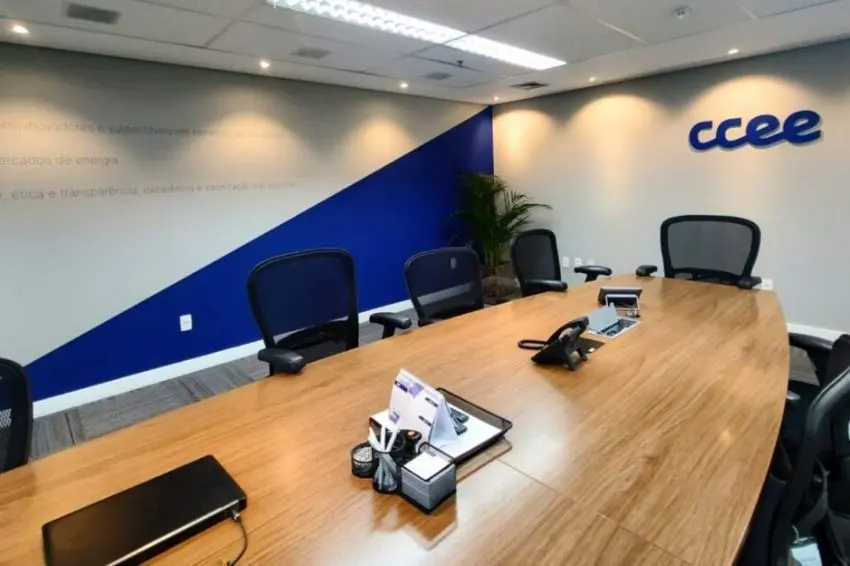
The Extraordinary General Assembly of CCCE (Chamber of Electric Energy Commercialization), convened for this Thursday (11), which would choose the new CEO of the entity, was postponed indefinitely due to the absence of a formal indication from the MME (Ministry of Mines and Energy) for the position.
Without compliance with this step stipulated in the Chamber's new governance rules, the electoral process ended up being interrupted even before reaching the voting stage for the agents.
The lack of a clear definition increases the uncertainty surrounding the leadership of the institution responsible for accounting and settlement in the Brazilian electricity market.
Although the assembly had already been convened, the new statutory model makes the holding of the election conditional upon prior receipt of the official nomination of the candidate by the Ministry of Mines and Energy and the completion of an independent analysis of integrity, reputation, and adherence to the requirements set forth in the entity's statute.
In a statement to its members, CCEE itself informed that the new date for the assembly will only be defined after these requirements are met, and must be announced at least five business days in advance.
New model
The postponement exposes, for the first time, the practical effects of the changes made to the Chamber's governance structure. Under the rules previously in place, the succession process had a different dynamic.
With the changes introduced in the bylaws, the appointment of the CEO became a formal prerogative of the Ministry of Mines and Energy (MME), with the members subsequently deciding on the name presented after the conclusion of the due diligence process conducted by a specialized consulting firm hired by CCEE itself.
This episode reinforces market expectations surrounding the selection of the Chamber's future leader, especially at a time marked by relevant discussions about modernizing the electricity sector, the evolution of the free market, and challenges related to energy pricing.
Interim position at CCEE
While there is no definitive successor, the trend is for the current interim management to continue. According to information circulating among industry agents and government interlocutors, Ricardo Simabuku is expected to remain in provisional command of CCEE indefinitely.
Simabuku assumed the presidency on an interim basis following the departure of Alexandre Ramos, who left the organization to take on the role of CEO at Cemig. The appointment was approved by the Chamber's Board of Directors as a temporary solution until the succession process is completed.
In addition to the still undefined effective presidency, one of the directorates created from the institution's new statute remains vacant, demonstrating that the implementation of CCEE's new governance architecture is still underway.
The market is waiting.
With no deadline for the formalization of the ministerial nomination, the agents are closely monitoring the developments of the process. The expectation is that, once the name is presented by the Ministry of Mines and Energy and the independent analysis foreseen in the statute is completed, the assembly will be convened again to deliberate on the choice of the new CEO.
Until then, Ricardo Simabuku's interim leadership is likely to ensure the administrative continuity of the Chamber, while the market awaits the government's next moves in a succession that, although initially treated as a mere formality, ended up revealing the complexity of the new governance model adopted.
all the content of Canal Solar is protected by copyright law, and partial or total reproduction of this site in any medium is expressly prohibited. If you are interested in collaborating or reusing part of our material, please contact us by email: redacao@canalsolar.com.br.