The CMSE (Electricity Sector Monitoring Committee) approved the early termination of contracts that will add 1,8 GW of capacity to the SIN (National Interconnected System) starting September 1, 2026.
The decision was taken this Wednesday (22), following recommendations from the ONS (National Electric System Operator), given the high probability of the El Niño phenomenon occurring in the second half of the year and the uncertainties related to the international geopolitical scenario.
Five contracts for projects that won the LRCE (Energy Reserve Capacity Auction) of 2022 and the LRCAP (Power Reserve Capacity Auction) of 2026 will be brought forward.
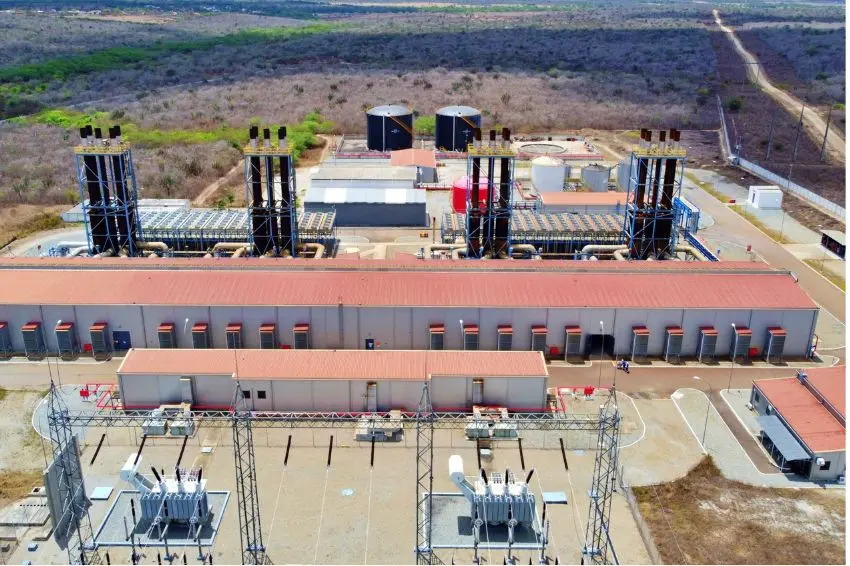
The selected power plants are Termomacaé, in Rio de Janeiro; Manaus I, in Amazonas; Termoceará Diesel, in Ceará; Três Lagoas, in Mato Grosso do Sul; and Araucária, in Paraná. Together, they will contribute to adding the projected 1,8 GW to the electrical system starting in September.
According to CMSE, the early commissioning of this capacity aims to reinforce the security of service to the electrical system throughout 2026 and into early 2027.
El Niño could increase energy demand
One of the factors that motivated the decision was the prospect of El Niño occurring in the coming months. A report issued by the ONS in July indicates a "high probability" of the phenomenon occurring in the second half of 2026.
Among the potential impacts on the electricity sector are a reduction in the availability of energy produced in the Northern region and an increase in system load due to higher temperatures.
With the heat, equipment such as air conditioners and refrigeration systems tend to be used more intensively, putting pressure on the demand for electricity, especially during peak consumption hours.
In this scenario, capacity reinforcement aims to expand the resources available to the ONS (National System Operator) to meet the system's peak demand periods.
Early payment compensates for the LRCAP 2026 deficit.
The addition of 1,8 GW is also related to the results of the LRCAP 2026, conducted in March. Based on sector planning studies, 4,2 GW was established as the power requirement to meet peak demand.
The auction, however, contracted 2,2 GW, given the lack of sufficient supply in the bidding process. According to CMSE, the early awarding of contracts aims to restore this structural balance, adding capacity to the system ahead of the originally planned deadline.
The measure is based on information from the PEN (Energy Operation Plan) 2025, subsequently updated in the 2026 version.
The geopolitical landscape also factored into the decision.
Another factor considered by the government was the uncertainty in the international fuel market caused by the current geopolitical scenario.
Fluctuations in the prices of these inputs can increase the operating costs of power plants used to meet periods of higher demand in the electrical system.
According to studies prepared by the MME (Ministry of Mines and Energy), the use of merchant plants, which operate without long-term contracts, to supply the load can cost at least 25% more than projects contracted in auctions.
Therefore, bringing forward the contracts also aims to reduce the need to resort to potentially more expensive alternatives to ensure that demand is met.
The process began in April of this year, when the Ministry of Mines and Energy (MME) consulted the winning projects of the LRCE 2022 and LRCAP 2026 programs about their interest and availability to bring forward the start of supply.
Power plants with a combined installed capacity of approximately 3,48 GW were consulted. Of this total, projects corresponding to approximately 2,38 GW expressed interest in early completion.
It was up to the ONS (National System Operator) to assess how much of this capacity would be needed to meet the operational needs of the system.
The final selection resulted in 1,8 GW of capacity that will begin to be provided starting in September, considering, according to CMSE, the compatibility of the projects with the requirements identified in the planning studies and the pursuit of the lowest tariff impact.
all the content of Canal Solar is protected by copyright law, and partial or total reproduction of this site in any medium is expressly prohibited. If you are interested in collaborating or reusing part of our material, please contact us by email: redacao@canalsolar.com.br.