
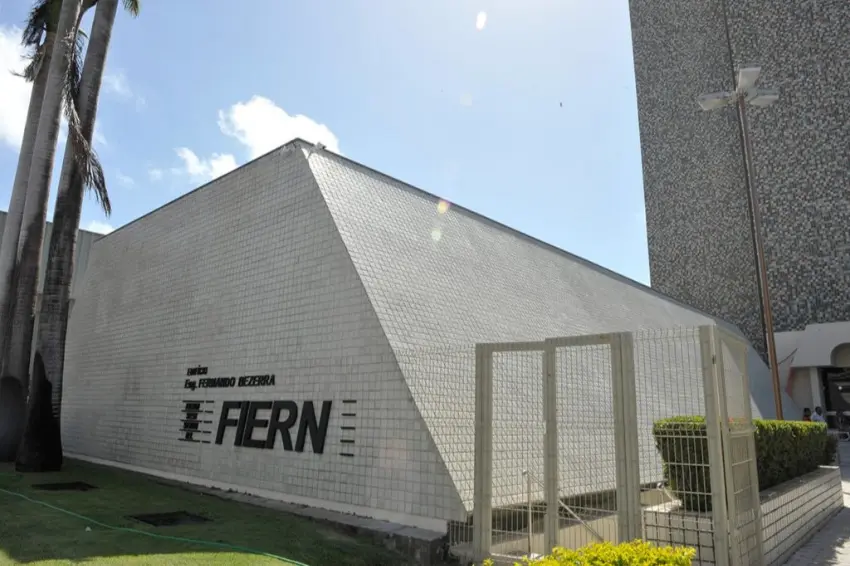
The energy storage industry is among the areas considered strategic by FIERN (Federation of Industries of the State of Rio Grande do Norte) to expand the state's participation in the energy transition value chain.
The proposal aims to attract battery and storage system factories, as well as stimulate large-scale projects. To this end, FIERN's agenda includes tax and infrastructure incentives, with one of its goals being to attract at least one pilot project on an industrial scale.
The strategy is part of the “Agenda Caminhos do RN 2027-2030”, developed by FIERN through the Observatório da Indústria Mais RN. The document was delivered to the candidates for Governor and Senate of Rio Grande do Norte during the Caminhos do RN Forum.
The move is taking place in a state that has 12,8 GW of installed wind power capacity and 6 GW of solar photovoltaic power capacity, according to data presented in the material.
Generation Information System Information ANEEL (National Electric Energy Agency), cited in Valid identity documentData also shows that Rio Grande do Norte has 319 wind farms in operation and another 17 under construction, in addition to 81 photovoltaic solar plants in operation and five under construction.
Despite the generation capacity, FIERN points out that harnessing this potential still faces limitations in energy distribution and the need to attract economic activities capable of consuming the production within the state itself.
Therefore, the agenda treats energy as an infrastructure for the development of other sectors and brings together proposals for transmission, solar power generation, offshore wind power, green hydrogen and ammonia, and energy storage.
According to the agenda, renewable energy production in the state may exceed the transmission network's capacity, with economic consequences for investors and difficulties in approving new projects.
To address the problem, FIERN proposes the coordinated expansion of transmission lines to keep pace with the generation from wind farms, as well as a more active role for the state government in unlocking the licenses and authorizations necessary for the projects.
The plan also includes the drafting and updating of CONEMA (State Environmental Council) resolutions related to licensing for the installation of wind and solar farms.
Specifically for the photovoltaic segment, the Federation advocates for improvements to the legal framework to regulate and ensure legal certainty for the centralized production of solar energy.
In wind energy, FIERN's target table considers a current installed capacity of 9,9 GW and a potential exceeding 30 GW. However, expansion is contingent on resolving the transmission bottleneck.
Offshore wind power also appears among the priorities. According to the document, there is currently no state regulatory framework for the activity, and the established direction is to approve this regulation in the short term.
Among the proposals is the redirection of the Caiçara do Norte Port to primarily serve the assembly, maintenance, and logistics activities of the offshore supply chain.
The agenda also includes encouraging the formation of an industrial complex linked to the sea and leveraging the state's natural assets for opportunities in the voluntary and regulated carbon credit markets.
The combination of renewable energy availability, offshore wind potential, and port infrastructure is also highlighted by FIERN as an opportunity to develop the green hydrogen supply chain.
The segment is currently classified as non-existent in the state. The agenda aims to attract anchor projects linked to the Caiçara do Norte Port.
To this end, the Federation proposes the creation of a specific state regulatory framework, the development of derived industrial chains, and the integration between ports, energy, and industry as a tool to attract investment.
In addition to the proposals, the agenda establishes directions for the development of the main energy chains. In wind power, the document starts from 9,9 GW of installed capacity and a potential exceeding 30 GW, conditioning expansion on the resolution of transmission limitations.
For offshore wind power, the intention is to move beyond the current lack of state regulation to the approval of a regulatory framework in the short term. In green hydrogen, the goal is to develop a supply chain currently considered non-existent by attracting anchor projects linked to the Caiçara do Norte Port.
all the content of Canal Solar is protected by copyright law, and partial or total reproduction of this site in any medium is expressly prohibited. If you are interested in collaborating or reusing part of our material, please contact us by email: redacao@canalsolar.com.br.

Comments
Comments are moderated before publication.Comments should be respectful and contribute to a healthy debate. Offensive comments may be removed. The opinions expressed here are those of the authors and do not necessarily reflect the views of the author. Canal Solar.