

The solar energy market in Latin America is undergoing a period of transition, marked by structural challenges such as curtailment and limitations in the electricity grid, while new technologies and energy demands are opening up significant opportunities for the sector.
In an interview, Claudio Loureiro, Country Manager of GCL in Brazil, details the company's operations in the region, analyzes the current market scenario, and points out paths for the sustainable development of the photovoltaic industry in the coming years.
How does GCL assess its current market share in the Latin American solar market?
GCL Systems Integration has been operating in the Latin American market for almost 10 years and has accumulated more than 1 GWp installed since 2017, with a strong presence in Brazil, both in distributed and centralized generation. Our modules are present in large-scale projects with consistent performance, frequently recognized in industry rankings and negotiated among major market players.
It is important to highlight that we are part of a group that also operates in the production of solar-grade silicon, being the second largest global manufacturer. We use proprietary FBR technology, which consumes approximately 75% less energy compared to the traditional Siemens process, resulting in a significantly smaller carbon footprint.
In addition to Brazil, we have a significant presence in countries such as Colombia and Mexico, as well as markets like Argentina, Chile, Peru, and the Caribbean. As a registered manufacturer among the top ten in the world by 2025, our focus is on the sustainability of the business in the financial, environmental, and social pillars.
And in the rest of Latin America, what are the highlights?
We are observing important developments in different regions. In the Southern Cone, Argentina is emerging as a potential market after the elimination of subsidies, while Chile may begin a new cycle of expansion for intermittent power plants with the adoption of storage systems.
In the Andean region, Colombia remains relevant despite regulatory challenges, and countries like Peru and Ecuador present opportunities, especially related to mining and high energy costs.
In Central America and the Caribbean, growth is expected, with Mexico potentially advancing more consistently and other markets beginning to adopt solar energy in a more structured way.
What are the main risks and opportunities for the sector currently?
Among the risks, the short-term trend of increased use of fossil fuels stands out, which increases dependence on imported commodities and their volatility. Furthermore, electrical systems are not yet prepared to handle the intermittency of renewable sources, resulting in significant energy waste and increased costs.
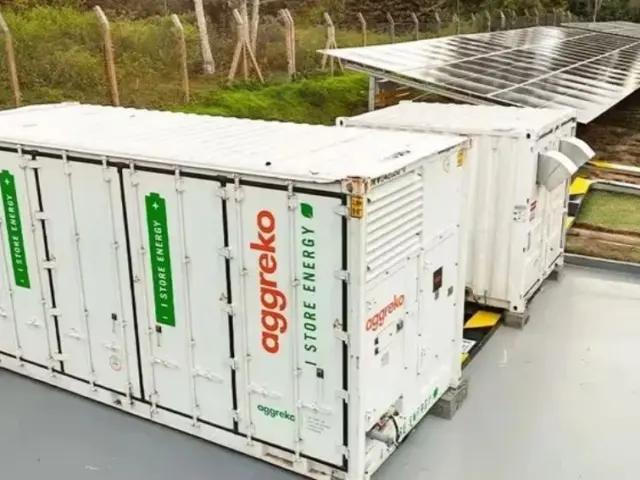
On the other hand, the main opportunity lies in the regulation of new technologies, especially storage systems. There is also a global trend of increased energy consumption, driven by factors such as the electrification of mobility, artificial intelligence, and the expansion of data centers.
How does GCL assess the future of the solar industry in light of this scenario?
The industry faces significant challenges related to excess production capacity. Today, there is a significant difference between the global installed capacity for module manufacturing and actual demand, which puts pressure on prices and margins.
This scenario should lead to the consolidation of the sector, with the exit of manufacturers that do not invest in research and development. At the same time, new technologies should drive the next phase of growth.
Among these, noteworthy developments include the evolution of TopCon cells, advancements in Back Contact solutions, and the development of technologies such as Perovskite Tandem, which promise to surpass the current efficiency limits of silicon cells.
In conclusion: which trend is still being underestimated by the market?
The sector still underestimates the speed at which energy demand will grow, especially with the advancement of artificial intelligence and data centers. This increase will require more robust energy planning and greater integration of technologies such as storage.
This has already been experienced in the past with conservative projections of solar energy, when capacity effectively doubled year after year. Unfortunately, without realistic planning, we will continue to face situations where clean energy is wasted while the cost to the end consumer increases, a scenario that can and should be avoided with more agile policies and decisions.
all the content of Canal Solar is protected by copyright law, and partial or total reproduction of this site in any medium is expressly prohibited. If you are interested in collaborating or reusing part of our material, please contact us by email: redacao@canalsolar.com.br.

Comments
Comments are moderated before publication.Comments should be respectful and contribute to a healthy debate. Offensive comments may be removed. The opinions expressed here are those of the authors and do not necessarily reflect the views of the author. Canal Solar.