
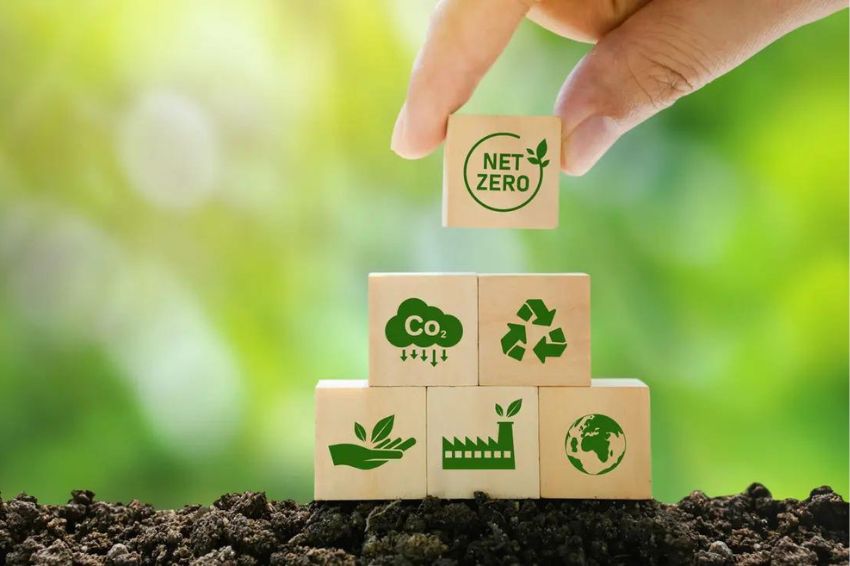
With the beginning of the activities of the new legislative year, expectations are growing that the National Congress will approve, still in the first half of 2023, the 528 / 21 Bill, which institutes the Brazilian Emissions Reduction Market (MBRE), regulating the purchase and sale of credits carbon in the country.
The creation of this market is provided for in the law that established the National Climate Change Policy (Law 12.187/09), and is a recommendation of the Kyoto Protocol, which aims to reduce greenhouse gases (GHG).
According to the PL, the carbon credit is a certificate that certifies and recognizes the reduction of GHG, responsible for global warming. According to the proposal, one credit is equivalent to one ton of these gases that are no longer released into the atmosphere, effectively creating a 'cap-and-trade' market, that is, whoever emits more than permitted needs to go to the sector to buy credits from those who emitted less than I could.
In May 2022, the federal government attempted to implement the carbon market in Brazil through Decree 11.075/22, establishing that, on a voluntary basis, sectors of the economy would present a plan to reduce greenhouse gas emissions. However, the initiative was considered insufficient.
To Rafael Guazelli, a lawyer specializing in Environmental Law and Agribusiness, it is extremely important that there is regulation to provide stability to investors in the carbon market.
“Without regulation, there is no certainty about how commercialization should be carried out, which taxes should be paid, which companies or rural producers will be able to commercialize the credit”, he assessed.
How to profit from marketing?
According to Guazelli, in general terms, the sale of carbon credits is simple. Individuals or companies that want to offset their own greenhouse gas emissions can purchase these credits through an intermediary or those that directly capture carbon. The entire process is certified by independent entities or those linked to the UN.
Companies can prepare and place carbon credits on the market. It is possible to generate credits from Reducing Emissions from Deforestation and Degradation (REDD) or Clean Development Mechanism (CDM) projects.
However, he stated that the preparation of these projects requires the hiring of environmental professionals to calculate the reduction of greenhouse gases generated by the institutions. Specialized consultancy may also be necessary to help with the commercialization of the asset, as there are still no clear rules.
Trading can be direct, but many trade at BM&FBOVESPA auctions and by investors in the RCE (Reduction Certificate of Emission) market.
“Carbon credit is defined in Brazil as a financial asset, it can be traded in the same way as cryptocurrencies, so its market value can jump depending on the situation. Carbon credit can also be negotiated directly between the buyer and the seller, without the need for intermediation on the stock exchange”, informed the expert.
Impact on agribusiness
In the lawyer's view, agriculture is one of the sectors that should be most impacted by the regulation of the carbon market due to the long chain it houses. The effects, positive or negative, will depend on the text of the law that will be approved in Congress and also on the environmental guidelines that will still be defined by the new government. Another alternative would be to exclude agriculture from the obligation to cut emissions, considering the essential nature of the activity, which is food production.
For Rafael Guazelli, regulation can be beneficial to rural producers, allowing them to acquire carbon credits with the intention of using them to increase their agricultural production.
“Regulation allows rural producers to sell carbon credits, encouraging them to mitigate carbon dioxide emissions. Therefore, regulation can make agriculture more sustainable without losing the possibility of increasing profits,” he explained.
Profitable business
According to a study by the Brazilian representation of the International Chamber of Commerce (ICC Brazil), carbon credit revenues could generate US$ 100 billion for Brazil by 2030. In the next decade, the country has the potential to supply up to 37,5% of demand global voluntary credit market up to 22% of market demand regulated by the United Nations (UN).
Currently, the European market accounts for around 90% of the sale of all carbon credits in the world. The main voluntary carbon markets are located in India (23,1 million tons of CO2 equivalent), the United States (14,4 MtCO2e) and China (10,2 MtCO2e). Brazil occupies only seventh place, with 4,6 mtCO2e.
“Brazil could become the largest seller of carbon credits in the world, with differentiation in relation to other countries due to the cost of the projects, the quality of the credits with a positive social impact and the multiplicity of sources for generating the credits”, concluded Guazelli.


Comments
Comments are moderated before publication.Comments should be respectful and contribute to a healthy debate. Offensive comments may be removed. The opinions expressed here are those of the authors and do not necessarily reflect the views of the author. Canal Solar.