

1. Introduction
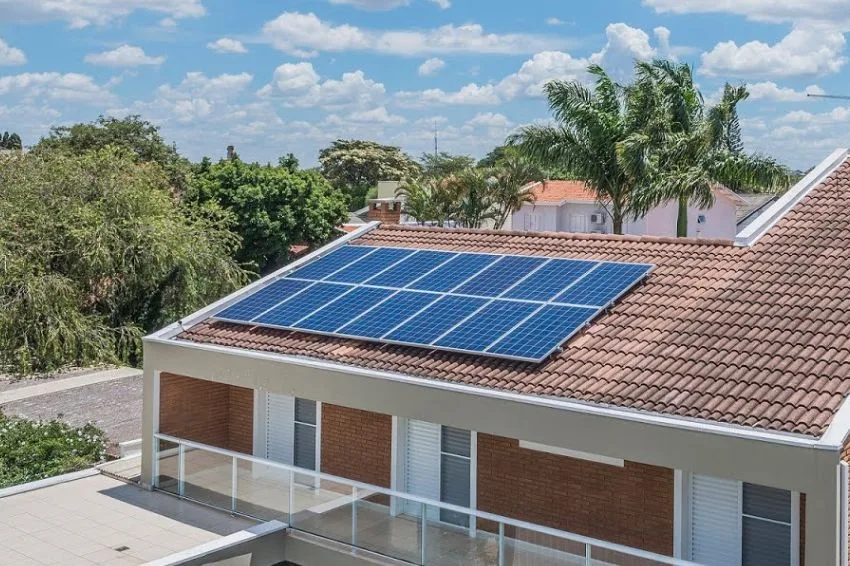
The growing expansion of microgeneration and distributed minigeneration in Brazil has imposed new interpretative challenges on Tax Law. The traditional model of the electricity sector, historically structured around a centralized logic of generation, transmission, distribution, and consumption, has begun to coexist with decentralized arrangements, in which consumers can also produce electricity, inject surpluses into the distribution network, and subsequently offset them through credits.
This new regulatory framework significantly alters the classic understanding of the relationship between consumer and distributor. In the conventional model, the consumer acquires electricity supplied entirely by the distributor or by a trading agent, depending on the contracting environment.
In the Electric Energy Compensation System (SCEE), however, part of the energy consumed can be offset by credits resulting from energy previously injected into the grid by the consumer unit itself or by a project linked to a regulatory modality permitted by law.
Law No. 14.300/2022 established the legal framework for distributed microgeneration and minigeneration, regulating the SCEE, the Social Renewable Energy Program, and the modalities of consumer participation in the compensation system.[1] A ANEEL, in turn, consolidated the rules for providing the public distribution service through Normative Resolution No. 1.000/2021, which was later amended to adapt to the legal framework for distributed generation.[2]
In this context, the central controversy of this study arises: should the electricity compensated under the SCEE (Brazilian Electricity Regulatory System) be included in the ICMS (Brazilian state sales tax) calculation base? The answer requires a joint analysis of the Federal Constitution, tax legislation, sector regulations, and the legal nature of energy credits.
The argument presented in this article is that compensated energy does not constitute a transaction related to the legal circulation of goods, and therefore should not be taxed under the I (Brazilian tax code).CMS.
Compensation does not represent the purchase and sale of energy, nor does it represent an onerous supply by the distributor for the portion deducted. It is a regulatory mechanism for matching injected active energy with consumed active energy, with economic effects limited to the SCEE environment.
The relevance of this discussion is evident. The improper application of ICMS (a Brazilian state tax) to compensated energy can compromise the economic rationality of distributed generation, artificially increase the cost of renewable projects, reduce the attractiveness of shared generation, and create legal uncertainty for consumers, investors, associations, cooperatives, consortia, and companies in the electricity sector.
2. The constitutional materiality of ICMS and electricity
ICMS has a constitutional basis in art. 155, II, of the Federal Constitution, which grants the States and the Federal District the power to establish a tax on transactions relating to the circulation of goods and on the provision of interstate, intermunicipal and communication transport services.[3]
Although electrical energy possesses unique physical characteristics, it is legally treated as a commodity for the purposes of ICMS (Brazilian state sales tax) incidence when used in a supply operation to the final consumer. However, this premise does not authorize the taxation of any electrical flow, technical measurement, or accounting entry. The essential element for the tax's materiality is the existence of a legal transaction involving the circulation of goods.
The circulation relevant for ICMS (Brazilian state sales tax) purposes is not the same as mere physical movement. It requires legal circulation, that is, a transfer of economic ownership or a commercial transaction capable of demonstrating contributory capacity. Thus, it is not enough for energy to physically transit through the distribution network. A taxable transaction is necessary.
In the traditional electricity supply model, the distributor supplies energy to the consumer and charges a corresponding tariff. In this case, there is a taxable transaction, since the consumer acquires electricity as a commodity. In the SCEE (Simplified Electricity Distribution System), however, the compensated portion does not result from full economic supply by the distributor, but from credits originating from energy previously injected into the distribution system.
This distinction is essential. ICMS (a Brazilian state tax) can be levied on the energy actually supplied and billed by the distributor. However, it cannot cover the portion that does not represent an economic acquisition of energy, but rather regulatory compensation.
The jurisprudence of the Superior Court of Justice reinforces, in different contexts, the need for a link between ICMS and energy actually consumed or supplied. Summary No. 391 of the STJ, for example, states that ICMS is levied on the value of the electricity tariff corresponding to the power demand actually used.[4] Even though the summary deals with contracted demand, its rationale shows that the taxation of electricity must observe the effective economic use of the taxable good.
On the other hand, STJ Repetitive Theme No. 986 established the understanding that TUSD and TUST are included in the ICMS tax base on electricity when billed as a charge paid directly by the end consumer.[5]
This precedent, however, does not resolve the controversy surrounding compensated energy. Topic 986 discusses the composition of the tax base in electricity supply operations; while the debate on the SCEE (Special System for the Commercialization of Electricity) involves a prior question: whether or not the compensated portion constitutes a taxable transaction.
Therefore, the discussion about including usage fees in the ICMS tax base should not be confused with the discussion about the very existence of a taxable event in compensated energy. These are distinct legal debates.
3. The electricity compensation system and the nature of the credits
The Electric Energy Compensation System is the mechanism by which the active energy injected by a consumer unit with distributed microgeneration or minigeneration is supplied to the local distributor and subsequently offset against the consumption of active electrical energy.[6]
Law No. 14.300/2022 consolidated this mechanism at the legal level, providing greater legal certainty to distributed microgeneration and minigeneration. The SCEE is not structured as an electricity trading system, but as a regulatory compensation regime.
The consumer-generator does not sell energy to the distributor and, for that simple reason, does not act as an energy trader. They inject active energy into the grid and receive credits in the form of energy, which are used to offset future consumption, in accordance with applicable regulatory rules.
The legal nature of these credits is essential for tax analysis. Energy credits are not currency, they are not available financial revenue, they are not an autonomous commodity, and they are not freely tradable. They are regulatory credits linked to the SCEE (Brazilian Electricity Regulatory System), with a specific purpose and use conditioned to the modalities foreseen in the legislation and regulations. ANEEL.
This point refutes the premise that compensated energy would be equivalent to a new supply operation by the distributor. When the consumer uses energy credits, the bill only records the reduction of a portion of consumption which, by virtue of the regulatory regime, should not be treated as energy economically supplied by the distributor.
The distributor continues to perform relevant functions: metering, billing, network availability, connection, operation of the distribution system, and application of tariff rules. These activities may give rise to their own charges, such as availability cost, contracted demand, tariff charges, or components provided for in Law No. 14.300/2022. However, the existence of these charges does not transform the compensated energy into a commodity sold again to the consumer.
Therefore, compensated energy has the nature of a regulatory abatement, not an onerous supply. The attempt to tax this portion through ICMS (Brazilian state sales tax) creates a fiction: it considers as a commercial transaction what, legally, is a credit offset.
4. Local self-consumption: non-incidence in its most evident form.
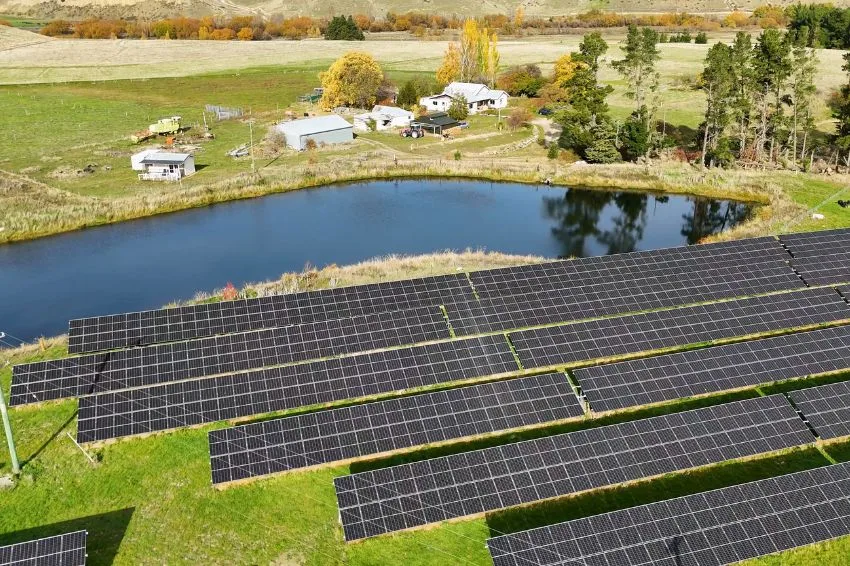
In local self-consumption, the consumer unit generates electricity at the same location where it consumes it. This is the simplest and most intuitive scenario of the SCEE (Sistema de Consumidor Eletrônica de Energia - Electricity Energy System). The consumer produces energy for themselves and, when there is a surplus, injects active energy into the distribution network, generating credits that are later used to offset the consumption of the same unit.
In this case, the absence of legal circulation of goods is evident. There is no alienation of energy to a third party, no purchase and sale between the consumer-generator and the distributor regarding the compensated portion, nor is there full economic supply by the concessionaire.
The distributor may charge, according to applicable regulations, the amounts due for network availability and other tariff components. However, the compensated energy does not correspond to the energy fully supplied by it. It corresponds to energy credits generated by the consumer themselves.
The application of ICMS (a Brazilian state tax) to this portion would, in practice, be equivalent to taxing self-consumption. The fact that the distribution network is used as compensation infrastructure does not alter the legal essence of the institution. The network enables the regulatory mechanism, but does not convert the compensated energy into a commodity subject to a new taxable transaction.
Thus, in local self-consumption, ICMS (a Brazilian state tax) should only be levied on the net energy actually supplied by the distributor, that is, on the portion not offset by credits regularly established in the SCEE (Brazilian Electricity Regulatory System).
5. Remote self-consumption: same ownership and absence of commercial transaction.
Remote self-consumption allows consumer units under the same ownership to use energy credits generated at a location different from the consumption site, provided that applicable legal and regulatory rules are observed. The difference compared to local self-consumption lies in the spatial displacement between the generating unit and the beneficiary unit.
This difference, however, does not alter the legal nature of the compensation. In remote self-consumption, the identity of the account holder remains. The credits arise from energy injected by a unit linked to the same consumer and are used to offset consumption of another unit under their ownership.
There is no sale of energy between consumer units. Nor is there full supply from the distributor on the compensated portion. Again, there is regulatory compensation for energy credits.
ICMS Agreement No. 16/2015 recognized the possibility of granting exemptions in internal operations related to the circulation of electricity subject to billing under the SCEE, covering compensation scenarios linked to the same ownership.[7] However, the analysis should not be limited to the agreement.
Exemption technically presupposes the existence of a taxable event subsequently dispensed with by a specific rule. Non-incidence, in turn, arises from the absence of the fact fitting within the constitutional materiality of the tax. In the case of compensated energy, especially in remote self-consumption, the strongest argument is that of non-incidence, since there is no autonomous commercial transaction on the deducted portion.
The agreement has practical and federal importance, but it should not be interpreted as creating tax liability. States and the Federal District cannot tax anything that does not fall within the constitutional competence of the ICMS (Tax on Circulation of Goods and Services). Therefore, even though the agreement plays a relevant role in administrative uniformity, the underlying principle remains constitutional.
6. Shared generation: complexity and permanence of the compensatory nature
Shared generation is the modality that presents the greatest legal and tax complexity. In this model, consumers come together through a consortium, cooperative, condominium, or civil association for the joint use of energy credits within the scope of the SCEE (Brazilian Electricity Regulatory System), as permitted by Law No. 14.300/2022 and the regulations of... ANEEL. [8]
The main tax objection to the non-incidence of ICMS (a Brazilian state tax) on shared generation stems from the plurality of owners. Since the credits can be allocated to consumer units belonging to different people, it is sometimes argued that there would be an economic circulation of energy between the generating enterprise and the beneficiary consumers.
This interpretation, however, requires caution. Shared generation, when properly structured, does not represent the sale of electricity by a private individual to an end consumer. What exists is a collective legal arrangement authorized by regulation, intended for joint participation in the SCEE (Brazilian Electricity Distribution System).
Consumers do not buy energy from the association, consortium, or cooperative as if they were acquiring energy from a trading company. They participate in a collective structure that enables the offsetting of credits.
The associative or consortium nature of the arrangement does not automatically transform the credits into a commodity. The credit remains a regulatory credit, linked to the SCEE (Brazilian Electricity Regulatory System), without full commercial autonomy. The compensated energy, in turn, remains as a consumption reduction, not as an onerous supply operation carried out by the distributor.
It is evident that poorly formulated contractual structures can generate risks. If the model is designed as a direct sale of electricity, priced per kWh, without regard for regulatory limitations and without adequate characterization of associative or consortium participation, there may be regulatory and tax challenges. However, this risk stems from the specific form of the legal transaction, not from shared generation itself.
When shared generation is structured within legal and regulatory limits, the compensated energy should receive the same legal and tax treatment as other forms of shared generation. The plurality of participants does not, in itself, create a legal circulation of goods. What matters is verifying whether there was a taxable commercial transaction. In the absence of such a transaction, there is no triggering event for ICMS (Brazilian state sales tax) on the compensated portion.
The opposite interpretation would produce an unjustified discriminatory effect. Local self-consumption and remote self-consumption would be exempt, while shared generation—an essential modality for democratizing access to renewable energy for consumers without their own land or individual investment capacity—would be more heavily burdened, even though subject to the same regulatory compensation system.
7. Exemption and non-incidence: a necessary distinction
The distinction between exemption and non-incidence is essential for a correct understanding of the subject. Exemption is a tax relief technique whereby the competent authority waives the payment of a tax that, in theory, would apply to a given event. Non-incidence, on the other hand, occurs when the event does not even fall under the constitutional and legal hypothesis of tax incidence.
In the case of compensated energy, the legal qualification of the tax exemption has relevant practical consequences. If the ICMS (Brazilian state sales tax) exemption is treated only as a tax waiver, it will be conditional on the existence, validity, adherence, and interpretation of state agreements and regulations.
However, if non-incidence is recognized, the conclusion will be more profound: the State does not have the constitutional competence to tax the compensated portion, because there is no transaction related to the legal circulation of goods.
ICMS Agreement No. 16/2015 is relevant, but limited. It authorizes the States and the Federal District to grant exemptions in internal operations related to the circulation of electricity subject to billing under the SCEE.[9] However, its text was constructed in a regulatory context prior to the legal framework for distributed generation and has its own limitations.
Furthermore, the agreement itself excludes certain components from the exemption, such as availability cost, reactive energy, power demand, connection charges or use of the distribution system and other amounts charged by the distributor.[10] These exclusions demonstrate that the agreement operates on the level of fiscal policy, not on the level of the constitutional definition of tax materiality.
The constitutional analysis remains autonomous. The agreement may recognize, harmonize, or facilitate the administrative application of the tax exemption. However, it cannot transform compensation into the legal circulation of goods. Nor can its absence or limitation authorize the taxation of a fact that does not fall within the constitutional hypothesis of the ICMS (Tax on Circulation of Goods and Services).
8. ICMS tax base and energy actually supplied
The tax base for a tax must be directly related to its triggering event. In the case of ICMS (Brazilian state sales tax), the tax base must reflect the value of the transaction related to the circulation of goods or the taxable service.
In conventional electricity supply, the transaction value corresponds to the supply made to the consumer, in accordance with applicable legal and jurisprudential rules. In the SCEE (Simplified Electricity Supply System), however, the electricity bill now records consumption, injection, credits, compensation, and billable balance.
The existence of these records does not mean that all energy measured in gross consumption has been economically supplied by the distributor.
Compensated energy should be excluded from the ICMS (Brazilian state sales tax) calculation base because it does not correspond to a paid supply operation. The taxable base should correspond to the net energy effectively supplied by the distributor, plus only the components that, according to applicable legislation and jurisprudence, validly integrate the taxable operation.
STJ Theme 986 does not alter this conclusion. Although it defined the inclusion of TUSD and TUST in the ICMS calculation base in certain situations, the precedent starts from the existence of an electricity supply operation.[11] In compensated energy, the debate is earlier and different: it questions whether there is a taxable operation on the compensated portion.
Therefore, the automatic application of Theme 986 to the SCEE would be technically inappropriate. The controversy regarding TUSD and TUST concerns the composition of the price of supplied energy; the controversy regarding compensated energy concerns the non-existence of onerous supply on the abated portion.
9. The non-incidence of ICMS on the TE and TUSD levied on compensated energy.
The discussion regarding the application of ICMS (a Brazilian state tax) in the Electric Energy Compensation System (SCEE) is not limited to the portion called Energy Tariff (TE). In many consumer bills for microgeneration or distributed minigeneration, the controversy also extends to the Tariff for Use of the Distribution System (TUSD), especially when the distributor calculates the tax on items related to compensated energy.
The issue must be addressed with methodological precision. Before discussing whether or not TE and TUSD are included in the ICMS tax base, it is necessary to answer a prior question: Is there a taxable transaction involving offset energy? If the answer is negative, as argued in this article, there is no legal basis to demand ICMS (a Brazilian sales tax) on either the TE (transfer tax) or the TUSD (transfer tax) corresponding to the compensated portion.
In conventional electricity supply, the TE (Energy Tariff) generally compensates for the energy consumed, while the TUSD (Distribution System Usage Tariff) relates to the use of the distribution system necessary to serve the consumer unit.
In ordinary supply operations, the Superior Court of Justice, in the judgment of Repetitive Theme No. 986, established the understanding that TUSD and TUST are included in the ICMS tax base when included in the invoice as a charge paid directly by the end consumer.
However, applying this precedent to the SCEE requires caution. Topic 986 stems from the existence of a taxable electricity supply operation to the end consumer. The controversy examined in that judgment concerned the composition of the ICMS tax base in an energy consumption relationship, that is, whether the costs of using transmission and distribution systems should be included in the value of the taxed operation.
In the case of compensated energy, the debate is prior to and different from the main issue. It's not just the economic composition of the energy supply that's being discussed, but the very existence of a legal transaction of goods concerning the compensated portion.
If the active energy previously injected by the consumer-generator is converted into credit and used to offset subsequent consumption, this portion does not represent a full costly supply by the distributor. This is a regulatory compensation mechanism, established by Law No. 14.300/2022 and operationalized within the framework of the regulations of... ANEEL.
Therefore, Topic 986 cannot be used as an automatic basis for taxing TE and TUSD on compensated energy. The precedent authorizes, in certain cases, the inclusion of TUSD and TUST in the ICMS tax base when there is a taxable electricity supply operation.
He does not claim that the energy offset in the SCEE constitutes a taxable event for ICMS, nor does he address the legal nature of the energy credits formed in the compensation system.
The distinction is fundamental. TE (Transmission System Charge) and TUSD (Transmission System Usage Tariff) can be included in the ICMS (Tax on Circulation of Goods and Services) calculation base when related to the energy effectively supplied by the distributor to the consumer. However, when linked to the portion offset by energy credits, there is no autonomous commercial transaction that justifies the tax being levied. One cannot tax the tariff composition of an operation that, legally, did not occur as a paid supply.
In the SCEE (System for Compensated Energy), compensated energy corresponds to the amount of active energy previously injected into the grid and subsequently deducted from the consumption of the beneficiary unit. Law No. 14.300/2022 establishes this system as a mechanism specific to distributed microgeneration and minigeneration, without equating it to the commercialization of electricity.
A ANEELIn turn, it presents micro and mini-distributed generation and the SCEE (Brazilian System for Energy Compensation) as regulatory instruments aimed at energy compensation, financial savings, socio-environmental awareness, and self-sustainability.
This regulatory framework prevents compensated energy from being treated as if it were energy entirely purchased from the distributor.
The distributor remains responsible for metering, billing, connection, network usage, and other regulated activities. However, these functions do not alter the nature of the compensated energy, which continues to be an energy credit used to offset consumption, and not a commodity sold again to the consumer.
For this reason, the non-incidence of ICMS should cover both the TE and TUSD corresponding to the compensated energy. TE cannot be taxed because there is no economic acquisition of the compensated energy; TUSD, in turn, cannot be taxed, in this specific portion, because its eventual regulatory charge associated with compensation does not transform the energy credit into a commodity circulation operation.
It is important to highlight that this conclusion does not mean that there will never be a tariff charge related to the use of the network in the SCEE. Law No. 14.300/2022 established transition rules and regulated the gradual collection of tariff components associated with the use of the distribution system, especially in relation to units covered by the new rules of the legal framework.
Tax controversy, however, is distinct from tariff controversy. The existence of a regulatory charge does not, in itself, authorize the application of ICMS (a Brazilian state tax) if there is no transaction related to the legal circulation of goods.
ICMS Agreement No. 16/2015 also contributes to understanding the topic, although it does not exhaust the analysis. The agreement authorizes the granting of exemptions in internal operations related to the circulation of electricity subject to billing in the SCEE (Brazilian Electricity Regulatory System).
However, its text establishes explicit limitations, excluding from the exemption, among other values, the cost of availability, reactive energy, power demand, connection charges or use of the distribution system, and other values charged by the distributor.
These limitations are frequently invoked to defend the application of ICMS (Brazilian state sales tax) to the TUSD (Transmission System Usage Tariff) of compensated energy. However, such an interpretation confuses two distinct levels: the level of exemption and the level of non-incidence. The fact that a certain component is not covered by the exemption of the agreement does not automatically mean that it is taxable. For ICMS to apply, the presence of a transaction related to the circulation of goods remains indispensable.
Thus, even if it is acknowledged that ICMS Agreement No. 16/2015 did not fully cover certain tariff components, this does not resolve the constitutional controversy. The absence of an express exemption does not create a taxable event.
The State can only demand ICMS (a Brazilian state tax) if there is a taxable event compatible with the tax's materiality. In the case of compensated energy, this materiality is not present, as there is no onerous supply from the distributor on the portion offset by energy credit.
The collection of ICMS (a Brazilian state tax) on the TUSD (Transmission System Usage Tariff) for compensated energy deserves even more specific criticism. The TUSD remunerates the use of the distribution infrastructure, but ICMS does not apply to the simple use of the electrical grid considered in isolation.
The tax applies to transactions related to the circulation of goods. In conventional supply, the Superior Court of Justice (STJ) understood that the TUSD (Transmission System Usage Tariff) is part of the final price of the electricity transaction, due to its inseparable relationship with the supply.
However, in compensated energy, the TUSD (Transmission System Usage Tariff) associated with the abated portion does not correspond to the price of energy supplied by the distributor. When required, it is a regulatory component for the use of the system, not a legal transaction of electricity.
Therefore, the reasoning must be reversed. One should not assume that all invoiced TUSD (Transmission System Usage Tariff) is automatically subject to ICMS (Tax on Circulation of Goods and Services) calculation. First, one must identify whether the TUSD is linked to a taxable energy supply operation or if it is associated with energy compensated in the SCEE (System of Energy Commercialization). Only in the first case will there be a legal basis for the tax to apply. In the second, taxation implies an undue expansion of the constitutional scope of ICMS.
The same reasoning applies to TE (Energy Transfer). If the TE corresponds to the net energy effectively supplied by the distributor and not offset by credits, there is a taxable transaction. However, if the TE is calculated on compensated energy, there is no economic acquisition of energy by the consumer, but a reduction resulting from a previously established energy credit.
Charging ICMS in this scenario would be equivalent to taxing energy that, from a regulatory standpoint, was produced by the consumer-generator themselves or by a collective structure regularly linked to the SCEE (Brazilian Electricity Regulatory System).
The conclusion, therefore, is that the non-incidence of ICMS (a Brazilian state tax) on compensated energy should cover the entirety of the compensated portion, including the tariff components of TE (energy transfer) and TUSD (distribution system) that are linked to this compensation.
Taxation is only legitimate on the energy actually supplied by the distributor, that is, on the net uncompensated balance, in accordance with applicable tax legislation and relevant judicial precedents.
This understanding preserves the coherence between the Constitution, tax legislation, and sector regulation. The SCEE (Brazilian Electricity Trading System) was not conceived as a commercial operation of buying and selling energy, but as a regulatory compensation system. The application of ICMS (Brazilian state sales tax) on TE (Energy Transfer Rate) and TUSD (Distribution System Usage Tariff) of compensated energy distorts this model, taxes a magnitude that does not reflect the legal circulation of goods, and compromises the economic and environmental purpose of distributed microgeneration and minigeneration.
10. Constitutional, regulatory, and economic impacts of taxing compensated energy.
Taxation of offset energy produces impacts that go beyond the individual relationship between consumer and tax authorities. It affects the legal security of the electricity sector, the economic attractiveness of distributed generation, and the coherence of public policies for energy transition.
Distributed generation is a relevant tool for diversifying the electricity matrix, reducing losses, decentralizing energy production, and increasing consumer participation in the electricity system. The very... ANEEL It presents micro and mini-distributed generation as a mechanism associated with the use of renewable sources, savings on energy bills and greater consumer autonomy.[12]
When the state taxes compensated energy, it reduces the economic benefit of the SCEE (Simplified Energy Commercialization System) and artificially alters the return on investment. This taxation can make certain projects unviable, especially those structured under shared generation, which often serve consumers without the technical or financial capacity to install their own generation.
Furthermore, the application of ICMS (a Brazilian state tax) to compensated energy can generate federal asymmetries. Since ICMS is a state tax, differing interpretations between states can result in distinct tax treatments for consumers subject to the same federal regulatory framework. This fragmentation compromises the sector's predictability and increases compliance costs.
From a constitutional perspective, the taxation of compensated energy also raises questions regarding the ability to pay. Compensation does not represent the economic acquisition of a new commodity, but rather the use of previously established regulatory credits. Taxing this portion means creating a tax burden on a quantity that does not correspond to price, revenue, or legal transaction.
Tax law must engage in dialogue with sector-specific regulation. The interpretation of the ICMS (Brazilian state sales tax) incidence hypothesis cannot ignore the legal nature of the SCEE (Brazilian state-owned electricity distribution system), otherwise the purpose of the legal framework for distributed generation would be undermined and the coherence of the legal system compromised.
11. Final considerations
The electricity compensated under the Electricity Compensation System should not be included in the ICMS (Brazilian state sales tax) calculation base. This conclusion stems from the very constitutional basis of the tax, which requires an operation related to the legal circulation of goods.
In local self-consumption, the non-incidence is evident, since the consumer offsets energy generated by themselves within the same consumer unit. In remote self-consumption, the spatial difference between generation and consumption does not alter the identity of the account holder nor transform the offsetting into a commercial transaction.
In shared generation, although there is a plurality of participants, compensation remains within its own regulatory framework, provided that the legal and regulatory limits of the SCEE (Brazilian Electricity Distribution System) are observed.
ICMS Agreement No. 16/2015 has practical relevance, but it does not constitute the sole basis for the tax exemption. The most appropriate argument is that of non-incidence, and not just exemption. Energy compensation does not represent an onerous supply by the distributor, nor an alienation of goods by the consumer-generator. It is a regulatory mechanism for offsetting the difference between injected active energy and consumed active energy.
The ICMS tax should be limited to the energy actually supplied by the distributor and not offset by regularly established credits. Taxing the offset portion unduly expands the scope of the tax, weakens legal certainty, compromises the economic viability of distributed generation, and creates an obstacle incompatible with the regulatory objectives of the legal framework for micro and mini distributed generation.
It is concluded, therefore, that the correct constitutional, regulatory, and tax interpretation leads to the recognition that ICMS (a Brazilian state tax) does not apply to electricity compensated under the SCEE (Brazilian state electricity distribution system), encompassing local self-consumption, remote self-consumption, and regularly structured shared generation.
References
[1] BRAZIL. Law No. 14.300, of January 6, 2022. Establishes the legal framework for distributed microgeneration and minigeneration, the Electric Energy Compensation System — SCEE and the Social Renewable Energy Program — PERS.
[2] ANEELNormative Resolution No. 1.000, of December 7, 2021. Establishes the Rules for the Provision of the Public Electricity Distribution Service. The resolution itself ANEEL It states that the regulation incorporates normative acts relating to the rights and duties of consumers and users of the public distribution service.
[3] BRAZIL. Constitution of the Federative Republic of Brazil of 1988, art. 155, II.
[4] SUPERIOR COURT OF JUSTICE. Summary No. 391: “ICMS is levied on the value of the electricity tariff corresponding to the power demand actually used”.
[5] SUPERIOR COURT OF JUSTICE. Repetitive Theme No. 986. The First Section of the STJ defined that TUSD and TUST are included in the calculation basis of ICMS on electricity when included in the bill as a charge paid directly by the end consumer.
[6] BRAZIL. Law No. 14.300/2022. The law establishes the legal framework for distributed microgeneration and minigeneration and the Electric Energy Compensation System.
[7] CONFAZ. ICMS Agreement No. 16, of April 22, 2015. Authorizes the granting of exemption in internal operations relating to the circulation of electric energy subject to billing under the Electric Energy Compensation System.
[8] BRAZIL. Law No. 14.300/2022, provisions relating to the modalities of participation in the SCEE, including shared generation, local self-consumption and remote self-consumption.
[9] CONFAZ. ICMS Agreement No. 16/2015.
[10] CONFAZ. ICMS Agreement No. 16/2015, clause one, §1, which establishes limits to the exemption, including exclusions relating to availability cost, reactive energy, power demand, connection charges or use of the distribution system and other amounts charged by the distributor.
[11] SUPERIOR COURT OF JUSTICE. Repetitive Theme No. 986.
[12] ANEELInstitutional portal about micro and mini distributed generation and distributed generation.
The opinions and information expressed are the sole responsibility of the author and do not necessarily represent the official position of the author. Canal Solar.


Answers of 7
A practical example was missing, because since they separated the TE and TUSD today, they don't refund the ICMS from the TUSD when offsetting solar energy. The correct thing would be for them to only charge the difference.
Perfect interpretation, supporting each point with coherent and consistent legal arguments and citations. One question: is there already a lawsuit in progress to determine where it does not apply?
About 5 years ago, I made a significant investment in energy generation by installing photovoltaic cells at my home. Today, I have approximately 20.000 kWh in accumulated credits that I cannot sell and will probably lose. Furthermore, I pay ICMS, PIS, and COFINS taxes on my monthly consumption, which is generated by myself – in other words, I don't buy it from anyone!
This is not fair taxation, it's expropriation, it's theft by the State!
Perfect, congratulations on the article.
Another point, perhaps even raised here but not understood by me, is that when I generate energy, the surplus goes to the utility company, and I pay for the transmission to send it there, and then I pay to receive it back, right? Because if I inject an amount X and don't use it within five years, I lose the credits, right? So I think it's unfair that I generate energy, the company receives payment for the transmission, and still keeps the energy used.
I think only the transmission fee for compensated energy should be charged, and not the bidirectional fee.
Please help me reverse this on my electricity bill because I always pay an absurd 590 reais per month in taxes on a 1500 kWh distributed generation system.
Great content!
Here we are charged ICMS (a Brazilian state tax), both by CELESC (the state electricity company) and by the energy cooperative.
How can I get a refund for what has already been paid and prevent further charges?