
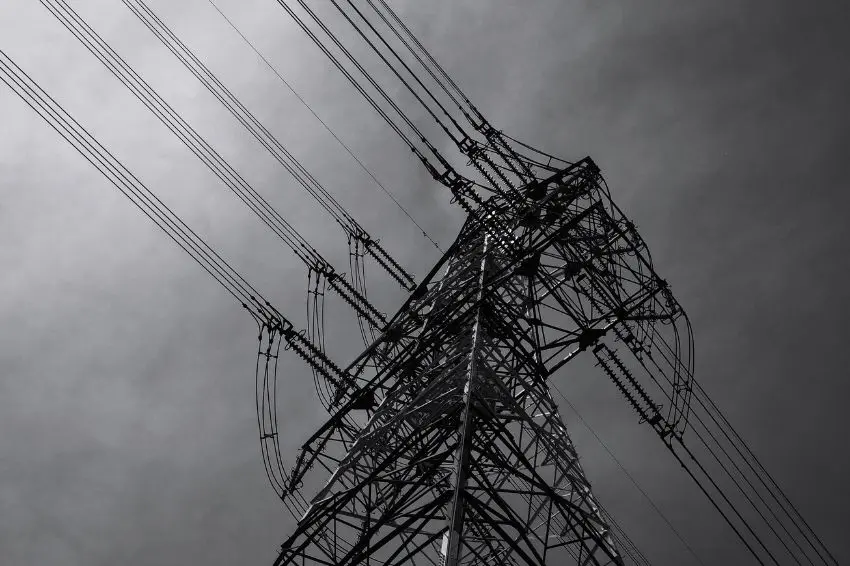
Transmission facilities in commercial operation in the country will have permitted annual revenues of R$ 54,95 billion in the 2026/2027 tariff cycle, a value 9,41% higher than that recorded in the previous period.
The amount was approved by ANEEL (National Electric Energy Agency) in the process that defined the TUST (Transmission System Usage Tariffs) in effect between July 1, 2026 and June 30, 2027.
The adjustment reflects the contractual update of the concessionaires' revenues, the expansion of the transmission network, and financial components incorporated into the regulatory calculation.
Despite the increase in compensation allocated to the segment, the ANEEL It is estimated that the average effect for end consumers served by distributors will be 1,1%, a percentage considered significantly lower than the growth observed in sector revenues. In total, the calculation involved 356 concession contracts belonging to 258 transmission companies.
Considering not only the revenue from facilities already in operation, but also financial components, the budget of the ONS (National System Operator) and projects planned to come online during the period, the total revenue from TUST considered in the tariff process increased from R$ 51,6 billion to R$ 56,5 billion, a rise of 9,3%.
Expansion drives revenue.
The growth in revenue for transmission companies is occurring within a context of continuous expansion of Brazil's electrical infrastructure.
In recent years, the transmission system has received successive investments to accommodate the advancement of renewable sources, especially wind and solar, as well as to allow the integration of new loads and reinforce the reliability of the SIN (National Interconnected System).
The increase in RAP (Annual Permitted Revenue) accompanies this movement by ensuring the remuneration of assets incorporated into the network and preserving the economic and financial balance of the concessions.
According to ANEELThe approved amounts guarantee the necessary resources for the operation and expansion of the transmission infrastructure, considered essential for the flow of energy produced in different regions of the country.
The regulatory agency also points out that transmission indicators have shown relative stability in real terms, that is, when the effects of inflation are taken into account.
The agency points to this behavior as a factor that helps reduce more abrupt fluctuations in tariffs associated with the use of the transmission network.
New stage of the location signal
In addition to defining revenues and tariffs, the 2026/2027 cycle marks another step forward in the implementation of the new location-based signaling methodology for TUST.
The model is currently in the fourth stage of a five-stage transition. In this phase, the calculation considers 60% weight for the regional scenario and 40% for the national scenario, increasing the influence of local electrical characteristics in defining transmission usage charges.
The proposal aims to bring tariff signals closer to the physical reality of the system, reflecting more clearly where there is greater availability of generation capacity and where pressures for network expansion are concentrated.
North and Northeast
The methodology points to ANEELIt seeks to create economic incentives associated with the location of the projects.
Regions with greater generation capacity, especially the North and Northeast, tend to show more favorable tariff signals for consumption. The expectation is that this will contribute to attracting energy-intensive activities to areas that already have ample energy supply and less need for additional transmission reinforcements.
Conversely, regions where demand puts more intense pressure on infrastructure expansion will receive signals commensurate with the additional costs imposed on the system. The goal is to encourage more efficient location decisions for both consumers and generation projects.
all the content of Canal Solar is protected by copyright law, and partial or total reproduction of this site in any medium is expressly prohibited. If you are interested in collaborating or reusing part of our material, please contact us by email: redacao@canalsolar.com.br.

Comments
Comments are moderated before publication.Comments should be respectful and contribute to a healthy debate. Offensive comments may be removed. The opinions expressed here are those of the authors and do not necessarily reflect the views of the author. Canal Solar.