

Brazil is experiencing a unique moment in its energy transition. Our electricity matrix is already predominantly renewable, but it faces the challenge of intermittent solar and wind power sources that depend on nature and vary according to the climate.
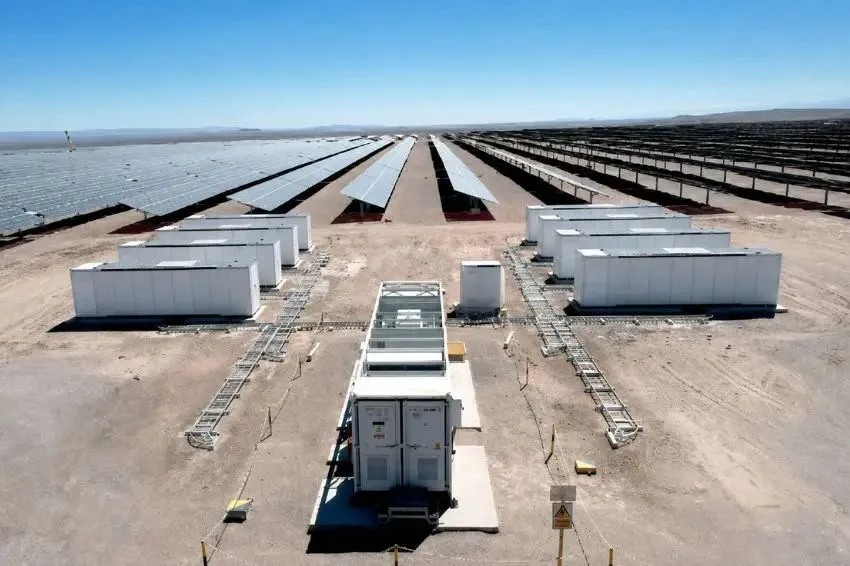
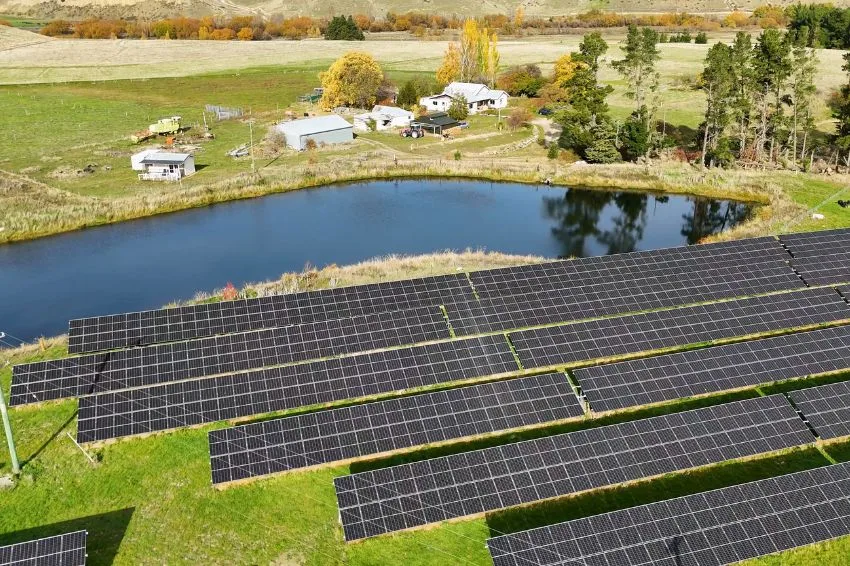
This characteristic, far from being a problem, is democratizing and decentralizing the sector: families, cooperatives, and small businesses can generate their own energy. What's missing is the link that makes this system reliable and constant: storage.
Today, the world depends on lithium-ion batteries. They are efficient, have high energy density and a long lifespan, but they carry serious limitations: high cost, dependence on scarce minerals concentrated in a few countries, and the risk of fires and explosions due to thermal runaway.
This is where the disruption comes in: sodium batteries. Cheaper, safer, and made from abundant raw materials, they can be developed in an aqueous medium, eliminating the specter of combustion.
Morgan Stanley's report, "Salt: The New Oil," signals that this technology has already entered the radar of the financial market.
And when the market, eager for trends and accurate predictions, begins to pay close attention, it's because the movement has ceased to be mere scientific speculation and has become a concrete possibility for economic and geopolitical transformation.
China is advancing rapidly, the United States and Europe are keeping pace, but what about Brazil? Will it be content to be a salt supplier or will it assume a leading role?
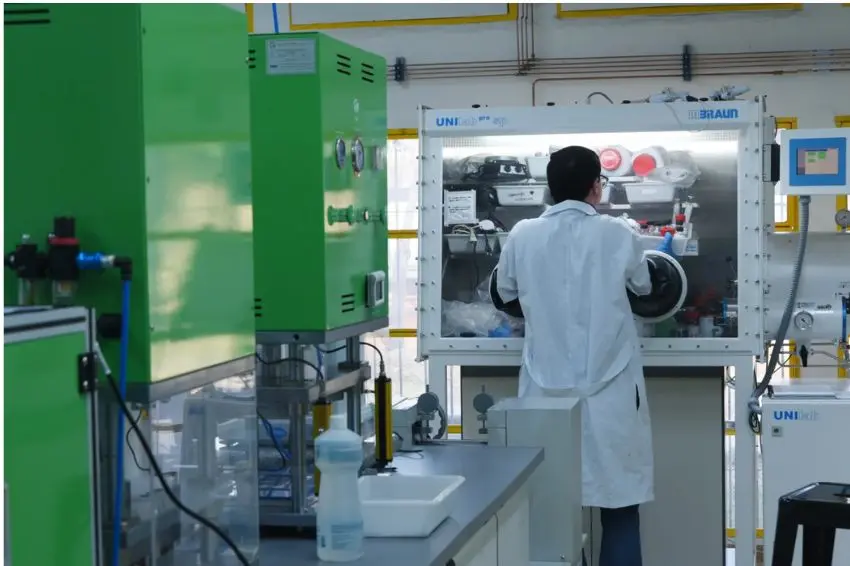
We cannot forget that Brazil has an academic tradition in this field. Researchers like Aldo José Gorgatti Zarbin, from UFPR, have been studying sodium-ion batteries for almost three decades. Their prototypes have already been featured on the cover of international scientific journals, showing that we have accumulated knowledge and the capacity for innovation. What is lacking is transforming research into public policy and industry.
Imagine if Brazil accelerated this field of research and developed a national battery designed for Brazilian homes. Each house could store solar or wind energy, reduce the risk of blackouts caused by extreme weather events, and even share surplus energy with those who cannot generate it.
This would prevent collapses in the economy and daily life, while empowering citizens. Consumers would become active producers, and entire communities could organize themselves into local energy networks.
This is the spirit of activism: to show that energy doesn't have to be centralized, expensive, or risky. It can be safe, accessible, and shared. Sodium could be the "new oil," but with a crucial difference: it's clean, abundant, and democratic. Brazil has the chance to lead this revolution, to show the world that it's possible to unite science, the market, and society around a sustainable future.
The question is inevitable: who is seeing this? The financial market has already noticed the geopolitical shift that's coming. But will Brazil be content to play a supporting role? Or will we take the lead, transform decades of academic research into industrial innovation, and lead the energy transition?
The opportunity lies before us. The salt that seasons our table can also be the salt that illuminates our future.
You may also be interested:
A new storage solution using sodium batteries will arrive on the Chinese market in September.
The opinions and information expressed are the sole responsibility of the author and do not necessarily represent the official position of the author. Canal Solar.

Answers of 3
Brazil is a country with many reserves of raw materials for industries, a wealth that could quickly bring Brazil to first-world parity and alleviate the burden of so many taxes on society.
The lack of investment, especially long-term investment, resulting from the absence of a public policy in the energy sector seems to be a clear fact.
Unfortunately, this is a typical stance of underdeveloped countries that suffer in this and other sectors from a political class that is almost always only concerned with its electoral and short-sighted interests.
I highlight the sad and irresponsible omission of the mainstream media in Brazil, which should be helping people realize how much the country loses and will lose due to the neglect that plagues this sector.
Meanwhile, the growth of distributed generation through clean and democratic sources is being stifled. This is yet another act of treason that compromises our future and will leave us further behind, especially when compared to so many other nations worldwide. Tragic…sad!
Leonardo Augusto A. Costa
Fiscal Auditor
In China, we already have vehicles with sodium batteries; now we need to develop this technology in Brazil.