
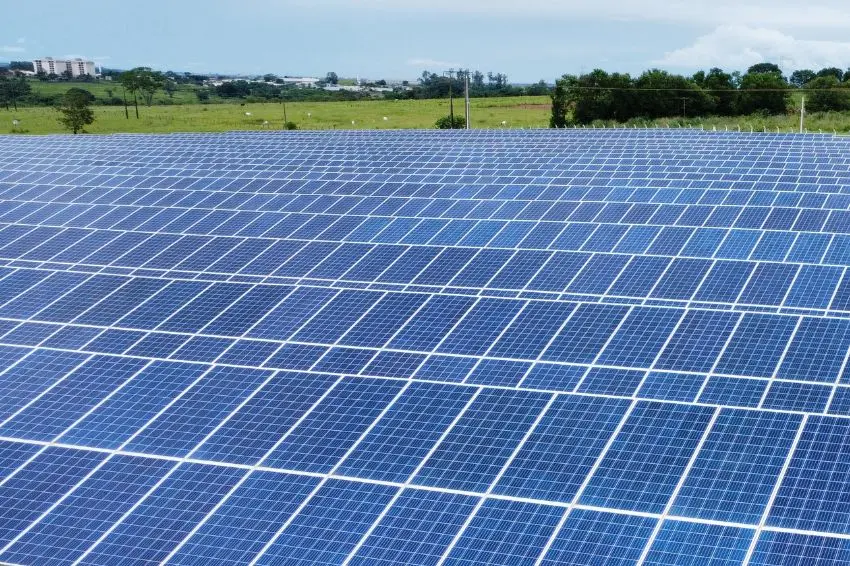
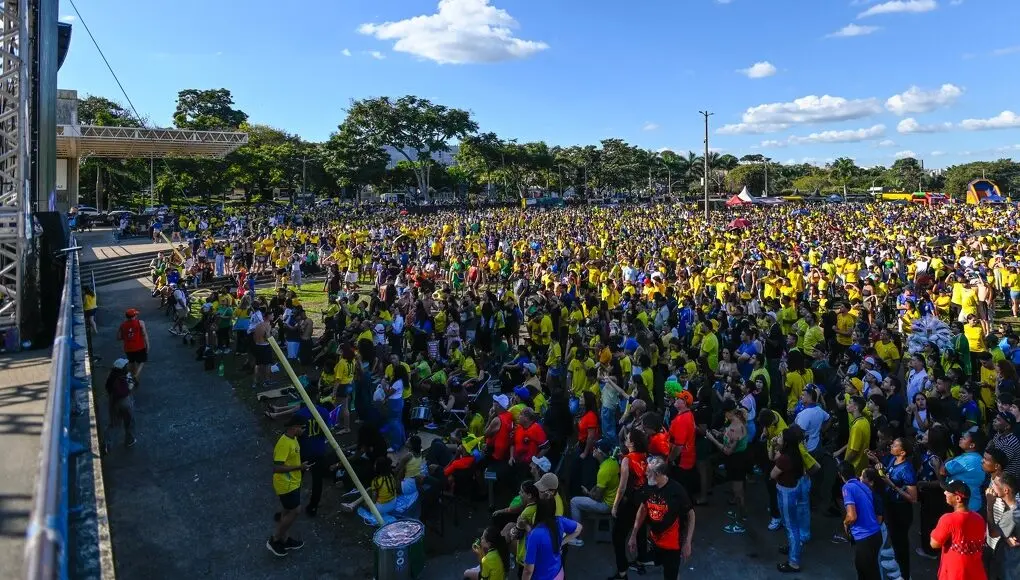
The strong mobilization of Brazilians to watch the match between Brazil and Japan, played this Monday (29) for the Round of 16 of the 2026 World Cup, led the ONS (National Electric System Operator) to restrict around 20 GW of renewable energy generation throughout the game.
According to the operator, the reduction was necessary due to the combination of low energy demand and high supply of renewable generation, in a scenario that would have increased the operational challenges for maintaining the system's balance.
"In this scenario, the objective of the reduction is to prevent risks to the stability of the National Interconnected System (SIN) and avoid the loss of controllability of the system, preserving the security and continuity of energy supply to society," ONS informed in a statement.
Since the start of the World Cup, the operation of the electrical system during the Brazilian national team's matches has required constant monitoring by the planning teams and control centers of the ONS (National System Operator).
This is because the sharp fluctuations in demand recorded before the start of matches, during halftime, and after the final whistle have required quick responses from the Operator to maintain the system's frequency and voltage within safe standards.
Specifically regarding the game against Japan, the ONS identified that, starting at 13 PM (one hour before the start of the match), the SIN (National Interconnected System) began a trajectory of load reduction that accumulated a drop of 8.641 MW until the end of the first half.
According to the operator, this movement occurred because millions of consumers and various segments of the economy simultaneously reduce or interrupt their activities to watch the match.
During halftime of the game, at 14:49 PM, a recovery of approximately 2.659 MW was recorded in just nine minutes. This behavior was attributed to the momentary resumption of domestic activities, such as the use of appliances, food preparation, and other electrical equipment.
After the match ended at 16:02 PM, a new surge in demand occurred, totaling 12.783 MW in about an hour, mirroring the gradual resumption of economic and domestic activities across the country.
According to the ONS (National System Operator), the volume was equivalent to the sum of the average demands of the states of Minas Gerais and Paraná. By around 18 PM, the system load had already returned to typical Monday behavior.
Brazil vs. Japan was no exception.
The behavior observed during Brazil vs. Japan mirrored the pattern seen in the Brazilian team's previous matches in this World Cup.
Our clashes against Morocco, Haiti e ScotlandONS also recorded sharp reductions in demand during the matches, followed by rapid recoveries at halftime and after the games ended, when millions of consumers simultaneously resumed domestic and economic activities.
The episode also occurs at a time of greater operational complexity for the Brazilian electrical system. In early June, the ONS had already determined Operational restrictions classified as Type III in renewable energy plants. to preserve the electrical and energy security of the SIN (National Interconnected System).
"We estimate that more people will be connected (in the final stages) during the World Cup, which could further increase the complexity of the operation," said the general director of ONS, Marcio Rea.
Type III Power Plants vs. Distributed Mills: Understand the differences and the ONS cuts.
all the content of Canal Solar is protected by copyright law, and partial or total reproduction of this site in any medium is expressly prohibited. If you are interested in collaborating or reusing part of our material, please contact us by email: redacao@canalsolar.com.br.