

1. The regulatory evolution of the White Tariff and the end of tariff inertia
1.1. The history of the voluntary (opt-in) model
The search for efficient economic signaling for consumers connected to low voltage in Brazil has deep roots, dating back to the conception of the old Yellow Tariff in 1985.
After a long period of maturation of discussions within the sector, the concept was reformulated and gave rise to the White Tariff through Normative Resolution No. 733/2016. ANEEL (National Electric Energy Agency) subsequently compiled into Normative Resolution No. 1.000/2021.
Conceived under the premise of reflecting the hourly costs associated with providing the transmission service in the distribution network (TUSD Transmission component), the White Tariff aimed to align charges with the stress that the consumption profile imposes on the infrastructure. However, the original model of spontaneous and voluntary adherence proved ineffective. By 2025, the modality had reached approximately 0,09% of the eligible market in terms of energy consumed.
This scenario is largely attributed to communication difficulties in engaging the end consumer and to the regulatory structure itself, as defined in Submodule 7.1 of the Tariff Regulation Procedures (Proret) at the time.
It is important to emphasize that the model was proposed in a technological context distinct from the current one, when the electrical grid did not yet possess the dynamics and bidirectionality provided today by distributed generation and storage systems. In that scenario, a simple tariff migration could generate advantages or disadvantages without there actually being a real change in consumer behavior.
To avoid opportunistic movements that could distort the price signal and to preserve the economic and financial balance of the concessions by seeking revenue neutrality, the regulator established the parameter. kzThis mechanism functioned as a system of checks and balances which, in the context of the time, was seen as a necessary safeguard for the stability of the sector.
However, in balancing the accounts, this protection mechanism ended up limiting the potential financial gains of the transition. As a consequence, the system hampered the very effectiveness of the economic signal it intended to create, undermining the main incentive for the user to actively change their consumption habits.
1.2. The “Duck Curve” and the new compulsory approach
The stagnation of the White Tariff clashed with the rapid transformation of the generation and load profile of the Brazilian electrical system. The exponential growth of distributed generation (DG) fueled the emergence of the so-called "Duck Curve," a systemic phenomenon characterized by a severe oversupply of solar energy in the middle of the day, followed by an abrupt ramp-up in demand and the need to activate thermal generation at nightfall.
It is essential to highlight that tariff modernization is not a sudden agenda item for Aneel. The regulator has been paving this path with structural debates since 2018 (in discussions about the two-part tariff in low voltage), going through the approval of... sandboxes tariffs in 2022 and, more recently, by Public Consultation No. 11/2023.
Given the urgency imposed by the "Duck Curve," what occurred was a strategic decision to anticipate the stages of this process. roadmap regulatory. Aneel has changed its stance towards an assertive induction of efficiency motivated by the confluence of three critical factors: the concrete results obtained in sandboxesThe maturing of the tariff modernization agenda and the urgent need to create real incentives for load modulation.
Through Joint Technical Note No. 8/2025 and the subsequent initiation of Public Consultation No. 046/2025, the Agency's technical superintendencies proposed an automatic and mandatory transition to hourly pricing, initially focused on large low-voltage consumers.
The proposed schedule foresees that, by the end of 2026, all consumers in subgroups B1 (residential), B2 (rural), and B3 (commercial and industrial) with monthly consumption equal to or greater than 1.000 kWh will be compulsorily included in the new time-of-use system. Although they represent only 2,5% of the total consumer units in the segment, this group accounts for a significant 25% of its total consumption.
The regulatory plan also proposes expanding the range of consumers covered starting in 2027, reducing the automatic cutoff for consumption above 600 kWh/month.
1.3. Marginal costs and the anatomy of usage profiles
To understand how Aneel's methodology transforms the relationship between users and the grid, it is imperative to delve into the engineering of tariffs. The tariff calculation model considers dozens of typical usage profiles, known as load curves, segregated by consumption classes, encompassing the commercial, industrial, residential, rural, public service, and public lighting sectors.
This analytical approach seeks to incorporate into the tariff calculation the sectoral specificities intrinsic to each segment, such as consumption habits, network usage patterns, and equipment ownership.
The true economic barometer of the system, however, emerges when this behavioral data is superimposed on the physical reality of the electrical infrastructure. The methodology establishes that, by cross-referencing typical usage profiles with the loads observed in the distribution networks, the regulator obtains hourly cost curves strictly associated with the provision of the transmission service.
The result of this cross-referencing reveals the so-called Marginal Capacity Costs, which estimate the exact economic impact that occurs at the system's margin: how much it costs to expand or reinforce the distribution network to meet the 1 kW increase in demand.
Within the tariff methodology based on these parameters, costs are translated into tariff components. These marginal capacity costs underpin and calibrate the value of the TUSD Transport component, acting as a kind of weighting factor between the voltage levels that distribute distribution and transmission costs.
They seek to ensure that the tariff accurately and technically reflects the real costs of service. By revealing the exact cost of each kilowatt required during peak hours, the methodology exposes the impact that the static profile – that is, the inertial and inflexible behavior of the traditional consumer, who uses energy without reacting to price signals – exerts on the distribution network.
Knowing how the distributor prices the expansion of its network hour by hour, a user equipped with automated management systems, analytical capabilities, and energy storage could actively shape their own load profile. With these technologies, they would exclusively operate during the lowest-cost tariff windows, benefiting themselves financially and contributing to optimizing network utilization and mitigating expansion costs.
1.4. Simulations of the reformulated tariff under the premise of behavioral inertia.
To understand the real impact of this modernization, the article The previous simulations showed that the constraints on the parameter were removed. kz and a "reformed" White Tariff was adopted, designed as a more direct reflection of marginal capacity costs of the networks.
In this approach, the containment mechanism associated with kz was replaced by the traditional method of revenue reconciliation, applied in an aggregated manner by voltage level. With this, the tariff signaling more accurately reflects the hourly costs of using the electrical infrastructure, highlighting and reducing cross-subsidies historically embedded in the conventional tariff, especially those in which low-voltage commercial and industrial consumers end up contributing to financing the network stress caused by the predominantly residential nighttime peak.
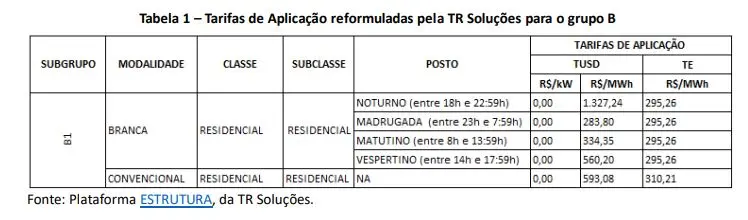
The hypothetical model tested by TR Soluções structured the pricing signal that would result in a reformulated White Tariff with four well-defined tariff periods:
- Post 1 (Early Morning – 23 PM to 07:59 AM): 90% reduction compared to the Conventional Transportation TUSD;
- Station 2 (Morning – 8:00 AM to 1:59 PM): 74% reduction;
- Station 3 (Afternoon – 14 PM to 17:59 PM): Transition zone with a slight reduction of 3%;
- Post 4 (Night Shift – 18 PM to 22:59 PM): a sudden increase of 240%.
Assuming a premise of absolute behavioral inertia —that is, assuming that consumers will strictly maintain their current load curves— simulations based on real concession data reveal a profoundly asymmetrical impact between consumption classes.
Subgroup B3 (commercial and industrial), whose activity occurs mostly during the daytime, benefits automatically and extensively: 85,1% of its consumers would obtain an average reduction of 23,1% in their Transportation TUSD bill without any routine changes.
Similarly, subgroup B2 (rural) shows a highly positive balance, with 73,9% of users capturing an average reduction of 22,0% due to already optimized profiles, such as night irrigation.
The major bottleneck lies in subgroup B1 (residential), which accounts for 65,4% of the analyzed market. Due to the strong concentration of demand in the early evening, driven not only by historical loads but, increasingly, by new consumption habits generated by the electrification of the economy, the behavioral inertia imposed by the reformulated White Tariff would penalize 53,5% of residential consumers. This scenario of passivity would generate a weighted average increase of 22,2% in the transportation bill for this contingent, which would push the overall average of subgroup B1 upwards by 8,0%.
1.5. Breaking inertia through technology
The projected results for the residential sector, however, are only valid under the static scenario of consumer passivity. The main thesis brought by the modernization of the electricity sector is that the imposition of a rigorous, transparent, and technically well-established price signal acts as the main catalyst for definitively breaking this behavioral inertia.
A clear example of this inducing force is the application tariff of R$ 1.622,50/MWh at Station 4 (Night shift – 18 PM to 22:59 PM) described in Table 1 — This value is not an official rate published by Aneel, but rather the result of a hypothetical reformulated White Tariff model defined by TR Soluções.
1.5.1. Feasibility of electric vehicles
Changes in consumption habits, coupled with the viability of new technologies, are significantly altering the user's relationship with the distribution network. The accelerated expansion of electromobility is the greatest exponent of this transformation: according to data from Association Brazilian Electric Vehicle Association (ABVE), sales of electrified vehicles grew ten times more than the automotive market as a whole in 2025, reaching the impressive mark of 224 units sold, with an even faster rate of adoption recorded at the beginning of 2026.
The introduction of battery electric vehicles (BEVs) or hybrids plug-in (PHEV), for example, adds a substantial load that can be entirely shifted to the early morning (Post 1), allowing a reduction of up to 90% in costs related to the energy transport component, for the specific case analyzed, of Cemig.
To ensure a comparison that accurately reflects operational reality, the cost analysis considered the following technical and tax parameters:
- Vehicle efficiency: Urban fuel efficiency of 6 km/kWh for electric vehicles, 12 km/l for gasoline-powered vehicles, and 8,5 km/l for ethanol-powered vehicles.
- Fuel costs: Market values of R$ 6,29/l for gasoline and R$ 4,21/l for ethanol.
- Effective cost of energy: Energy rates (Cemig) were calculated taking into account the following taxes: ICMS (18%), PIS/PASEP (1,25%) and COFINS (5,75%).
- Distance analyzed: Projected monthly mileage of 1.000 km, aiming to measure the financial impact.
Under this scenario, the difference in operating costs between combustion and electric engines is substantial. While monthly fuel expenses range from R$495 (ethanol) to R$524 (gasoline), electric vehicles have significantly lower costs. However, the effectiveness of these savings depends on consumption habits and the tariff method adopted.
- Standard cost (Conventional Rate): Under a fixed-cost energy tariff, regardless of the time of day, the monthly cost is R$ 197.
- Maximum optimization (White Tariff – early morning): Restricting vehicle charging to the hours of 23 PM to 8 AM reduces the monthly energy cost to R$ 126, which represents savings of approximately 76% compared to using gasoline.
- Critical scenario (White Tariff – nighttime): Charging during peak hours (between 18 PM and 22:59 PM) represents the most expensive tariff condition, raising the monthly cost to R$ 355.
It should be noted, however, that the magnitude of this economy has a markedly regional character due to Brazil's complex tax asymmetry. The calculation of the effective cost of energy, when incorporating 'internal' tax rates, varies significantly depending on the collection regulations and ICMS exemption rules in force in each state. The variation in the costs of liquid fuels also has implications for the economic advantages.
The analysis shows that managing the costs of electric vehicles with the adoption of the White Tariff depends directly on modulating charging habits. Planned charging during the early morning hours maximizes the vehicle's financial return, while maintaining the Conventional Tariff mitigates exposure to the high costs of peak hours.
In short, the microeconomic viability of electromobility becomes intrinsically linked to the consumer's discretion regarding their charging times.
From a network planner's perspective, the aggregate behavior of these electric vehicle fleets under different tariff incentives dictates the sustainability of distribution assets. Disorganized charging concentrated in the early evening overloads substations and local feeders that are already operating at their limit due to the traditional residential peak.
Therefore, the precise calibration of hourly slots in the White Tariff acts as an asset management tool that optimizes the utilization factor of existing infrastructure and postpones the need for investments in expanding transport capacity.
1.5.2. The role of storage in mitigating the Mandatory Tariff
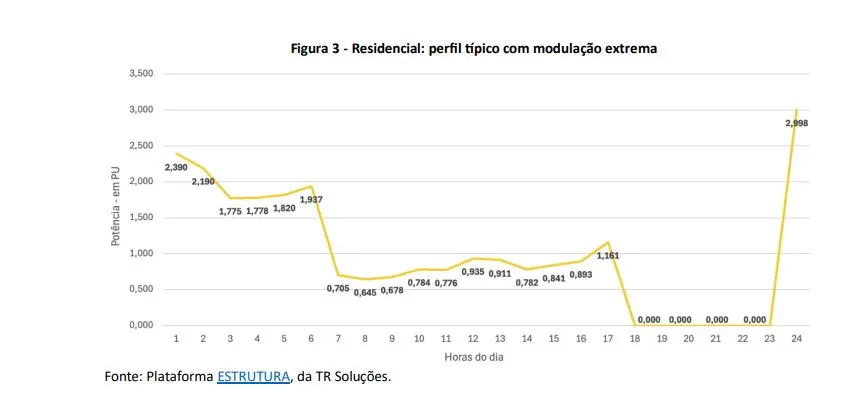
A figure 1 This presents one of the 15 typical residential load profiles used in defining Cemig's tariff structure in the 2023 tariff review. At the time, this profile represented approximately... 12% of residential consumption And, in a possible reformulation of the White Tariff along the lines envisioned by TR Soluções, this class would be subject to an increase of approximately 11% on the electricity bill.
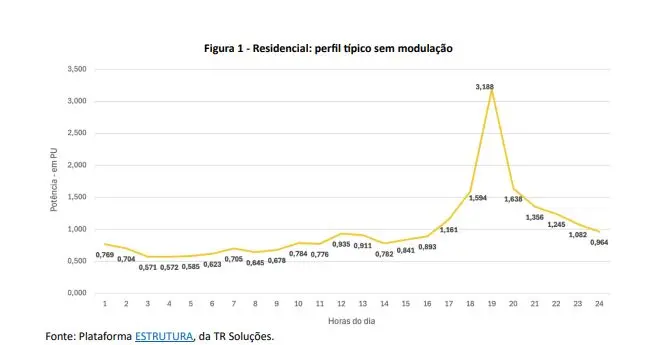
For a monthly consumption of 1.000 kWh with the typical profile shown in Figure 1, without load modulation, the mandatory migration to a reformulated White Tariff, as proposed by TR Soluções, would represent an increase in expenses, raising the monthly bill by R$ 141,24 and also to 1.374,83 BRLThis is because standard household usage concentrates a large portion (over 35%) during nighttime hours, and the high cost charged during this peak period completely absorbs any savings generated during the cheaper early morning hours.
Therefore, given the imminent mandatory compliance, consumers who maintain their original habits will face an inevitable increase in operating costs. Since altering the family's nighttime consumption routine is practically unfeasible, the definitive technical solution to mitigate this impact would be intelligent energy storage and load modulation.
Installing a battery bank combined with managing heavy loads allows for shifting consumption from peak hours to the early morning. To illustrate the financial impact of this strategy, two modulation scenarios were simulated in comparison to a non-modulated bill of R$ 1.374:
- Partial modulation (peak attenuation): In this scenario, the battery system and automation are configured to supply the house's demand only during the initial and most critical hours of the Night shift (from 18 PM to 20 PM), transferring the system's charging to the early morning hours. This maneuver generates direct savings of $ 299 monthly, (approximately R$ 600 annually compared to the reformulated White Tariff without load management).
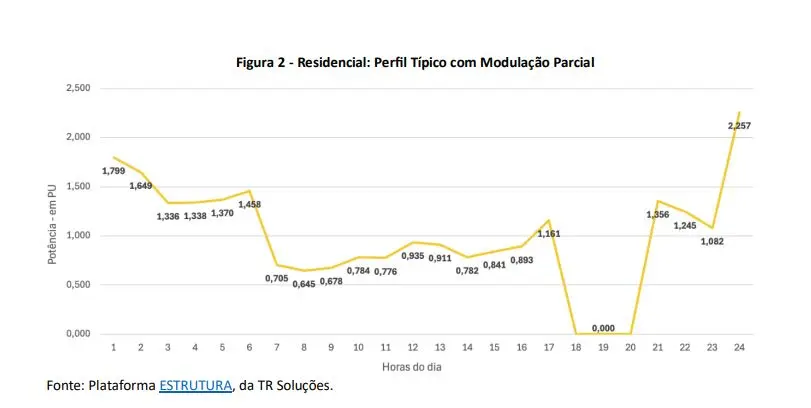
Extreme Modulation (total displacement of the night shift): This represents the highest level of efficiency. The battery bank and intelligent management would eliminate 100% of the utility grid consumption during the entire night shift (from 18 PM to 22:59 PM). The early morning hours would then account for almost 68% of the household's consumption. The result would be a reduction in the electricity bill. 865 BRLBy concentrating energy purchases during off-peak hours and completely avoiding peak hours, the system would provide significant savings. $ 509 monthly (more than R$ 6.100 annually) compared to the original bill for the revised White Tariff.
- Paybacks of storage systems
The main advantage of using energy storage systems for load modulation is the complete preservation of consumer comfort and convenience. Unlike rationing measures, battery-powered automation operates imperceptibly, guaranteeing energy supply while the system autonomously manages tariffs behind the scenes.
From a financial standpoint, the feasibility is highly attractive. To meet the demand of the extreme modulation scenario (which requires the storage of approximately 11,8 kWh per day for peak-hour use), a 15 kWh lithium-ion (LiFePO4) battery bank demands an estimated investment of R$ 20.000 — assuming an infrastructure already equipped with a hybrid inverter.
Given annual savings exceeding R$ 6.100, the return on investment (payback) occurs in approximately 3,5 years old. Since modern lithium modules have a lifespan exceeding 10 years (or 6.000 cycles), the equipment ensures more than six years of net return after its complete amortization.
However, despite the high initial financial attractiveness, a rigorous feasibility model must necessarily weigh the operational stress on the CAPEX and OPEX of the system. The adoption of an extreme modulation scenario, which requires deep daily load and discharge cycles to completely offset consumption at the Night station, accelerates the physical degradation of the storage cells.
Therefore, it is prudent for the prosumer to incorporate an annual capacity loss rate into their financial planning (“State of Health – SoH”) throughout the estimated lifespan of the equipment, in addition to forecasting costs for maintenance or eventual replacement of the hybrid inverter in this long-term horizon, ensuring that the projected profitability supports the operational reality of the technology.
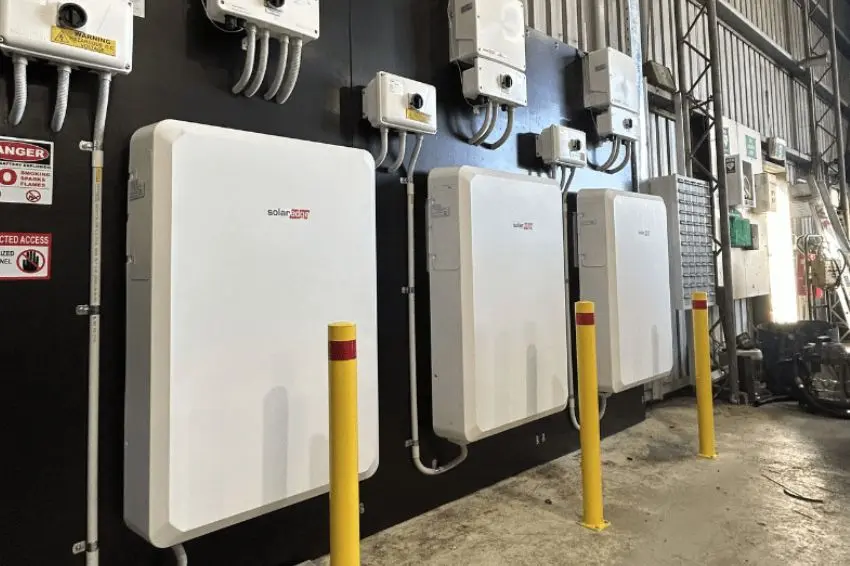
It is worth highlighting that, in addition to financial optimization, the adoption of this technology raises the quality standard of residential electrical installations by providing resilience against power outages. In the event of a public grid failure, the system acts immediately as a high-capacity uninterruptible power supply (UPS), keeping essential equipment and connectivity operational.
Additionally, hybrid inverters ensure a stabilized power supply, protecting household appliances against voltage fluctuations and grid surges, which extends the lifespan of the appliances and mitigates losses associated with the quality of power delivered by the distributor.
The adoption of the White Tariff finds its perfect complement in energy storage, generating a powerful economic synergy. Far from acting merely as a safeguard against grid failures, the technology is consolidating itself as an indispensable market tool to mitigate exposure to peak hours, ensure financial predictability, and expand residential autonomy.
In this way, the consumer ceases to be a passive element, conditioned by their typical consumption curve, and begins to act as an active agent in managing their own demand.
2. Batteries and the White Tariff: from perceived risk to regulatory liberalization
The intersection between the White Tariff and the strategic use of energy storage technology was the epicenter of one of the most intense debates in the 2nd phase of Aneel Public Consultation No. 39/2023 (CP 39). At the heart of the discussion was the right of access to the hourly tariff modality for low-voltage consumer units (Group B) equipped with co-located storage systems.
The trajectory of this debate perfectly illustrates the tension between the regulator's protective conservatism and the inevitability of the energy transition spearheaded by the prosumer.
2.1. The agency's apprehension and the denial of access
In the original draft submitted for public consultation, Aneel (Brazilian Electricity Regulatory Agency) proposed an express prohibition on joining the White Tariff for units with co-located batteries.
The Agency's technical rationale was based on the predictability of the system and the protection of the user. This is because the original tariff periods (peak and off-peak) were calibrated based on typical load curves, which do not account for the drastic and artificial profile change that a storage system generates.
The regulator's biggest fear was the risk of failure: if the equipment malfunctioned or performed below expectations precisely during peak hours, when energy is substantially more expensive, the consumer would suffer an increase in their bill.
Without sufficient time to adjust consumption manually, this abrupt fluctuation could, in the Agency's view, trigger a wave of dissatisfaction and complaints.
2.2. Innovation against regression
The proposed restriction was met with strong opposition and unanimously criticized by various entities in the electricity sector, such as ABEEólica, ABGD, ABSAE, Athon Energia, COGEN, edp, Bright Strategies, Among other things, market participants united to classify the measure as a serious regulatory setback, basing their defense of the liberalization on the following pillars:
- Maximizing systemic benefits: The essence and main purpose of the White Tariff is to encourage a shift in consumption to periods of lower demand. Combining it with energy storage maximizes this objective, allowing consumers to purchase energy at off-peak (cheap) locations for their own consumption or to inject energy into their systems during peak hours.
- Immediate relief for the network.This operational flexibility drains consumption during critical periods of high stress. This behavior relieves the National Interconnected System (SIN) and directly postpones investments in network reinforcements and expansion.
- Inconsistency and lack of justification.The entities pointed out that the ban was proposed arbitrarily, without having been submitted to a prior Regulatory Impact Analysis (RIA) and without specific technical justification.
- Stifling innovationRestricting access to this modality would directly discourage the implementation of clean and flexible technologies in residential, commercial, and industrial environments. The prohibition would put the Brazilian market at odds with global megatrends in energy transition.
2.3. Technological neutrality and risk-taking
Given the robust technical basis of the contributions received, Aneel demonstrated institutional maturity by reassessing the issue and reversing its original position. Its final decision recognized that the systemic benefits provided by active consumption management far outweigh initial concerns.
By opening up access, the regulator embraced the principle of technological neutrality and paved the way for the structuring of much more sophisticated markets in low voltage, such as demand response programs, the creation of virtual power plants (Virtual Power Plant – VPP) and the future provision of ancillary services.
However, the liberalization consolidated a new paradigm of responsibility. Aneel made it clear that state oversight has limits: consumers who choose to use the White Tariff with batteries assume all the risks inherent in operating their equipment.
If the system fails during peak hours, the consumer will bear the financial burden of the increased tariff. This is a fair trade-off for modernization: the freedom to manage one's own demand and mitigate system costs requires planning, proper maintenance, and risk management on the part of the new consumer.
3. Tariff asymmetry and the SAE as a major equalizer
The transition to the White Tariff exposes an inherent vulnerability for consumers benefiting from distributed generation. While distributed generation has democratized access to clean energy, time-of-use pricing introduces a severe financial obstacle for these systems.
In this scenario, SAE can consolidate itself as a viable market solution, as well as a vector for the maturation of more sophisticated business models that add benefits for both prosumers and the system.
3.1. Time mismatch and adjustment factor (energy value loss)
The traditional model of distributed solar energy generation, whether local or remote, suffers from a timing mismatch with respect to periods of peak system stress. The plant injects its maximum volume of energy into the grid during the day, a period that coincides with the Off-Peak hours of the White Tariff.
The problem arises when the consumer unit linked to the distributed generation network uses this energy at night, usually during peak hours, which are characterized by substantially higher costs.
Under current compensation rules, energy is not simply exchanged on a "one-to-one" basis when energy is compensated at a time different from when it was injected. The regulation requires that the discount be based on the economic relationship between the Energy Tariffs of the tariff periods (Peak TE / Off-Peak TE).
The technical discussions raised during CP 39 indicated that, historically, this adjustment factor has varied on average between 1,6 and 2,1 in Brazil. In practice, this creates a considerable financial asymmetry. The consumer needs to generate and inject approximately 2 kWh of solar energy into the grid during the day to offset just 1 kWh of their consumption during peak nighttime hours..
The result is a massive loss of efficiency in compensation, drastically reducing the attractiveness and financial return on investment in local and remote power plants for customers subject to hourly tariffs.
3.2. SAE colocated in the cargo: arbitrage and tariff protection
To circumvent this penalty imposed by the adjustment factor, the introduction of a co-located energy storage system at the consumer unit acts as the perfect shield. Storage resolves the inefficiency of the time mismatch by allowing the consumer to arbitrate the use of energy.
The operational strategy becomes simple and highly profitable:
- Loading (Off-Peak): The consumer programs their battery to charge during the day, absorbing energy from the solar power plant. Since this consumption occurs during off-peak hours, it is offset at an ideal 1:1 ratio by the credits generated simultaneously by their solar power plant.
- Unloading (Tip): When the system enters peak hours and the fare reaches its highest price, the consumer starts to supplement their internal power using the battery.
With this maneuver, and depending on the system's dimensions, the consumer can zero out their grid consumption during peak hours, protecting themselves against energy "discounts." The SAE (System for Energy Acceleration) maximizes the value of solar credits, ensuring that all generated energy is used at its maximum economic efficiency, without the losses imposed by conversion between tariff periods.
3.3. SAE in generation: the inversion of market logic
The potential of storage expands even further when considering its installation directly at the remote MMGD plant. This alternative, widely advocated by industry stakeholders, avoids losses and reverses the adjustment factor rule in favor of the consumer.
By linking batteries to the generation site, the entrepreneur can store solar energy production throughout the day, intentionally injecting it into the grid during peak hours. Under this configuration, regulatory asymmetry acts as a lever for benefits:
- Credit multiplication: Since the injection occurs during the period when the Energy Tariff (ET) is most expensive, each 1 kWh injected during peak hours becomes worth much more, generating multiplied credits to be used at other times.
- Exponential descent: These "valued" credits could offset a significantly larger volume of consumption during off-peak periods for the various beneficiary units of the consortium or cooperative.
To illustrate this mechanism, imagine a scenario where the TE values in A4 and BT are those highlighted in the following tables:
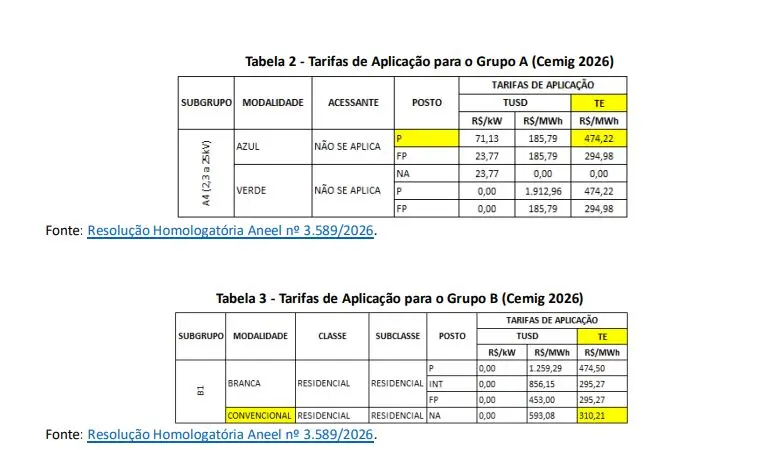
By installing a co-located SAE (Solar Energy Storage System) at the power plant in A4, the battery stores the solar energy generated during the day and the intentionally injects data into the network during peak hours.At this point, the injection becomes valued according to the adjustment factor rules, which are based on the Energy Tariffs (TE) of the beneficiary unit itself. Thus, the market logic is reversed in favor of the consumer subject to the hourly tariff (White Tariff):
- The adjustment factor becomes a "premium". The ratio (TE Ponta Branca / TE Fora de Ponta Branca) is 474,50 / 295,27, resulting in an adjustment factor of 1,61.
- Each 1 kWh Energy stored and injected by the A4 plant during peak hours is converted into sufficient credit to offset 1,61 kWh of daytime consumption (Off-Peak) in Low Voltage units.
If the low-voltage consumer is subject to the Conventional Tariff, the regulation establishes that the energy injected during peak hours will be treated at a 1-to-1 ratio, without the application of the hourly adjustment factor.
In addition to the clear economic advantage, this strategy provides an important service to the National Interconnected System (SIN). The concentrated injection of energy during peak hours relieves the distribution and transmission network infrastructure precisely when it is most needed, mitigating the harmful effects of the "Duck Curve" and reducing the risk of nighttime overloads.
Furthermore, it is precisely this type of demand response that makes it possible to mitigate the need to contract reserve capacity to meet the power requirements of the SIN (National Interconnected System).
In short, whether by protecting the end consumer at the point of consumption or by multiplying credits at the point of generation, storage systems establish the physical infrastructure necessary to enable demand response mechanisms.
As already discussed in article previous Published by TR Soluções regarding the escalating costs of the Power Charge for Capacity Reserve (ERCAP), whose projections for 2032 point to a peak in sectoral revenue of R$ 53 billion resulting from power auctions, equipping the consumer with predictive capacity and active load modulation transforms the passive user into a strategic agent for stabilizing the National Interconnected System (SIN).
Energy storage, coupled with efficient tariff signals, proves to be the missing piece in the White Tariff puzzle, converting a readjustment risk into a tool for tariff moderation and systemic efficiency.
Despite its undeniable benefits, it is imperative that market participants recognize that tariff arbitrage in remote generation (A4) carries a latent regulatory risk. Historically, Aneel has acted to curb mechanisms that it interprets as purely financial arbitrage, especially if the economies of scale provided by storage begin to translate into an unforeseen drain on the compensation accounts of distributors.
As the use of batteries for the intentional multiplication of peak-hour credits gains massive commercial traction, it is highly likely that this 'reversal of logic' will face severe scrutiny in upcoming tariff review cycles or in future updates to Regulatory Resolution No. 1.000/2021.
Therefore, investors in remote power plants should structure their business models anticipating not only legal safeguards, but also regulatory stress scenarios that consider potential changes in adjustment factors and hourly injection rules.
4. Conclusion
The imminent mandatory transition to the White Tariff represents a watershed moment in the Brazilian electricity sector, definitively ending the era of tariff inertia for large low-voltage consumers. While this regulatory change imposes a financial burden on traditional consumption profiles and exposes the timing mismatch of distributed generation time (DGT), it also opens a window of opportunity for active demand management.
As demonstrated, the adoption of flexible technologies acts as the main catalyst for this new reality. The strategic modulation of large loads, such as shifting electric vehicle charging to the early morning hours, highlights the ability to drastically reduce charging costs by directly benefiting from the price signals of the transportation component.
However, it is the integration of Energy Storage Systems (ESS) – represented in the market mainly by battery systems (BESS) – that promotes the true disruption in the sector's business models.
From a systemic point of view, the benefits of this break in behavioral inertia extend beyond the boundaries of individual cost reduction for large low-voltage consumers. By attenuating load ramps and flattening system demand peaks, the aggregate use of distributed batteries acts as a... decentralized resource for operational flexibility and security.
This advancement directly reduces the need for the granting authority to allocate more expensive resources during critical moments or to hold capacity reserve auctions for power generation purposes, the costs of which are in the billions and are shared by all users.
More than relying on complex regulations regarding the equipment installed behind the meter (behind the meterThe consolidation of price signals that stimulate tariff arbitrage and intelligent demand management, enabled by a mandatory White Tariff aligned with real costs, appears to be the most feasible and immediate alternative to relieve the sectoral burdens that currently weigh on the national electricity matrix.
Batteries are becoming the major regulatory equalizer. Whether located at the load to shield consumers from high peak-hour costs, or installed in remote generating plants to promote arbitrage of the adjustment factor by converting energy discounts into economic gains in compensation, storage reverses market logic in favor of the investor.
Ultimately, the SAE (System for Energy Management) ceases to be a niche technology or a mere contingency mechanism and establishes itself as the foundation of the economic viability of the modern prosumer. More than ensuring profitability, predictability, and financial independence, the strategic integration of batteries and load modulation provides an essential service to the stability of the National Interconnected System, relieving infrastructure stress during peak hours and enabling a more efficient, intelligent, and resilient energy transition.
The opinions and information expressed are the sole responsibility of the author and do not necessarily represent the official position of the author. Canal Solar.





An answer
Excellent content...very enlightening, Paulo.
This new horizon of integration with SAE is reshaping the market and naturally selecting and consolidating companies in the sector that are always focused on offering efficient solutions, in contrast to those that are just riding a fleeting wave. We have already been experiencing this new era and are excited about what is yet to come.