
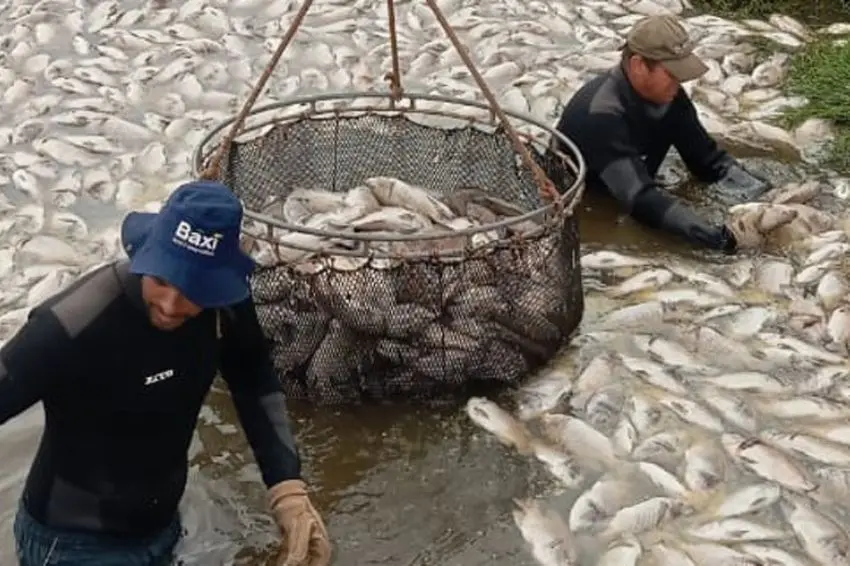
Fish farmers in Paraná are facing problems with interruptions and fluctuations in the electricity supply, which compromise the operation of equipment essential to the activity and cause financial losses.
In fish farming, electricity is essential for powering aerators and other equipment responsible for oxygenating the water. When there are power outages, these systems may stop working, jeopardizing the survival of the fish and the performance of the production.
One of the most serious cases occurred in São João do Ivaí, in the north of the state, where approximately 450 fish, equivalent to 230 tons, died on a rural property after a power outage.
According to information released by FAEP (Federation of Agriculture of the State of Paraná), the supply to the property was interrupted on September 29th and only restored the following day, about 23 hours later.
During this period, the generator used to keep the equipment running also experienced problems. The equipment suffered a malfunction that damaged two starter motors and the automation board, resulting in a repair cost of R$ 20.
Without the aerators functioning properly, producer Edilson Pini, his wife, and two employees tried to maintain oxygenation in the ponds through alternative means, including the use of granulated oxygen. However, these measures were not enough to prevent the animals' deaths.
The property, which has been involved in fish farming for about 40 years, produces 800 tons of fish per year, distributed across 15 ponds. The loss compromises the production forecast for the next four months and jeopardizes commercial contracts, including the supply of fish for school meals in 22 municipalities in Paraná state. losses totaling R$ 2,5 million.
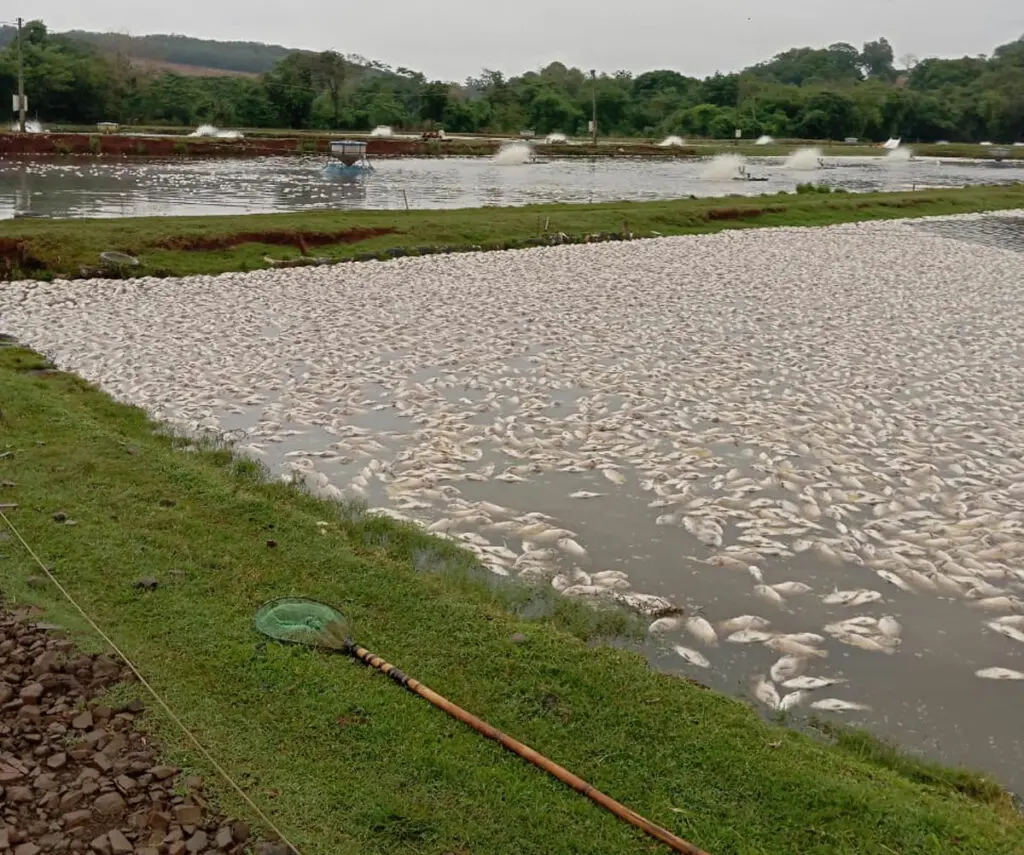
The problem affects other producers.
The problem, however, is not limited to São João do Ivaí, according to FAEP. The organization reports difficulties faced by fish farmers in different regions of Paraná, including prolonged interruptions and frequent voltage fluctuations.
In the Marechal Cândido Rondon region, for example, producers report variations in supply, mainly in the late afternoon and early evening. In these situations, the voltage can drop without a complete interruption, preventing the automatic activation of generators.
Furthermore, protective devices can block the aerators from starting to prevent damage to the motors, compromising the oxygenation of the tanks. According to the entity, the problems also increase production costs due to diesel consumption, generator maintenance, and wear and tear on electrical equipment.
“When the power fails, the fish suffer from low water oxygenation. With low oxygen levels, the outcome of the cycle is compromised: daily weight gain decreases, and the fish remain in the tanks for more days before being delivered,” explains Edio Chapla, president of the Aquaculture Technical Committee of the FAEP System.
According to the official, who is also a fish farmer, there are many reports of producers experiencing difficulties due to the deficient supply of electricity throughout the state.
“This causes problems that go beyond the economic aspect. It has an impact on the psychological side. The producer lives with the anxiety of not knowing if the generator will come on, if the equipment will turn on, and having to chase after this power supply. It's torture,” Chapla emphasized.
Batteries as an alternative
Among the technologies that can reduce the impacts of power outages are battery energy storage systems (BESS), capable of storing electricity for use during grid failures.
In fish farming, these systems can power essential equipment, such as aerators and pumps, for specific periods, depending on the required power and installed storage capacity. Batteries can also work in conjunction with photovoltaic systems and diesel generators, allowing for different backup power supply configurations.
Autonomy depends on system sizing, equipment power consumption, and the duration of interruptions. To maintain operation during faults or voltage fluctuations, appropriate control, protection, and power transfer devices are also necessary.
What does Copel say?
In a statement sent to the press, Copel reported that the storms recorded on September 29th affected the power supply to 173,7 consumer units in Paraná. In São João do Ivaí and neighboring municipalities, the distributor recorded 385 incidents related to the issue.
According to the company, after being contacted by the customer on the afternoon of September 29th, five teams were mobilized to respond to the incident. The work involved rebuilding sections of the power grid damaged by broken cables, damaged poles, and fallen branches on the distribution lines.
The distributor further added that, between September and the beginning of October, Paraná recorded five consecutive high-intensity weather events within a 35-day period, causing damage to the electrical infrastructure in different regions.
Copel also stated that it maintains investments in the distribution network and a contingency plan with preventive actions, real-time monitoring, and measures to restore power supplies in the region.
The Plano Safra program will now finance energy storage systems in rural areas.
all the content of Canal Solar is protected by copyright law, and partial or total reproduction of this site in any medium is expressly prohibited. If you are interested in collaborating or reusing part of our material, please contact us by email: redacao@canalsolar.com.br.


Comments
Comments are moderated before publication.Comments should be respectful and contribute to a healthy debate. Offensive comments may be removed. The opinions expressed here are those of the authors and do not necessarily reflect the views of the author. Canal Solar.