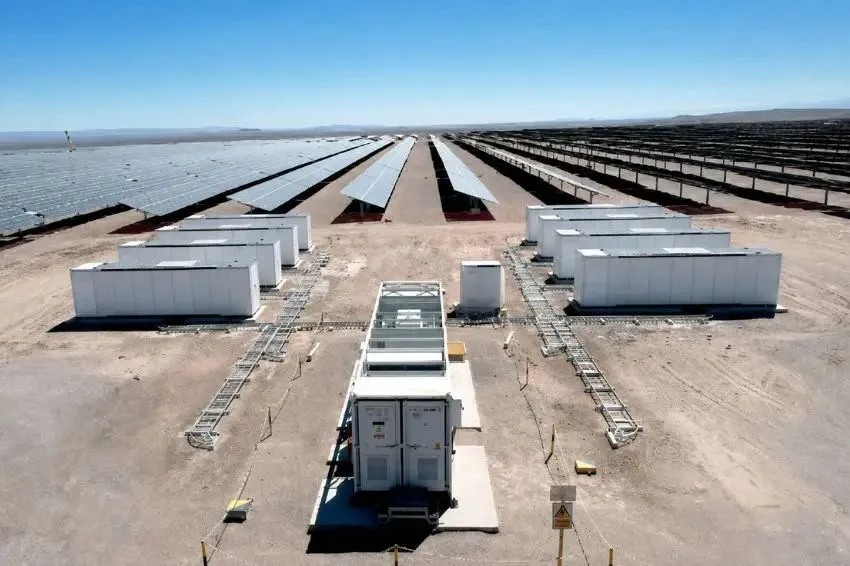

The new edition of the Plano Safra (Harvest Plan), announced by MAPA (Ministry of Agriculture and Livestock), will allocate R$ 525,1 billion to finance Brazilian agribusiness and brings a novelty for the energy transition in the field: for the first time, battery energy storage systems are included among the eligible items for financing under the program.
The measure includes programs such as Inovagro and Prodecoop, which will now allow investments in electricity storage systems. The expectation is to expand the use of renewable generation solutions on rural properties and strengthen energy security in the countryside.
For ABSOLAR (Brazilian Photovoltaic Solar Energy Association), the initiative represents an important step towards the modernization of Brazilian agribusiness. “The Harvest Plan is consolidating itself as an increasingly strategic instrument to accelerate the energy transition in agribusiness,” said Bárbara Rubim, president of the association's Board of Directors.
"These technologies can be used in water pumping and irrigation, in the refrigeration of meat, milk and other products, in temperature control in poultry production, in lighting, in electric fences, in telecommunications systems, in monitoring rural properties and in various other applications that increase productivity, efficiency and sustainability in the field," he emphasized.
Despite the expansion of financing lines, the ABSOLAR He assesses that the cost of credit still represents a challenge for producers. Although interest rates have decreased and now range between 8% and 12,5% per year, compared to the range of 8,5% to 14,5% in the previous edition, financing continues to be pressured by the current level of the Selic rate.
“The inclusion of energy storage in financing lines is an important step forward for the sector. At the same time, the cost of credit still directly influences producers' investment decisions in solar energy and energy storage projects,” Bárbara pointed out.
Currently, Brazilian agribusiness has 6,3 GW of installed capacity in photovoltaic systems, equivalent to more than 13% of the country's total self-generation solar capacity. According to... ABSOLARMore than 800 rural properties already use solar energy in Brazil.
According to the organization, the inclusion of storage systems in financing lines represents another step towards expanding the adoption of solutions that combine solar energy and batteries in the field, providing greater energy security, reduced electricity costs, and increased competitiveness for Brazilian agribusiness.
all the content of Canal Solar is protected by copyright law, and partial or total reproduction of this site in any medium is expressly prohibited. If you are interested in collaborating or reusing part of our material, please contact us by email: redacao@canalsolar.com.br.