
While a few years ago oil was considered one of the planet's main strategic resources, today another group of chemical elements is gaining prominence in the world economy: the so-called rare earth elements.
Although little known to the public, they are present in various technologies used daily and play a fundamental role in the energy transition, mainly in the manufacture of wind turbines, electric vehicle motors, electronic equipment and high-efficiency systems.
The growing interest in these minerals has led countries such as China, the United States, the European Union, and Brazil to treat the issue as strategic for industrial development and energy security.
What are rare earths?
The term "rare earths" encompasses a group of 17 chemical elements, comprising the 15 lanthanides, as well as scandium and yttrium. These elements possess magnetic, electrical, and optical properties that allow for the manufacture of smaller, lighter, more resistant, and more efficient equipment. Despite the name, they are not necessarily rare.
According to the MME (Ministry of Mines and Energy), many of these elements are relatively abundant in the Earth's crust. The challenge lies in the fact that they usually appear dispersed in low concentrations, mixed with other minerals, making their identification, extraction, and processing more complex and expensive.
The economic viability of a mineral deposit depends on factors such as element concentration, geological characteristics, processing costs, logistics, and market demand.
What is the connection with renewable energy?
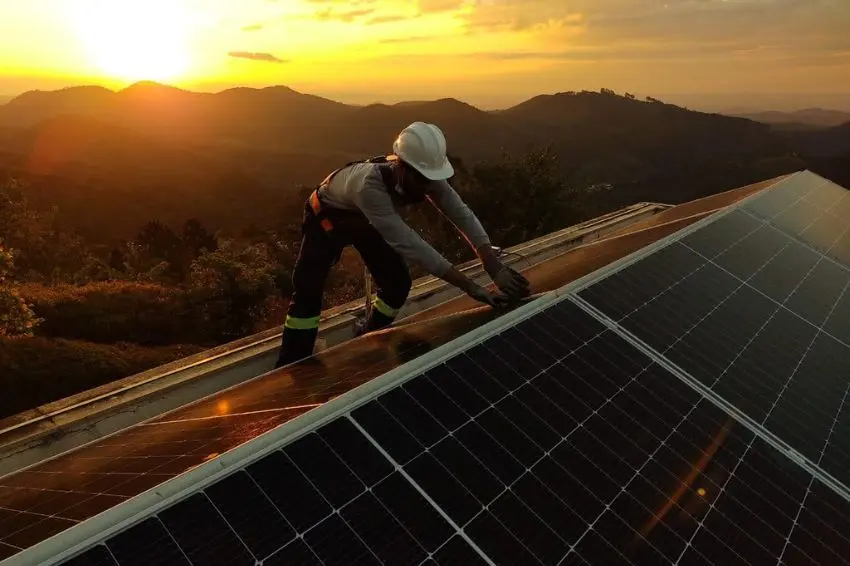
Without even realizing it, virtually everyone uses products containing rare earth elements. These elements are present in equipment such as smartphones; computers; televisions; medical equipment; fiber optics; military systems; industrial catalysts; electric motors and even wind turbines.
Its main advantage is enabling more compact, lightweight equipment with higher energy efficiency. It is precisely in this aspect that rare earth elements have gained enormous importance in recent years.
The expansion of renewable energy sources depends on increasingly efficient technologies, and many of these devices use permanent magnets made with elements such as neodymium, praseodymium, terbium, and dysprosium.
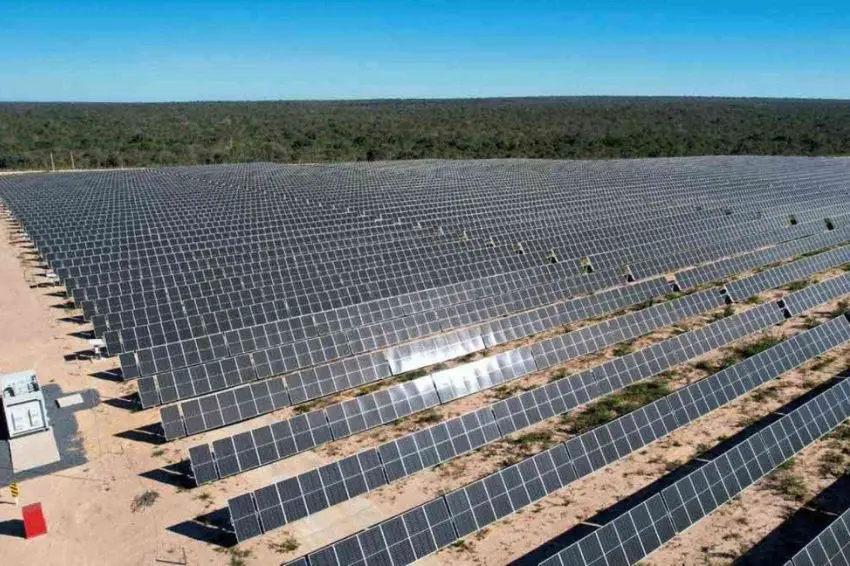
wind energy
In the most modern wind turbines, especially direct-drive turbines, these magnets replace more complex mechanical systems. The result is a more efficient turbine, with less maintenance required and a longer lifespan.
With the growth of offshore wind energy, global demand for these elements is expected to increase significantly over the next decade.
Electric vehicles
Contrary to what many believe, electric vehicle batteries typically do not use rare earth elements. Lithium, nickel, cobalt, and graphite remain the primary materials used in these batteries.
Rare earth elements are primarily found in electric motors, which are responsible for transforming electrical energy into motion. Motors that use neodymium permanent magnets offer greater power, better efficiency, and lower weight—important characteristics for extending vehicle range.
It is worth noting that some manufacturers, such as Tesla, have already been developing motors with lower or even zero use of rare earth elements, seeking to reduce their dependence on these materials.
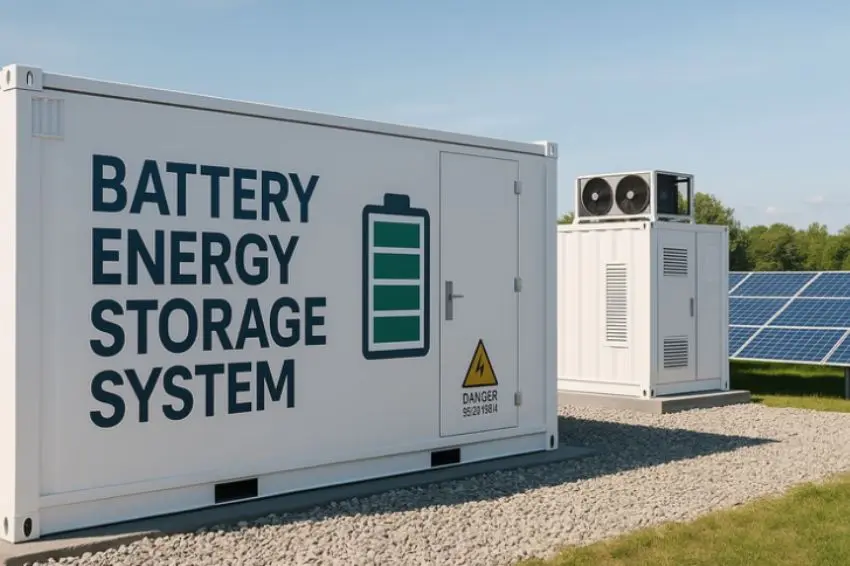
energy storage
In battery-energy storage systems (BESS), the use of rare earth elements is much lower than in electric motors or wind turbines. The lithium-ion batteries that predominate in the market mainly use lithium, graphite, nickel, manganese, cobalt, and iron.
However, rare earth elements can appear in electronic components, sensors, control systems, inverters, and auxiliary equipment responsible for the operation of storage systems. In other words, although they are not the main components of batteries, they are still present in the technological infrastructure that integrates these systems.
Why does China dominate this market?
Global rare earth production is highly concentrated. Currently, China accounts for the majority of mining and, especially, the processing of these elements, a stage considered the most complex in the production chain.
This dominance has transformed rare earth elements into a geopolitical issue, with the United States, Japan, and the European Union investing heavily to diversify suppliers and reduce their dependence on the Chinese industry.
And what is Brazil's role?
Brazil possesses one of the world's largest potentials for rare earth elements. According to the Ministry of Mines and Energy (MME), a large portion of these elements occurs in ionic clay deposits, formed by the weathering of rocks enriched in these minerals.
In these deposits, the elements become adsorbed onto the clay particles, allowing, under certain geological conditions, a potentially simpler extraction with less need for processing when compared to other types of deposits.
This characteristic can represent environmental and economic advantages, making the A country that is a potential strategic supplier for the global industry. of clean technologies.
However, according to the Ministry, the biggest challenge for Brazil lies not only in mining, but in developing the entire industrial processing and transformation chain.
Today, much of the added value of rare earth elements lies precisely in the separation, refining, and manufacturing of permanent magnets and technological components, stages that are mastered by only a few countries.
all the content of Canal Solar is protected by copyright law, and partial or total reproduction of this site in any medium is expressly prohibited. If you are interested in collaborating or reusing part of our material, please contact us by email: redacao@canalsolar.com.br.