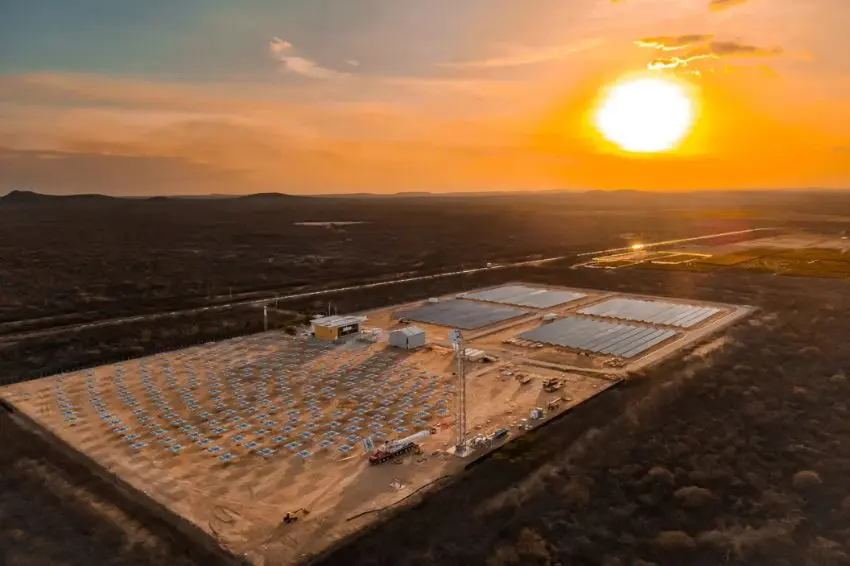

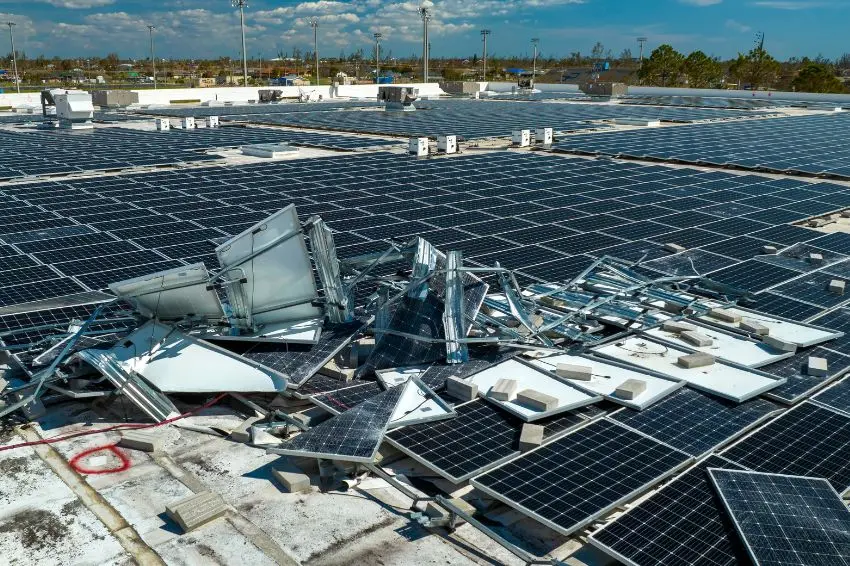
The Norwegian multinational Scatec has informed the market that it will begin to fully reuse the materials contained in solar panels damaged during the construction of its projects in Brazil, expanding an initiative that the company considers strategic for the future circular photovoltaic economy.
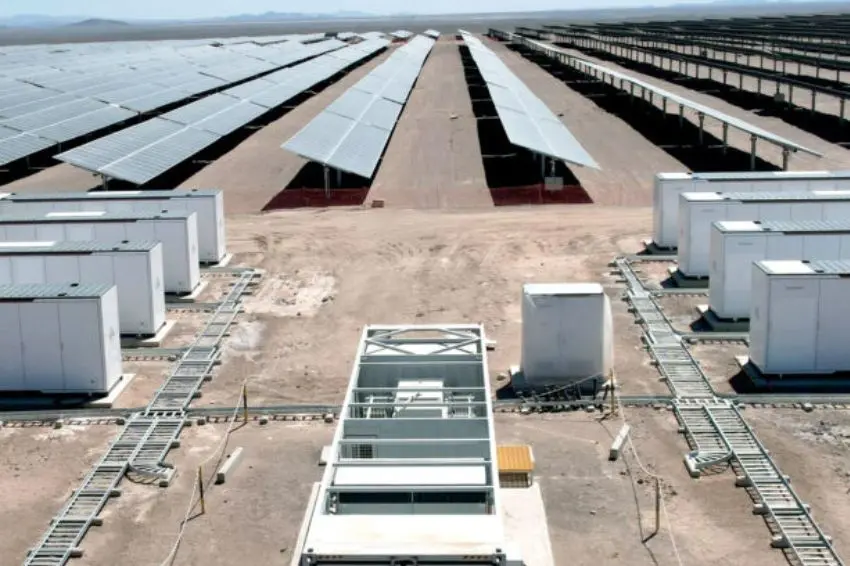
The new model will be adopted at the Rio Urucuia plant, a 142,31 MWp project under construction in Minas Gerais and scheduled to begin operations later this year.
According to the company, all panels that are eventually damaged during transport or installation will be sent for a specialized process capable of recovering 100% of the materials present in the equipment.
This initiative represents an improvement over the project developed by the company in 2025, when approximately 4.700 panels were recycled with a reuse rate of 85%.
More complex materials
Until recently, recycling processes focused mainly on recovering simpler components, such as glass and metals.
Now, the company claims to have broadened the scope to include materials that are traditionally more difficult to reuse. These include plastics, rubbers, and other components that typically represent an additional challenge for the recycling chain.
According to Ledjane Oliveira, coordinator of Community Relations at Scatec and a master's degree holder in Materials Engineering, technological advancements have allowed for a significant increase in the utilization of waste generated during the construction of power plants.
The experience gained from previous projects, especially at the Mendubim plant in Rio Grande do Norte and the Quixeré plant in Ceará, was used as a basis for developing the new phase of the program.
Future demand
Although the current volume of discarded panels is relatively small, the company believes the issue will gain relevance as the first large solar parks installed in the country approach the end of their useful life.
The company's assessment is that the lessons learned now could be important when hundreds of thousands of modules need to be replaced in the coming decades.
In this sense, recycling ceases to be merely a solution for occasional waste and becomes an integral part of the long-term planning of the photovoltaic supply chain. The initiative is also aligned with Scatec's global goal of achieving net-zero emissions by 2040.
environmental benefits
The results obtained in the previous stage help to quantify the potential environmental benefits of recycling.
According to the company, the proper disposal of the modules used in the Mendubim and Quixeré plants prevented more than 420 cubic meters of waste from being sent to landfills.
Furthermore, the process prevented the emission of 84,72 tons of carbon dioxide equivalent. To make the operation feasible, the equipment was transported from Rio Grande do Norte to Minas Gerais, where it underwent specialized treatment.
The recovered materials were given different destinations. The metals went to foundries, while the glass began to be used in the manufacture of products such as asphalt paints and tempered glass.
Circular economy
One of the points highlighted by the company involves the reuse of metals present in the structure of solar modules, especially components containing lead, tin, copper, and silver.
The company points out that the removal and recovery of these materials significantly reduces the environmental risks associated with the improper disposal of equipment.
Recovered lead, for example, can return to the production chain in the manufacture of new connectors or be used in automotive batteries. Other metals, on the other hand, go on to various industrial processes.
The company also highlights the economic potential of the activity. Data indicates that each real invested in recycling in the photovoltaic sector can generate an estimated return of R$ 3,18.
Another indicator shows that for every 39 cubic meters of recycled materials, approximately 13 tons of CO₂ equivalent are prevented from being emitted.
With approximately 201 panels planned for the Rio Urucuia power plant, the company sees the complete recycling of damaged modules as an anticipation of a topic that is likely to gain increasing importance as solar power generation matures in Brazil and around the world.
all the content of Canal Solar is protected by copyright law, and partial or total reproduction of this site in any medium is expressly prohibited. If you are interested in collaborating or reusing part of our material, please contact us by email: redacao@canalsolar.com.br.