
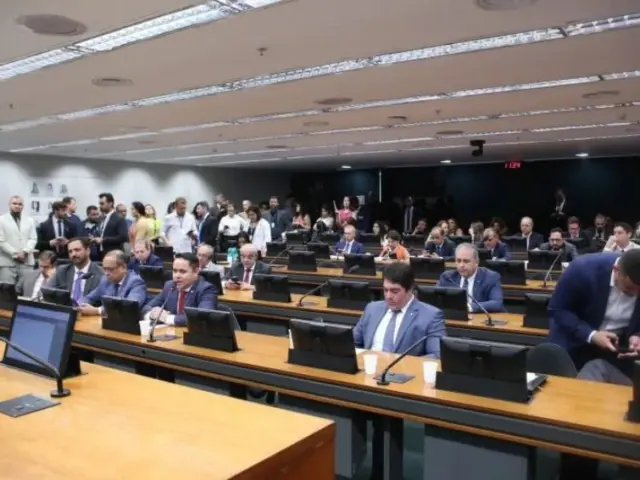
A ALESP (Legislative Assembly of the State of São Paulo) published, this Wednesday (23), a legislative decree which grants exemption from ICMS (Tax on the Circulation of Goods and Services) for the sector of micro and mini generators of electrical energy, including power generation plants solar energy with power up to 5 MW.
The document was published this Wednesday (23) on the first page of Official Gazette of the State of São Paulo.

Previously, the benefit was granted only for the operations of generating plants with up to 1 MW of installed power. Furthermore, the measure provides that the exemption will also apply to distributed generation projects operated in the form of shared generation and remote self-consumption.
Luiza Melcop, partner at Cortez Pimentel Advogados, explains that the limitation of 1 MW power was due to the State of São Paulo's adherence to the Confaz Agreement (National Finance Council) 16/2015 – which allowed signatory states to apply the tax exemption from that the energy would be next to the load or in another consumer unit belonging to the same holder.
From the Confaz Agreement 16/2015, the States of Minas Gerais and Rio de Janeiro, based on Complementary Law 160/2017, began to grant the benefit based on shared generation. In the case of Minas Gerais, ICMS exemption was already granted for projects with an installed capacity of up to 5 MW.
“This measure is of fundamental importance for the economy and families. Solar energy is a reality in several households in São Paulo. The environmental issue is increasingly present in society and mini energy generators”, he said Carlão Pignatari, state deputy and president of ALESP.
Other ICMS decrees
This week, ALESP also approved two other projects that guarantee exemption from ICMS for other sectors of industry in São Paulo. One of them was the Draft Legislative Decree 46/2022, which includes optical transceivers in the list of tax-exempt equipment in the State of São Paulo.
These transceivers are electronic components used for data transmission over medium and long distances, widespread following the implementation of optical fiber in the country. The benefit will be valid for companies whose main economic activity is data processing, application providers and website hosting on the Internet.
The other project approved was the Legislative Decree 44/2022, which exempts companies that manufacture metal packaging from circulation tax for the acquisition of goods necessary to maintain their activities. The decision also exempts these manufacturers from ICMS so that the tax burden on the exit of metal packaging corresponds to the percentage of 3%.
Measures are already taking effect
The three legislative decrees were published in Official State Gazette this Wednesday (23), but the measures have already been in effect since last month, due to the new Confaz policy, which allows state governments to make tax changes immediately and approved by the legislature within 15 days.
According to Secretary of State for Finance, the projects ratify a set of measures proposed by the Executive aimed at stimulating competitiveness of São Paulo taxpayers.


Comments
Comments are moderated before publication.Comments should be respectful and contribute to a healthy debate. Offensive comments may be removed. The opinions expressed here are those of the authors and do not necessarily reflect the views of the author. Canal Solar.
Comments on this article are closed.