
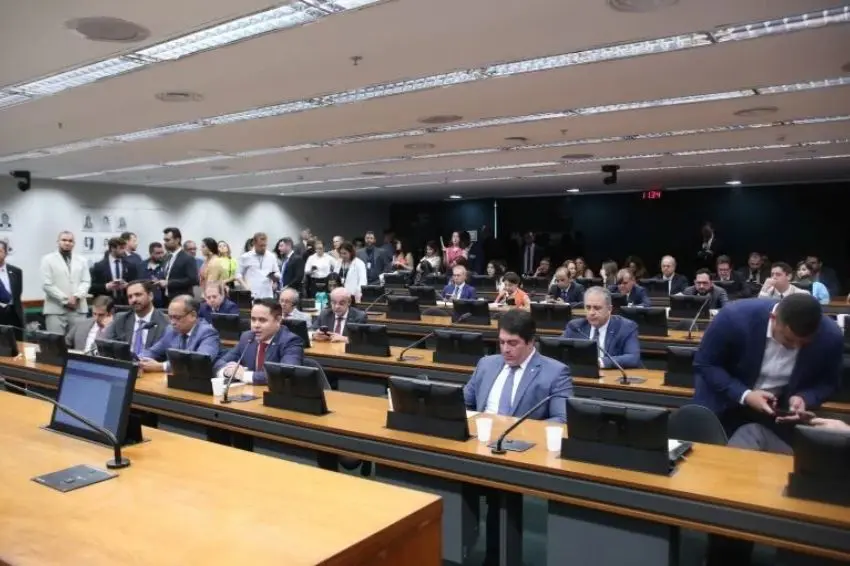
A bill is currently being processed in the Chamber of Deputies that proposes creating the TSEE (Regionalized Social Tariff for Electricity), with subsidized consumption limits adjusted to the climatic and economic conditions of each region of the country.
The proposal aims to change the current model, which establishes a national consumption limit for granting the benefit. Under the rule mentioned in the bill, low-income families registered in the CadÚnico (Single Registry for Social Programs) are entitled to a total exemption from electricity tariffs for monthly consumption of up to 80 kWh.
According to the author of the proposal, Representative Rubens Pereira Júnior (PT-MA), the uniform limit disregards the consumption needs of families living in warmer regions, where the use of fans and air conditioners can increase the demand for electricity.
"Low-income families living in Teresina, with average summer temperatures of 38°C and a real need for cooling, consume much more than 80 kWh per month without any waste," he reported.
"The uniform national ceiling penalizes this family doubly: they pay the highest tariff and consume beyond the subsidized limit due to climate constraints, not by choice," the congressman added.
Regional index
To define the discounted consumption limits in each locality, the project foresees the creation of the ICR (Regional Composite Index). This indicator would be updated and published annually by the MME (Ministry of Mines and Energy) and by... ANEEL (National Electric Energy Agency), in partnership with IBGE (Brazilian Institute of Geography and Statistics).
The index formula would consider three factors, each with different weights:
- Regional cost of living: weight of 45%;
- Climate conditions: weight of 35%, taking into account the need for refrigeration equipment;
- Non-technical losses in the electrical grid: A 20% weighting, including fraud and energy theft.
With these criteria, the proposal seeks to adapt the subsidized limits to regional differences, considering both household expenses and the conditions that influence electricity consumption.
Compensation for distributors
The project also provides for the creation of a financial compensation fund, with federal and state resources, to cover the tariff differences of the distributors resulting from the application of the regionalized model.
To receive the funds, the utility companies would have to meet targets, such as investing in the installation of smart meters, promoting the regularization of illegal connections, and working together with public safety and social assistance agencies to combat electricity theft.
Next Steps
The bill is being processed in a conclusive manner and will be analyzed by the committees on Mines and Energy; Social Security, Welfare, Childhood, Adolescence and Family; Finance and Taxation; and Constitution and Justice and Citizenship. For the proposal to take effect, it still needs to be approved by the Chamber of Deputies and the Federal Senate.
all the content of Canal Solar is protected by copyright law, and partial or total reproduction of this site in any medium is expressly prohibited. If you are interested in collaborating or reusing part of our material, please contact us by email: redacao@canalsolar.com.br.

Comments
Comments are moderated before publication.Comments should be respectful and contribute to a healthy debate. Offensive comments may be removed. The opinions expressed here are those of the authors and do not necessarily reflect the views of the author. Canal Solar.