
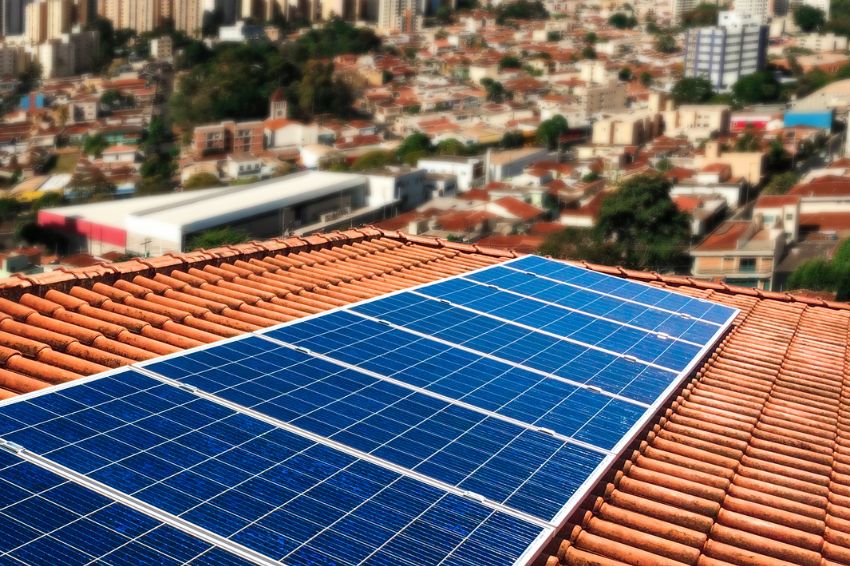
A solar own generation on roofs, facades and small plots of land, it is a powerful ally in reducing energy costs for all consumers in Brazil.
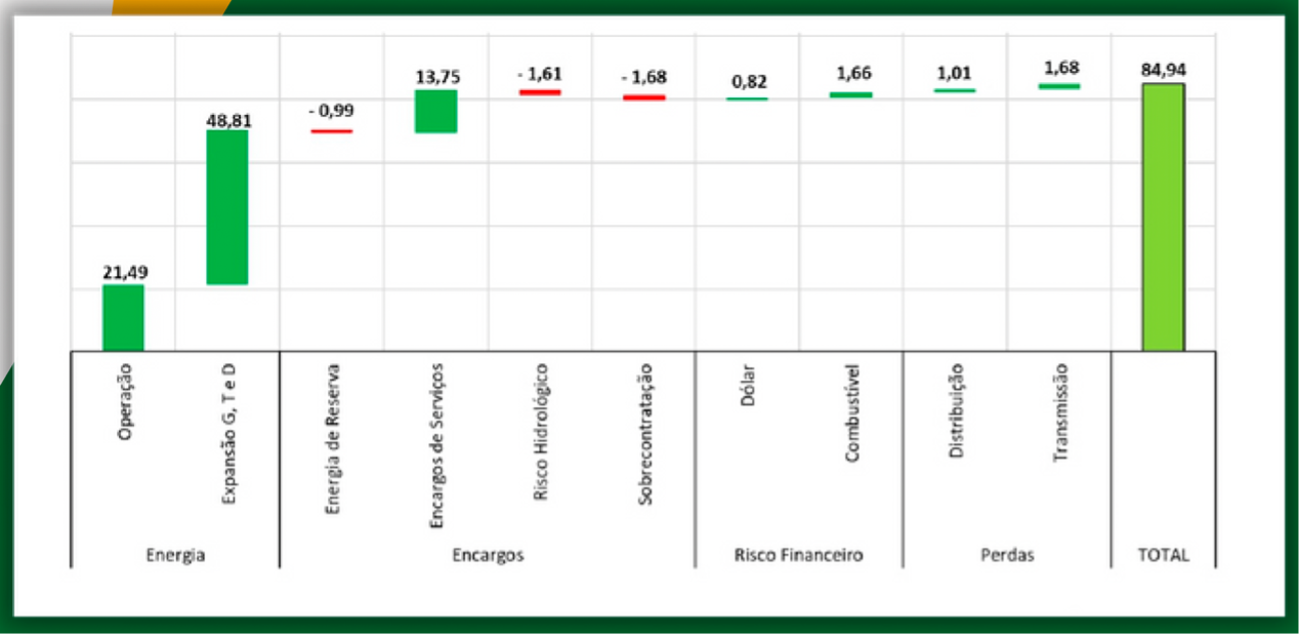
A study carried out by specialized consultancy volt robotics, at the request of ABSOLAR (Brazilian Photovoltaic Solar Energy Association), revealed that the net savings on the electricity bill could reach more than $ 84,9 billion 2031 up.
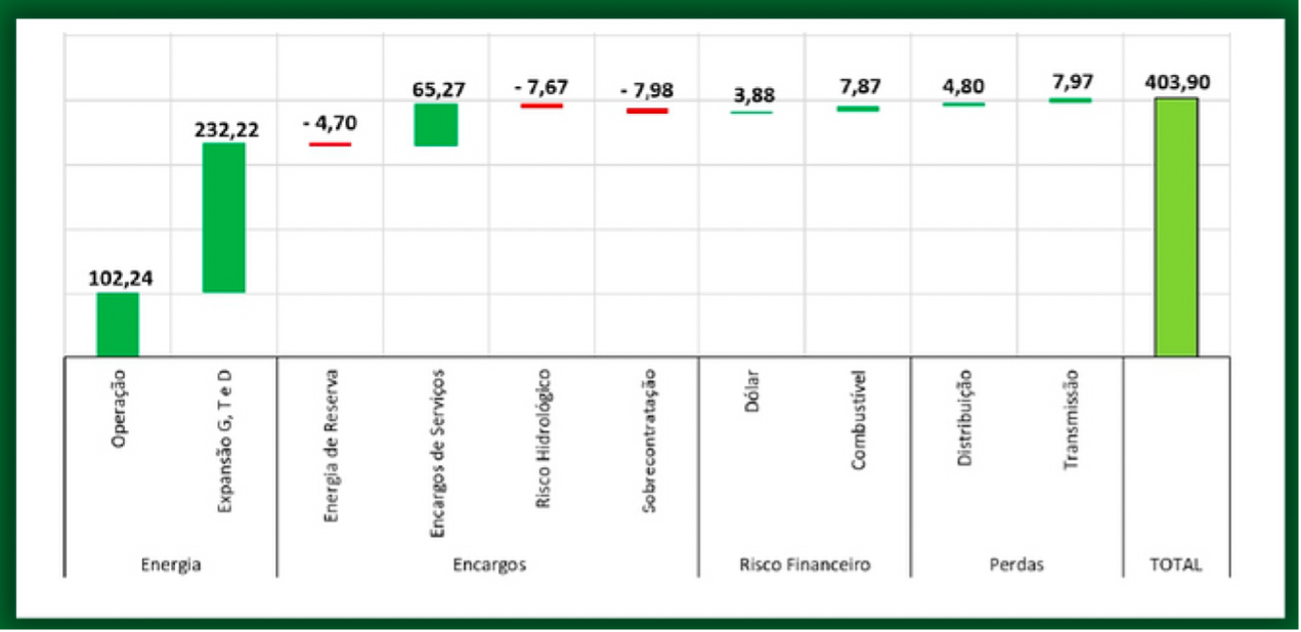
According to the research, photovoltaic energy reduces thermal power plant costs, system operating costs, system service charges and electrical losses by R$403,90 per MWh, compared to an average residential tariff of R$729 per MWh.
In ten of the main variables evaluated to calculate the costs and benefits of the modality, such as operation, expansion of generation, transmission and distribution, reserve energy, service charges, hydrological risk, overcontracting, exchange rate and fuel price variations and distribution losses and transmission, seven had a positive balance, mainly in the energy dimension (operation and expansion of the electrical system), with a total of R$70,3 billion in benefits in this dimension.
According to Volt Robotics, only three of the ten variables present a slightly negative balance, such as reserve energy, hydrological risk and overcontracting, with an accumulated deficit of less than R$4,3 billion.
For Rodrigo Sauaia, executive president of ABSOLAR, it is possible to affirm that the benefits of solar DG are crucial for Brazilian society. Additionally, the advancement of solar energy sources strengthens Brazil's sustainable energy transition, giving consumers more power of choice, autonomy and energy independence.
“When analyzing the socioeconomic and environmental gains of solar own generation, such as attracting investments, generating jobs, increasing the population's income and purchasing power, reducing emissions of polluting gases and advances in the country's energy transition and sustainability, the The balance is even more positive for a nation that can be a protagonist in the global geopolitics of the 21st century”, he added.
Guilherme Susteras, advisor and coordinator of the distributed generation working group at ABSOLAR, reinforces that, with the study carried out using official planning data and computational tools, the entity fulfills its commitment to deliver valuable and auditable contributions to ANEEL, to help in the work of defining the tariff methodology to be applied to consumers who generate their own energy, starting in 2029.
“In this way, the ABSOLAR works to ensure that solar self-generation is treated in a fair and balanced manner, as determined by Law No. 14.300/2022, and that the benefits of the modality are correctly identified, valued and incorporated into public policies for the benefit of society”, concluded Susteras.
About the study
Seven evaluation dimensions were identified: Energy, Charges, Financial Risk, Losses, Energy Security, Environment and Socioeconomic, with qualitative and qualitative analyses, subdivided into more than two dozen variables.
The calculations were made based on the official growth scenario projected for distributed generation in the Ten-Year Energy Expansion Plan 2031 (PDE 2031), authored by the MME (Ministry of Mines and Energy) and EPE (Energy Research Company).
Last Friday (27), the ABSOLAR and Volt Robotics met with ANEEL to present the results of the study with calculations of costs and benefits of distributed photovoltaic generation in Brazil.
The work concluded that the benefits of the growth of solar generation in the Brazilian electricity matrix far outweigh the costs, bringing relevant net gains to consumers and society.
The meeting, held at the headquarters of the regulatory body, sought to raise awareness among the Agency's technical teams and specialists, so that the calculations can be carried out in a complete, fair and transparent manner, as well as so that they can be completed quickly, given their importance for the market.
More indicators
Solar self-generation has surpassed the 24 GW mark of installed power in homes, businesses, industries, rural properties and public buildings in Brazil, with more than 3,1 million consumer units served by photovoltaic technology, according to mapping by ABSOLAR.
In total, the country has more than 2,1 million photovoltaic systems installed on roofs, facades and small plots of land. Since 2012, there have been around R$ 121,0 billion in new contributions, which generated more than 720,7 thousand jobs accumulated in the period, spread across all regions of Brazil, and represent a contribution to the public coffers of R$ 30,8 billion. Photovoltaic technology is already present in 5.539 municipalities and in all Brazilian states.



Comments (1)
Comments are moderated before publication.Comments should be respectful and contribute to a healthy debate. Offensive comments may be removed. The opinions expressed here are those of the authors and do not necessarily reflect the views of the author. Canal Solar.
request information