
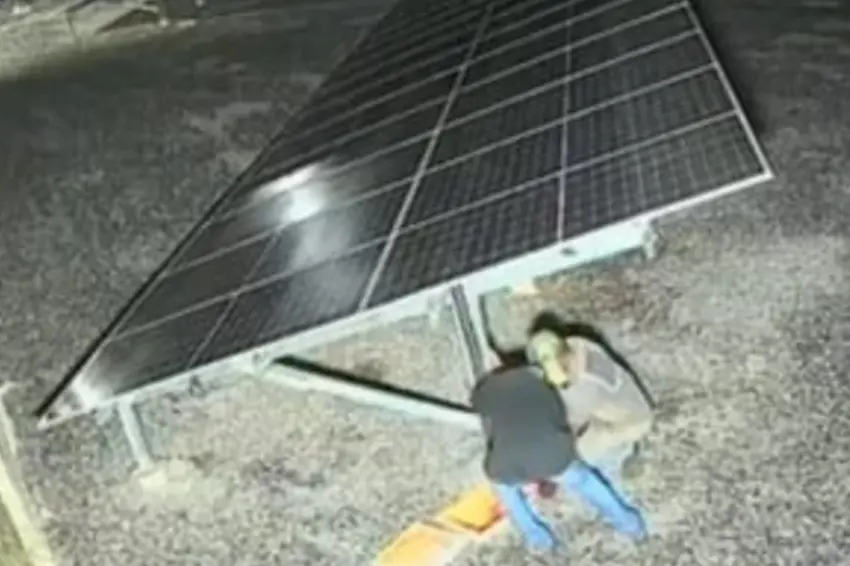
Theft of equipment is at the top of the concerns regarding the profitability of distributed generation (DG) solar power plants, according to Allan Mesquita, director of asset management at Brasol.
The impact goes beyond simply replacing materials: it involves the time needed to get operations back up and running and the lost revenue while the business remains totally or partially shut down.
“The restoration time is very critical,” says the executive. According to him, even when there is insurance coverage, the owner needs to consider the deductible and the possibility of not fully recovering generation losses, including in contracts that cover lost profits.
The assessment comes from the experience of an operation that brings together more than 330 MW, distributed across more than 170 solar assets, in addition to two customer substations.
Brasol's structure serves both projects linked to the group and third-party assets, with activities including operation and maintenance, performance analysis, and asset protection.
To reduce exposure, the company decided to internalize security management. According to Mesquita, the change occurred after identifying difficulties in the service provided by a contracted company, especially in response time to incidents such as theft and fires.
Brasol structured its own team and developed internal controls to monitor assets and expedite team deployment.
According to the director, the strategy helps to limit the extent of the damage, although it does not eliminate the risks. "Our response time is crucial in ensuring that we have the least possible damage," he says.
The company is also involved in a project with the São Paulo State Public Security Secretariat and other companies in the sector. Details are being kept confidential to protect intelligence strategies, but the executive reports that similar initiatives have also been implemented in other parts of the country.
Part of the vulnerability, however, begins in the development of the projects. Projects without adequate perimeter control, appropriate cameras, and reliable telecommunications infrastructure can increase risks for investors and owners.
Therefore, property security is an integral part of the diagnosis carried out when the company takes over the management of a plant. In these assessments, Brasol also identifies construction defects and problems resulting from inadequate maintenance.
According to Mesquita's analysis, the growth of distributed generation (DG) opened up opportunities for companies that lacked the necessary expertise to build or operate the assets, leaving the need for correction and reinvestment for subsequent years.
The difficulty in contracting services with the required quality was one of the reasons for the creation of the company's asset management unit. One of the episodes reported by the executive involved the destruction of 40 modules during a brush clearing activity.
According to him, the problem was not related to the provider's intentions, but to a lack of preparation and procedures. The case showed how a seemingly simple service can cause harm when there is no management structure compatible with the risks of the activity.
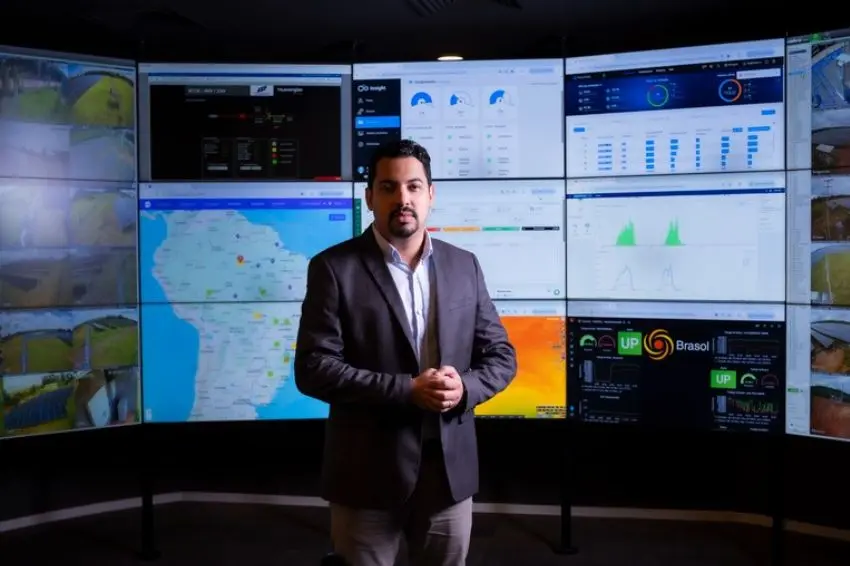
According to Mesquita, decisions driven by immediate economics can compromise the return on investment over the plant's lifespan. In a new project, the loss caused by a few damaged modules may seem small compared to the total generation.
However, as the asset ages, repeating these mistakes tends to increase the need for reinvestment. "These small decisions erode future money that we haven't even realized yet," he says.
In addition to the quality of services, the availability of replacement equipment is a concern for the executive. Components that become obsolete and are no longer offered by manufacturers can prolong interventions and make the recovery of operations dependent on the conditions of the supply chain.
Failures in protection systems and electrical installations can also cause more widespread damage. A problem in a transformer, for example, can compromise different equipment and a significant portion of the generation.
Technology is another area being used to anticipate problems. The company has developed an internal platform that monitors fire outbreaks near the plants and issues alerts to guide response protocols. This work is accompanied by close collaboration with Civil Defense and public forces in the regions where the projects are located.
The initiative, internally called the Winter Plan, seeks to establish these contacts before an emergency occurs. The proposal is to present the location of the plants and the characteristics of the surrounding area, facilitating the activation of local teams when an incident arises.
For weather events whose damage cannot be entirely avoided, Mesquita highlights the need to combine adequate insurance and operational recovery capacity.
The availability of in-house engineering and teams allows for some repairs to be carried out more quickly, although the restoration also depends on the acquisition of materials.
In the context of fire monitoring and asset protection actions, the executive reports that the company managed to mitigate more than R$ 16 million in losses last year.
The company is still working to consolidate the measurement of the financial results of the different technological and operational initiatives.
In performance analysis, cross-referencing generation data, projections, and alarms helps identify deviations and determine the most appropriate time for interventions.
In one case, the team noticed a rapid drop in production associated with a problem in an inverter's fan.
Since the other fans continued to function, the alarm did not appear to be a highly significant event. Monitoring the performance trend led to intervention before the problem could escalate into greater damage.
In addition to managing existing projects, Brasol monitors opportunities in energy storage.
According to Mesquita, the company has been making more acquisitions than building new assets and is paying close attention to the battery auction and the development of storage systems, known by the acronym BESS.
"Today, we are making far more acquisitions than we are building new assets," he states. Specific targets for 2027 were not revealed.
You may also be interested
From copper to inverters: what is stolen from solar plants and how to prevent it?
all the content of Canal Solar is protected by copyright law, and partial or total reproduction of this site in any medium is expressly prohibited. If you are interested in collaborating or reusing part of our material, please contact us by email: redacao@canalsolar.com.br.

Comments
Comments are moderated before publication.Comments should be respectful and contribute to a healthy debate. Offensive comments may be removed. The opinions expressed here are those of the authors and do not necessarily reflect the views of the author. Canal Solar.