
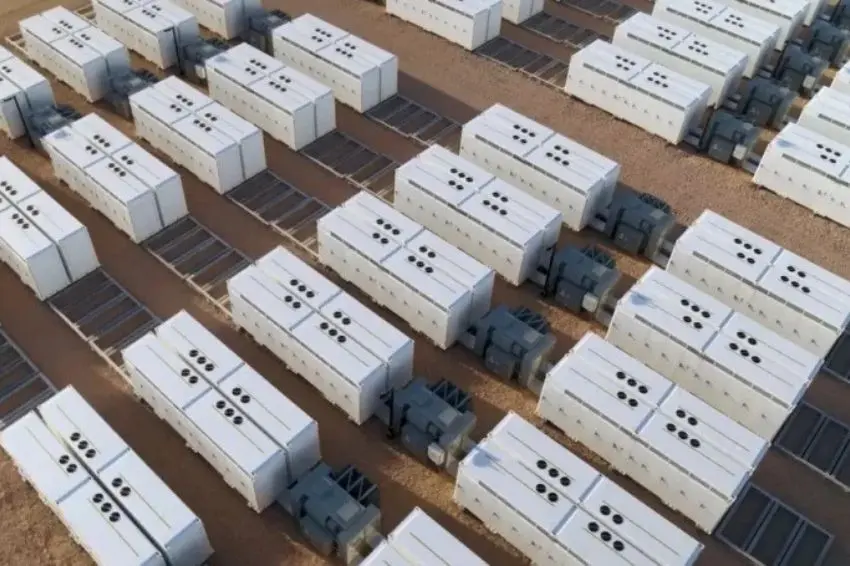
The auction for reserved capacity for contracting battery storage systems should be maintained on the scheduled dates, while the rule that exclusively assigns the cost of contracting to generators needs to be urgently revoked.
This is the position of ABSAE (Brazilian Association of Energy Storage Solutions), expressed after ABEEólica (Brazilian Association of Wind Energy and New Technologies) took the initiative to legally challenge the conditions of the auctions scheduled for December.
In a statement released regarding the action, ABSAE affirms that "the auction needs to be held on the scheduled date; delaying this contract puts at risk the capacity and flexibility necessary to serve consumers in August 2028."
The organization also criticizes the cost-sharing rule and advocates for the urgent approval of Bill 3.716/2026. According to the association, "the current law directly harms consumers, especially regulated consumers, who will receive the cost plus taxes and risks."
The organization adds that the legal uncertainty surrounding the auction could generate uncertainty among participants and affect competitiveness. For ABSAE, the solution lies in the approval of Bill 3.716/26.
Lawsuit challenges exclusive taxation of generators.
The protest comes after ABEEólica filed a public civil action against the Union and on November 16. ANEEL (National Electric Energy Agency).
The organization is asking the court to suspend the auctions for reserve capacity for battery procurement, scheduled for December 2nd and 4th, under the currently established conditions. The lawsuit is being processed in the 17th Federal Civil Court of the Federal District and includes a request for urgent relief.
The main question is directed at paragraph 6 of article 3-A of Law 10.848/2004, included by Law 15.269/2025. This provision stipulates that the costs of contracting batteries should be shared exclusively among the power generators, according to the regulations of... ANEEL.
According to Abeeólica's assessment, the rule contradicts the traditional model of capacity reserve auctions, in which costs are distributed among the end users of the SIN (National Interconnected System). The association argues that the contracted power benefits consumers by contributing to the security and reliability of supply, and not just the generation agents.
Lack of regulation increases uncertainty.
Another central point of contention is the absence of a definitive methodology for distributing the costs among the generators. ANEEL The topic was submitted to Public Consultation 37/2026, which ended on November 6, but the regulations have not yet been finalized.
The proposal under discussion foresees different levels of flexibility for generation sources, with participation factors in the charge ranging from 25% to 100%. According to ABEEólica, this differentiation could cause certain generators to pay up to four times more than others, without the legislation having established criteria to justify the distinction.
The entity also questions the predictability of costs for contracts with a duration of 15 years and a supply start date scheduled for August 2028. Furthermore, it points out that the full transfer of charges to consumers is not necessarily guaranteed in free market contracts, which could transfer part of the burden directly to the generators.
ABEEólica states that it does not intend to prevent the contracting of storage capacity, but rather to avoid auctions taking place before the resolution of legal and regulatory controversies. The association requests that the courts suspend the auctions under the current conditions, preserving the possibility of holding them after the contested points have been corrected.
Uncertain vote
Meanwhile, in the Chamber of Deputies, Bill 3.716, authored by Representative Arnaldo Jardim, which proposes removing the exclusive obligation of power generators to cover the costs of the battery auction, remains without a scheduled vote.
In an interview with Agência Infra, the president of the house, Hugo Motta (Republicanos-PB), informed that the matter is not scheduled for this week, which makes its consideration by the Senate and subsequent approval by the Presidency of the Republic before the election even more uncertain.
all the content of Canal Solar is protected by copyright law, and partial or total reproduction of this site in any medium is expressly prohibited. If you are interested in collaborating or reusing part of our material, please contact us by email: redacao@canalsolar.com.br.


Comments
Comments are moderated before publication.Comments should be respectful and contribute to a healthy debate. Offensive comments may be removed. The opinions expressed here are those of the authors and do not necessarily reflect the views of the author. Canal Solar.