
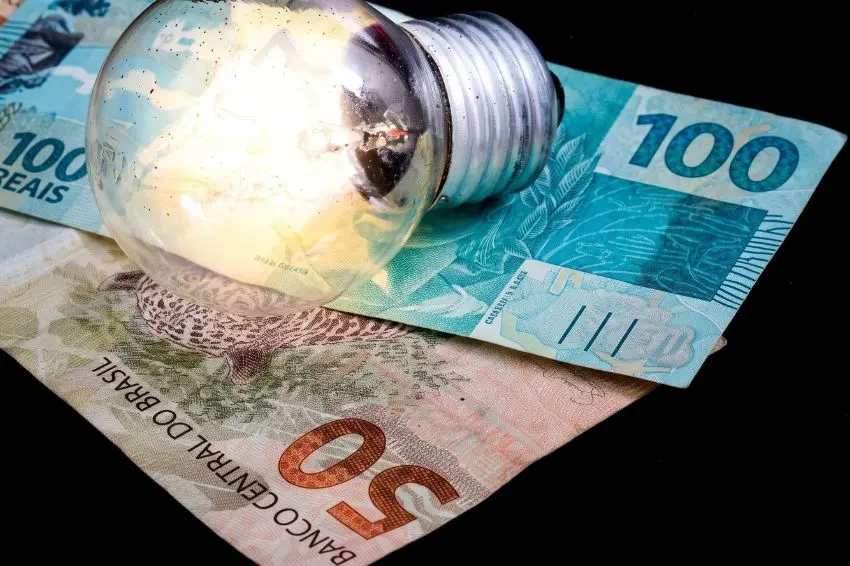
The MSL (Free Solar Movement), the FPGD (São Paulo Distributed Generation Front), and 23 other state associations and fronts released an open letter this week to warn consumers about the impacts of... Price on Time, regulatory proposal that will be voted on by the board of directors of ANEEL (National Electric Energy Agency) in December of this year.
The measure provides for automatic and mandatory inclusion in hourly pricing for low-voltage consumers with average monthly consumption equal to or greater than 500 kWh. In practice, the model makes energy more expensive during peak hours and cheaper during off-peak hours, affecting approximately 5,7 million consumer units across the country.
According to the document, those who do not wish to adopt the time-of-use model will not be able to remain on the current conventional tariff. The only alternative foreseen by the proposal is to migrate to a transitional modality, with a deadline, which adds approximately 8% to the network usage fee (TUSD) and 10% to the energy fee (TE).
Impacts on distributed generation and batteries
For consumers who have already invested in photovoltaic systems under the rules of Law No. 14.300/2022, the letter points out that credits injected during the day will now be valued by time slot, undergoing economic conversion when used at night.
Furthermore, anyone connecting a new distributed generation plant or a commercial charging station after 90 days from the publication of the resolution will be directly subject to the hourly tariff, without the right to the transitional option.
“Those who installed solar energy to avoid higher bills risk being penalized twice. First, by the 'Tarifa Hora Certa' (Specific Time Tariff), because credits generated during the day become worth less. Then, by the 'Encargo de Complemento de Recursos' (ECR) (Resource Supplement Charge), whose value is still unclear, to consumers who already pay for the grid, according to Law 14.300,” warns Hewerton Martins, president of MSL.
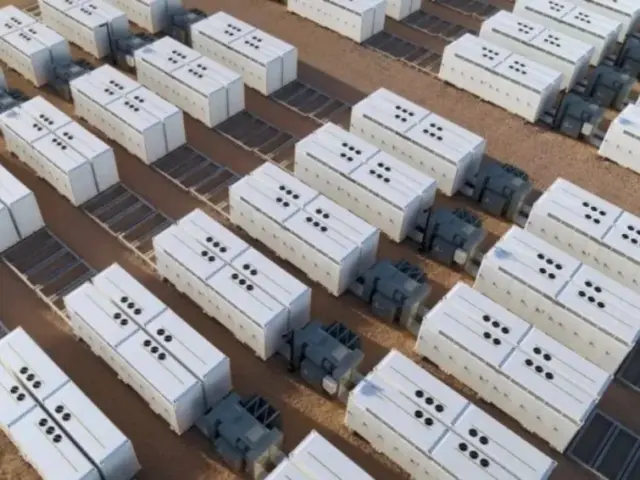
The organizations also criticize the lack of incentives for small-scale residential and commercial storage. Although the technical note itself... ANEEL While acknowledging that batteries relieve the electricity grid during peak hours and pointing to a drop of more than 86% in technology costs between 2013 and 2025, the regulatory text does not foresee tariff benefits or public calls for small systems.
Lack of representation and affected sectors
Another point questioned in the letter is the conduct of Public Consultation No. 046/2025. According to the survey presented in the letter, more than 70% of the 862 contributions submitted came from agents within the electricity sector itself, such as energy distributors, without the participation of representative entities of small businesses, such as Sebrae, CNC, or Fecomércios, in the technical workshops held in early 2026.
The document further argues that, while industry can concentrate its operations during business hours, families and small businesses have no room to shift consumption to the night.
Among the segments identified as most exposed to the increase in bills are:
- Bars, restaurants, bakeries and small delivery businesses (like the more than 400 iFood partners)
- Supermarkets, pharmacies, and gas stations operating continuously.
- Gyms, hotels and night schools
- Clinics, small hospitals, and rural irrigators.
- Charging electric vehicles primarily for urban transportation services via apps.
"Economic activities whose operation is concentrated in the early evening tend to bear the most expensive share of energy costs precisely during their peak operating hours, with little room for shifting consumption," the organizations point out.
This is the case for small shops and food services, including small businesses that operate through delivery on digital platforms such as iFood and similar services, whose activity begins and concentrates during dinnertime.
"The size of this audience is significant: iFood alone brings together more than 400 partner establishments, including restaurants, supermarkets, pharmacies and other retailers, according to the company's own impact report," the document highlights.
In the letter, the organizations also state that the regulatory impact report of the proposal still lacks economic-financial modeling and distributional analysis to demonstrate who will bear the costs of the transition.
“The consumer will be the one to pay this bill. They are the most impacted, but they were not called upon extensively for dialogue. A key point is that the 'Hora Certa' tariff, when it was called the 'Tarifa Branca' (White Tariff), had low adoption when it was optional. In other words, people did not approve of the model. Now, it has changed its name, been renamed, and is being imposed on the vast majority of consumers, even without having had voluntary adoption,” said Hewerton Martins, president of MSL.
“In practice, nobody is going to change their shower schedule overnight, and families aren't going to stop ordering snacks at night. The same goes for small businesses and delivery services, which only start operating after 18 pm. In other words, with the 'Specific Hourly Rate' tariff, nighttime certainly means the most expensive bill for consumers and small businesses,” he emphasized.
Given this, the Free Solar Movement and state-level groups are asking consumers, trade associations, and parliamentarians to demand clarification from the company. ANEEL and the National Congress before the deliberation scheduled for December.
"What does 'Tarifa Hora Certa' plus ECR equal? What is the impact? What is the correct calculation? How much does this increase the cost for consumers and small businesses? It's not clear, and those who invested in solar energy believed in Law 14.300. We request transparency in the calculation details of..." ANEEL "And we trust in Congress and the institutions to ensure that consumers, who already bear such high electricity bills, are not penalized once again," concluded the president of MSL.
The president of FPGD (São Paulo Distributed Generation Front), Anderson Mendonça, highlights the joint mobilization of the entities to broaden the debate. “Today, we are working in all spheres, in a voluntary movement, so that decisions about electricity bills are not made without the voice of those most impacted. We have seen in our journey that multi-sectoral unity with common interests brings regulatory and legislative results,” he stated.
Check out the full letter from the organizations by clicking [here]. here.
all the content of Canal Solar is protected by copyright law, and partial or total reproduction of this site in any medium is expressly prohibited. If you are interested in collaborating or reusing part of our material, please contact us by email: redacao@canalsolar.com.br.


Comments
Comments are moderated before publication.Comments should be respectful and contribute to a healthy debate. Offensive comments may be removed. The opinions expressed here are those of the authors and do not necessarily reflect the views of the author. Canal Solar.