
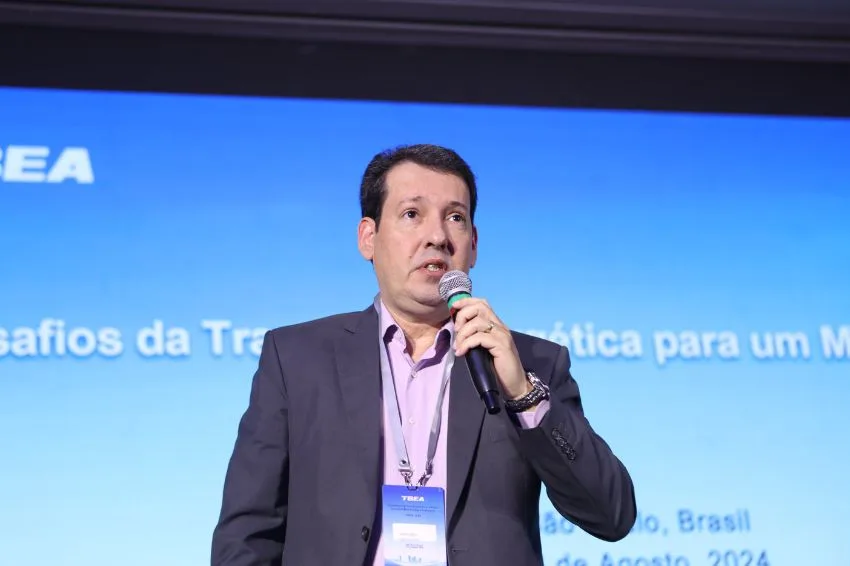
The solar sector is constantly evolving, with high expectations for the advancement of storage technologies and significant changes in market dynamics. In an exclusive interview with Canal Solar, Antônio Salgueiro, General Manager LATAM at TBEA, shares his vision on trends and challenges for 2025.
Focusing on the impact of BESS (Battery Energy Storage System), Salgueiro discusses how innovations in batteries and inverters can transform the sector. He also assesses the role of storage auctions and how the Brazilian market can prepare to take advantage of these opportunities.
Below, check out the full interview with the executive, where he addresses topics such as the future of DG (distributed generation), the barriers to the adoption of storage technologies and the prospects for new business models in the photovoltaic segment.
With the maturity of the distributed generation sector, which segments do you believe will be most prominent in 2025?
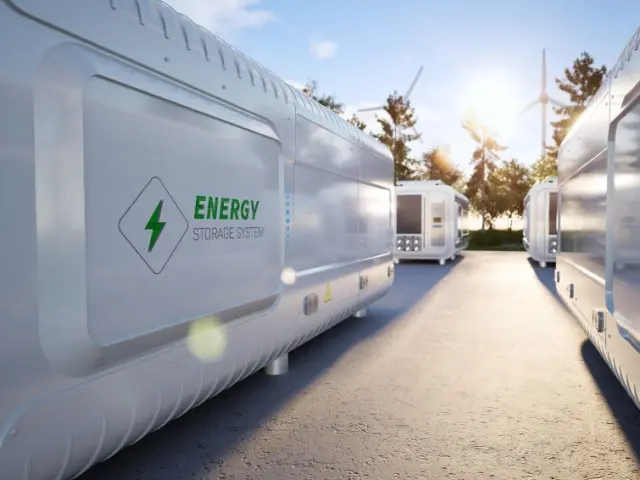
Certainly, the most important segment in 2025, in TBEA's view, will be the battery energy storage market. BESS will indeed be a very big trend, given the various problems we are encountering with curtailment.
Another key point is the auction that is scheduled for this year. This auction will open the door for large-scale plants, and with that the market will take on an interesting pace.
Of course, everyone is also waiting for the appropriate regulation and changes in grid procedure so that these batteries can effectively connect to the system.
The adoption of storage systems is starting to grow in Brazil. How do you assess the impact of this on the solar energy market in 2025?
As mentioned in the previous question, storage will certainly be the support point for a new stage of growth in solar generation. Through new regulations and legislation, the possibility of delivering energy at the most appropriate time for demand will be a clear trend.
We are currently facing issues due to the “duck curve”, where, at times of peak solar energy production, demand does not require this injection, resulting in curtailment. Batteries will help shift this production to times of peak demand, promoting continued growth in both solar generation and BESS energy delivery initiatives.
What technological innovations do you believe will have the biggest impact on the solar sector in 2025, especially in relation to inverters and batteries?
Modular BESS will be one of the main innovations, with the ability to adapt to new battery technologies. Large-scale systems with modular design will be important trends to enable the market.
Furthermore, the Statcom (Static Synchronous Compensator), which assists in the generation of reactive energy and in maintaining system stability, will be an essential solution, especially in view of the increasing injection of solar energy, mainly in DG.
What can the Brazilian market expect in terms of new business models and strategic partnerships in the solar energy sector this year?
In GC (centralized generation), the self-production model will continue to predominate, although this benefit may be reduced in the future. With batteries, we will see trends such as peak and off-peak management and greater energy use on the DC side of inverters.
At GD, we see challenges, especially with new manufacturers offering products of questionable quality and very low prices. However, over time, the quality and energy availability of projects tend to readjust the market.
What changes do you foresee in the demand for solar energy in sectors such as agribusiness, industry and commerce throughout this year?
Once again, the major changes are linked to BESS. First in agribusiness, which works with irrigation pivots or off-grid systems, BESS has proven to be quite viable, economically speaking – thus reducing the consumption of diesel, which is currently expensive and difficult to logistic.
Another thing would be the management of peak and off-peak energy. Especially in medium voltage in medium-sized industries, this management with BESS is proving to be quite effective today.
The insertion of BESS also in DG is a challenge, which in our view, can be easily overcome due to the better energy price conditions paid in distributed generation, which unlike GC, in DG we already have a minimum rule for the insertion of batteries in the system through 14300.
However, solutions should be better discussed, mainly due to the massive use of string inverters, which have a greater difficulty in implementing BESS on the DC side, whereas on the AC side there are some types of regulatory complications that still need to be resolved, mainly in energy concessionaires that today consider BESS through their PCS an increase in the power connected to the grid, directly impacting the access opinion of users.
Does the market for large solar plants in Brazil still have room for growth, or is the trend towards focusing on distributed generation and storage?
By 2025, we will see a market of 5 to 6 GW, in which self-production still offers potential for growth. In addition, there is a promising movement related to hydrogen. Despite some pending issues, investments have already begun, and hydrogen could keep the market growing or at least prevent a reduction.
Another interesting point is the increase in data centers. Brazil has become an attractive destination for these facilities, which require high-capacity energy and continuous operation, generating new opportunities for the sector.
Furthermore, we expect that, in one or two years, batteries will be even more competitive. This will allow the solar energy produced to be moved to more suitable times for injection into the grid, ensuring greater viability for centralized generation projects.
At GC, customers continue to demand quality, seeking suppliers with experience, technical capacity and well-structured processes. At GD, we face a more challenging scenario, with manufacturers offering inferior products and prices below market value. However, we believe that the market will readjust over time, as project quality prevails.
What are the main barriers that energy storage still faces to be widely adopted in Brazil?
There are several challenges. Firstly, there is still no clear regulation defining the rules for BESS in Brazil, which discourages short-term investments. In addition, the tariff issue is a major obstacle: taxes on storage systems can increase costs by more than 70%, often making implementation unfeasible.
Another challenge is the lack of clarity in the ONS requirements for connecting BESSs to the transmission system, especially on the AC side of the plants connected to the SIN. This makes it difficult to approve new projects.
However, we believe that the auction scheduled for this year can help establish clearer rules and improve the viability of these systems in Brazil. Still, without progress on the tariff issue, it will be challenging to implement large-scale projects in the short term.
The rise in the dollar and changes in economic policy have had a direct impact on costs in the sector. What is your view on this?
In 2024, these factors had a significant impact, especially on GC. With low-value PPAs, customers were already operating at the edge of profitability, and the additional costs caused by the dollar and the cancellation of ex-tariffs made investments even riskier.
The market has shown resilience, and customers are looking for ways to reduce costs to absorb these increases. TBEA has been offering technical solutions, such as inverter and substation optimization, to minimize the impacts.
Furthermore, distributed generation, which is growing rapidly, is not being kept up with the pace of expansion of the electrical system, creating challenges for both GC and DG. In this scenario, batteries emerge as an interesting alternative to shift energy to times of greater demand.
How do you assess the energy storage auction in Brazil? What impact could this have on the solar market and the electricity sector as a whole?
The auction is an essential step towards consolidating the storage segment in Brazil. Just as the first solar energy auctions boosted market regulation more than a decade ago, the same could happen now with BESS.
This initial auction will help create a foundation for future investments in the free market. In the future, unused solar energy could be diverted to storage, increasing its efficiency.
What technical and financial challenges must the auction-winning projects face in order to be implemented?
Challenges include the lack of clear ONS rules for battery connection, especially in the transmission system, and the need to reduce upfront costs (CAPEX) while spreading expenses over time (OPEX).
Furthermore, the battery market is constantly evolving, and more efficient and economical technologies are expected to emerge in the coming years. This will allow costs to be amortized during operation, reducing the need for high initial capital.
Could the storage auction pave the way for the development of a local supply chain for batteries and equipment in Brazil?
While the auction has the potential to boost the local supply chain, tariff issues and high taxes still make domestic manufacturing difficult. For now, China remains the most competitive option in terms of cost and quality.
To make projects viable in Brazil, it would be necessary to reduce tariffs on imported products and promote local complementary chains without harming those interested in implementing battery systems.
What are your expectations regarding the economic viability of the projects that won the auction? Is the revenue model adopted sustainable?
The current model, inspired by transmission auctions, may be viable with adjustments. However, we believe that in the future it will be more effective for competitors to use their own energy or new surpluses for storage, reducing the impact of curtailment.
all the content of Canal Solar is protected by copyright law, and partial or total reproduction of this site in any medium is expressly prohibited. If you are interested in collaborating or reusing part of our material, please contact us by email: redacao@canalsolar.com.br.


Comments
Comments are moderated before publication.Comments should be respectful and contribute to a healthy debate. Offensive comments may be removed. The opinions expressed here are those of the authors and do not necessarily reflect the views of the author. Canal Solar.