
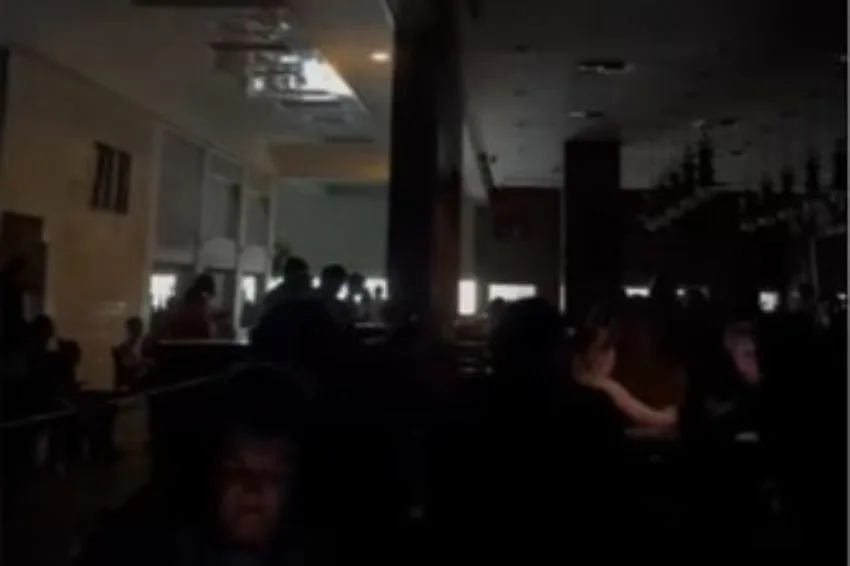
Constant power outages have had a direct impact on the Brazilian commercial sector—and, more recently, shopping malls have been facing losses due to blackouts that compromise everything from safety to sales.
These episodes raise awareness of the lack of efficient backup systems and reinforce the role of solutions such as solar energy storage with batteries.
On May 18, a blackout hit the Midway Mall in Natal, Rio Grande do Norte, shutting down escalators, elevators, restaurants, and stores. The power outage was caused by a substation failure, and power was only restored after more than an hour of interruption.
Less than a week later, Park Shopping in Brasília (DF) was left without power for more than three hours due to a faulty circuit in the area. The outage caused payment systems, lighting, and refrigeration to stop working, causing disruption for both store owners and customers.
Videos shared on social media showed dark hallways and customers using their cell phone flashlights to navigate. Some complained about the difficulty of leaving the theaters and parking lots.
Cases like these aren't unique to this year. During Black Friday 2024, the Bahia Shopping Mall in Salvador, Bahia, lost power during peak hours, affecting consumers and merchants on one of the busiest days of the year. The outage was caused by interference during construction work that affected Neoenergia Coelba's underground network.
Storage as a solution to ensure security and revenue
In an interview with Canal Solar, Lais Andrade, an engineer at CS Consultoria, highlighted that the recent blackouts in shopping malls highlight the vulnerability of businesses that do not yet have backup systems.
"Not all shopping malls in Brazil have generators or energy storage systems for situations like these. When this type of support is not available, operations can be completely interrupted, compromising sales, safety, and the customer experience," she says.
According to Laís, solar systems with batteries can automatically detect power outages on the grid and transfer power to priority loads virtually instantaneously. "The system detects the power outage, isolates the unit, and then powers previously selected loads, such as lighting, CCTV, and other strategic areas," she explains.
-

Lais Andrade, an engineer at CS Consultoria and a specialist in photovoltaic systems. Photo: Canal Solar
The engineer emphasizes that scaling depends on the client's investment, making it possible to cover part or all of the mall's demand. For owners, one of the main advantages is continued store revenue, especially in malls with variable rent models, where part of the revenue depends directly on tenant sales.
"With the storage system, stores continue to operate and generate revenue normally," explains Lais. For consumers, the presence of batteries ensures a seamless experience. "Customers often don't even notice there's a power outage because the switching is almost imperceptible," she adds.
The engineer emphasizes that LFP (lithium iron phosphate) batteries are best suited for this type of application, as they offer greater durability and storage capacity. "These batteries can withstand prolonged drops and offer greater operational safety," she says.
In addition to technical performance, storage systems also have advantages over diesel generators in terms of response time, maintenance, and environmental impact. "Generators need to reach a minimum number of revolutions per minute to begin operating, while batteries kick in almost immediately," Lais points out.
In terms of maintenance, generators require periodic checks, oil changes, and ongoing inspections. "Not to mention the environmental risks of oil or fuel leaks, which can contaminate the soil or sewage, requiring greater expenditure on checking the tightness of fuel tanks, if any," warns the engineer.
With the increasing frequency of power grid failures and the growing demand for sustainable solutions, battery storage is gaining relevance in the commercial sector. As Lais points out, it's no longer just "a technical choice but a strategic decision to ensure business continuity, safety, and value."
all the content of Canal Solar is protected by copyright law, and partial or total reproduction of this site in any medium is expressly prohibited. If you are interested in collaborating or reusing part of our material, please contact us by email: redacao@canalsolar.com.br.