
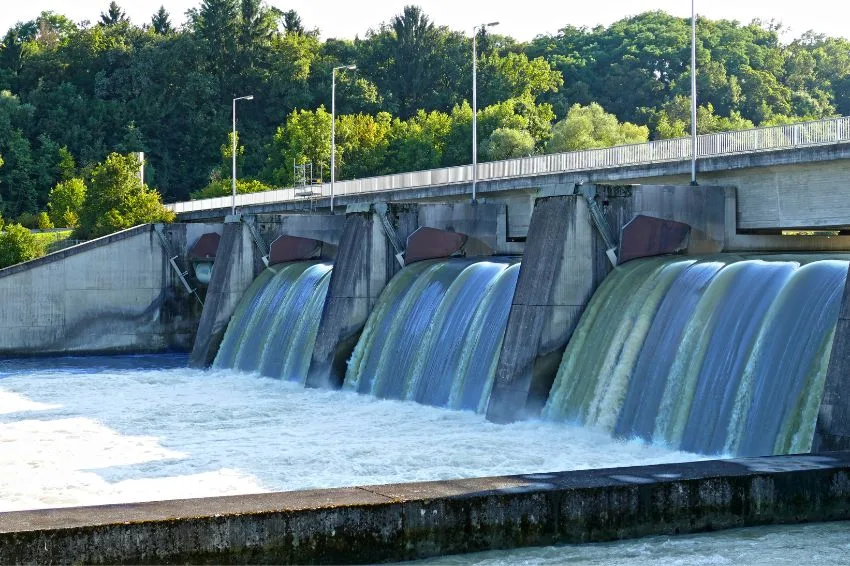
The conditions for electricity supply in 2026 remain secure, supported by the recovery of reservoirs, the improvement of the hydrological scenario in the South of the country, and the operational planning foreseen to face any periods of higher demand.
This was the main scenario presented during the most recent ordinary meeting of the CMSE (Electricity Sector Monitoring Committee), which brought together representatives from the main bodies responsible for monitoring the operating conditions of the Brazilian electricity system.
The assessment also indicates that the system will continue to rely, when necessary, on the supplementary dispatch of thermoelectric plants, the optimized operation of the São Francisco River hydroelectric plants, and the strategic use of the Itaipu dam reservoir to preserve the reliability of the SIN (National Interconnected System).
Among other highlights of the meeting, attention was also given to the expansion of electrical infrastructure, results from energy trading, and projections for the coming years.
Reservoir recovery
One of the central points discussed by the committee was the improvement observed in the hydrological conditions of the Southern Region during the month of June, because, according to information presented by the ONS (National System Operator), the frequent occurrence of cold fronts and cold air masses over the South, Southeast and Midwest regions favored both the occurrence of precipitation and the reduction of temperatures.
As a result, reservoirs in the southern region recorded a recovery in their storage levels, especially in the Iguaçu River basin, reinforcing the conditions for supplying the electrical system.
Rainfall above average was also recorded in the basins of the Iguaçu, Tietê, Grande, and Paranaíba rivers, and in the incremental area of the Itaipu hydroelectric plant. In the other basins of the National Interconnected System (SIN), conditions remained close to the historical average for the period.
Despite this favorable rainfall pattern in parts of the country, the CMSE highlighted that the probability of the El Niño phenomenon occurring during the second half of 2026 remains high, with scenarios predominantly indicating strong or very strong intensity.
High levels
Operational data presented to the committee shows that the National Interconnected System (SIN) ended June with approximately 71% of its energy stored. Among the subsystems, the North registered the highest rate, with 95% of its maximum stored capacity, followed by the Northeast, with 89%. The Southeast/Central-West region closed the month with 66%, while the South reached 63%.
Regarding ENA (Natural Inflow Energy), June ended below the LTA (Long-Term Average) in all subsystems: 93% in the Southeast/Central-West, 82% in the South, 59% in the Northeast, and 58% in the North. For the entire SIN (National Interconnected System), ENA corresponded to 82% of the historical average.
For July, the scenarios developed by the ONS indicate distinct behavior among the regions. In the upper limit scenario, the ENA (Energy Not Supplied) could reach 125% of the historical average in the South and 105% in the Southeast/Central-West, while the Northeast and North remain with projections below the average. The system's storage is expected to remain between 66,1% and 69,7%, depending on the hydrological conditions observed throughout the month.
Safety margin
During the meeting, the ONS also presented the PEN (Energy Operation Plan) to the board, a study that assesses the conditions for guaranteeing the supply of energy and power between 2027 and 2030.
The schedule foresees the release of the executive summary and results on the platform on Tuesday (7). Power BI, the date on which a meeting with industry stakeholders will also take place. The final reports should be available by July 31st on the operator's official channels.
Also in the area of planning, Cemaden (National Center for Monitoring and Alerts of Natural Disasters) presented meteorological forecasts indicating below-average rainfall in parts of the Iguaçu and Jacuí river basins in the first week, followed by above-average rainfall in sections of the Paraná, Iguaçu and Upper Uruguay river basins in the second half of July.
Solar power generation advances
Monitoring the expansion of the system was also on the agenda of the CMSE, with particular emphasis on the information that, in June, 184,5 MW of installed centralized generation capacity came into commercial operation. The Lagoinha Photovoltaic Complex in Russas (CE), responsible for 165 MW of this total, was specifically mentioned.
In the transmission segment, 1.012 kilometers of new lines began commercial operation, including the Xingó–Camaçari II and Presidente Juscelino–Vespasiano 2 projects. During this period, no new transformers with a voltage equal to or greater than 230 kV came into operation.
Commercialization and exchange
In the short-term market, CCEE (Chamber of Electric Energy Commercialization) reported that the financial settlement related to the May accounting totaled R$ 3,07 billion. Of this total, R$ 2,64 billion was settled, while R$ 424,4 million remained unpaid. Another R$ 414,81 million was allocated to CONER (Reserve Energy Account).
The committee also analyzed preliminary data on international energy exchange. There were no hydroelectric exports or commercial imports in May and June. However, thermoelectric exports reached an average of 754 MW in May and 1.169,5 MW in June, with... Argentina as the main destination, followed by Uruguay.
At the end of the meeting, the CMSE He reiterated that he will continue to closely monitor the conditions of the electricity market, keeping track of hydrological conditions, system operation, and supply trends to ensure security of supply over the coming months.
all the content of Canal Solar is protected by copyright law, and partial or total reproduction of this site in any medium is expressly prohibited. If you are interested in collaborating or reusing part of our material, please contact us by email: redacao@canalsolar.com.br.



Comments
Comments are moderated before publication.Comments should be respectful and contribute to a healthy debate. Offensive comments may be removed. The opinions expressed here are those of the authors and do not necessarily reflect the views of the author. Canal Solar.