
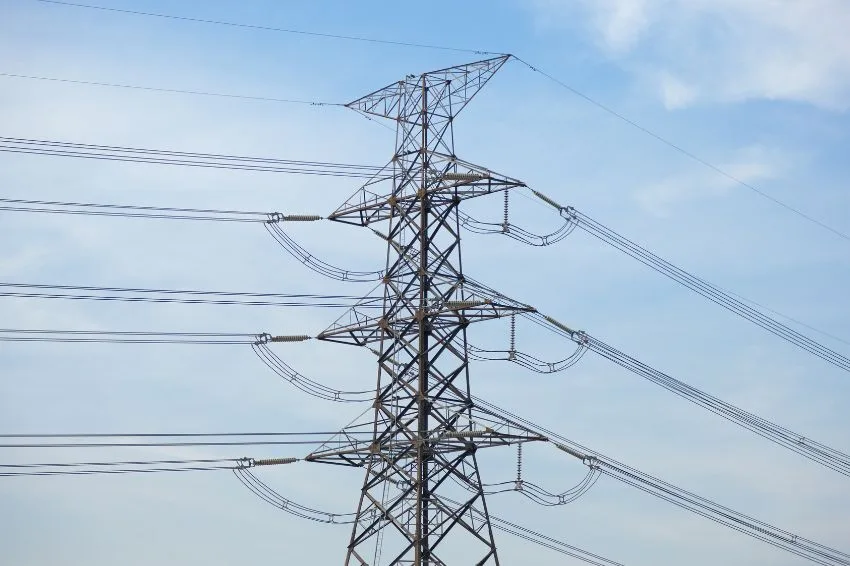
The expansion of battery energy storage systems in Brazil now has a new technical milestone with the implementation of the first LRCAP (Capacity Reserve Auction in the form of Power) focused on this technology.
In a joint technical note, EPE (Energy Research Company) and ONS (National System Operator) detail the methodology that will be used to calculate the remaining capacity of the transmission network available for connecting new projects, one of the central elements in defining where it will be possible to install the projects that will compete in the tenders scheduled for December.
More than just presenting technical procedures, the document highlights the concern of planning and operation bodies in adapting the traditional criteria for access to the SIN (National Interconnected System) to the specific characteristics of battery-based storage systems (BESS).
The proposal seeks to ensure that the winning projects from the auction can be integrated into the electrical system without compromising operational reliability or causing conflicts with other network expansion processes.
Technical basis
This note was prepared in compliance with the guidelines established by the MME (Ministry of Mines and Energy) for the two storage auctions scheduled for December 2nd and 4th, 2026 — one intended for systems with national content and the other open to other projects.
Both projects are scheduled to begin supply on August 1, 2028. This document corresponds to the first of two stages in the technical process. In this phase, EPE and ONS present the assumptions, criteria, and calculation methodology.
A second technical note, scheduled for September 30th, will disclose the actual quantities of remaining capacity available at each busbar, sub-area, and area of the SIN (National Interconnected System), in addition to the reference cases used in the simulations.
In practice, this separation allows agents to know the calculation rules in advance before the actual results are released.
Physical network capacity
One of the central aspects of the methodology is that the evaluation is not limited to the existence of physical space to connect new ventures.
The analysis incorporates different dimensions of the electrical system's operation, including static performance, dynamic stability, short-circuit levels, physical availability of substations, operational limitations of transmission equipment, and the charging capacity of the batteries themselves.
The goal is to verify whether each point in the network has the effective conditions to receive new storage systems under different operating conditions.
Another key difference highlighted in the report is that the methodology considers both the moment when the batteries inject power into the system and the period in which they need to be charged. This approach seeks to reflect the bidirectional nature of storage systems, which sometimes act as generators and sometimes as energy consumers.
According to the document, even if a busbar has the capacity to receive a certain power during battery discharge, this value may be reduced or even eliminated if studies indicate restrictions on charging the equipment under safe operating conditions.
Critical situations
The simulations were structured to reproduce the moments of greatest power demand in the electrical system.
To this end, EPE and ONS used as a reference the studies already employed in defining the capacity requirement of the SIN (National Interconnected System), considering representative scenarios for meeting peak demand.
The technical note explains that assumptions about the behavior of different generation sources — hydroelectric, wind, solar, and thermoelectric — were incorporated in order to represent critical operating and energy flow situations.
The assumptions vary according to the country's geoelectric region. For the North, Northeast, Southeast/Central-West, and South regions, specific availability percentages were established for the different generation sources, allowing the studies to reflect the operational particularities of each subsystem.
The note also clarifies that, for battery charging analyses, fixed percentages of generation or charging will not be adopted. Instead, different operating combinations that represent favorable conditions for absorbing the energy necessary to charge the systems will be evaluated.
Transmission expansion
Another relevant aspect of the methodology is updating the configuration of the transmission network used in the studies.
Transmission facilities already granted authorization will be considered. ANEEL (National Electric Energy Agency) until the ordinary meeting of the CMSE (Electric Sector Monitoring Committee) held at the end of the project registration period, using the trend dates approved by the committee.
Updated information provided by energy distributors and concessionaires will also be incorporated to ensure greater alignment between the computational model and the expected evolution of the electrical infrastructure.
The methodology also provides for compatibility with the so-called Access Season. In this way, part of the network capacity allocated to this process will be deducted from the quantities available for the battery auction, preventing the same transmission resource from being reserved simultaneously for different projects.
operational safety
Concern for operational safety appears repeatedly throughout the document because, in addition to electrical performance assessments, the note establishes that limitations related to short-circuit levels may restrict the remaining capacity of certain busbars.
When there is a need to replace equipment without a timeframe compatible with the start of the supply scheduled for August 2028, these sites may no longer be considered suitable for new developments.
The physical availability of substations for new connections will also be analyzed. The busbars will be classified according to the existing expansion possibilities, taking into account the infrastructure commitments to already contracted projects, future access routes, and works planned in the transmission plan.
From a broader perspective, the technical note demonstrates that the large-scale integration of storage systems will require more sophisticated criteria than those traditionally used for conventional generation projects.
By simultaneously considering aspects of operation, transmission expansion, loading, unloading, and electrical safety, EPE and ONS seek to establish a methodology capable of guiding the efficient allocation of new projects and reducing risks.
all the content of Canal Solar is protected by copyright law, and partial or total reproduction of this site in any medium is expressly prohibited. If you are interested in collaborating or reusing part of our material, please contact us by email: redacao@canalsolar.com.br.


Comments
Comments are moderated before publication.Comments should be respectful and contribute to a healthy debate. Offensive comments may be removed. The opinions expressed here are those of the authors and do not necessarily reflect the views of the author. Canal Solar.