
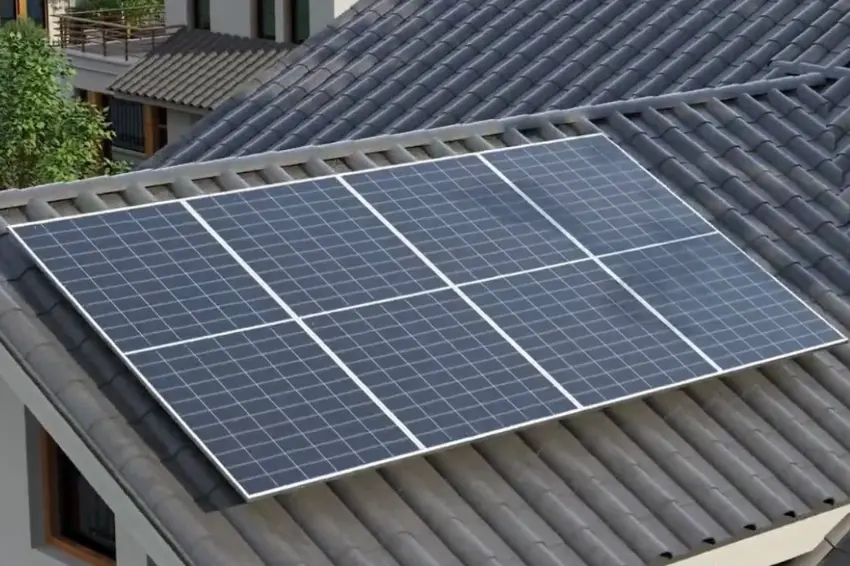
The adoption of Fast Track for small-scale distributed generation systems is opening up opportunities for new photovoltaic project configurations.
In this scenario, SolarUnit, from DAH Solar, appears as an example of a solution whose modular architecture can enable the adjustment of installed power to the 7,5 kW limit foreseen for this type of framework.
According to the manufacturer's technical team, the main SolarUnit models currently available in Brazil have power ratings of 1,5 kW and 2 kW. Combining these units allows for a total output of 7,5 kW in various ways, such as using five 1,5 kW units or three 2 kW units combined with one 1,5 kW unit.
“The SolarUnit has power management and export control capabilities through the DTU (Data Transfer Unit), using CTs (Current Transformers). This feature allows the system's behavior to be adapted to the installation's needs and, when applicable, to implement an export limitation strategy,” explained Philipe Boaventura, Latam Technical Manager for batteries and converters at DAH Solar.
According to Boaventura, the architecture allows the integrator to adapt the installed power to the characteristics of the residence and the requirements of Fast Track. Metering via current transformer (CT) connected to the data transfer unit (DTU) also makes it possible to monitor the energy flow and perform power control and export when necessary.
According to him, the combination of SolarUnit and Fast Track is primarily aimed at residential projects and small commercial installations with a consumption profile compatible with systems up to 7,5 kW.
Boaventura explains that the application gains relevance especially in regions where reverse flow has become an obstacle to connecting new distributed generation systems. Among the examples cited is Minas Gerais.

"Each generating unit operates independently, allowing for greater flexibility in sizing and reducing the impact of any individual outages," he said.
In residential projects, Boaventura also highlights the importance of considering the consumption profile to adapt generation to the demand of the consumer unit and seek greater local use of the energy produced.
“We see SolarUnit as a particularly interesting solution for homes seeking a modular installation with a high level of monitoring, scaling flexibility, and the possibility of future integration with storage solutions,” he stated.
Care in sizing
Regarding the considerations for sizing a Fast Track project, Boaventura highlights some points that the integrator should observe:
Power limit and eligibility: respect the 7,5 kW installed generation power limit and verify that the project meets the other conditions established for local self-consumption in the Fast Track.
Consumption profile: evaluate the unit's consumption characteristics and size the system aiming for a high rate of self-consumption.
"This is especially important because, by opting for Fast Track, the consumer will not be able to allocate or reallocate surplus or credited energy to another consumer unit," he stressed.
Technical aspects of the installation: correctly sizing the quantity and power of the SolarUnits, verifying the electrical configuration of the installation and the connection capacity, as well as ensuring the proper installation of the measurement and communication devices used for power control.
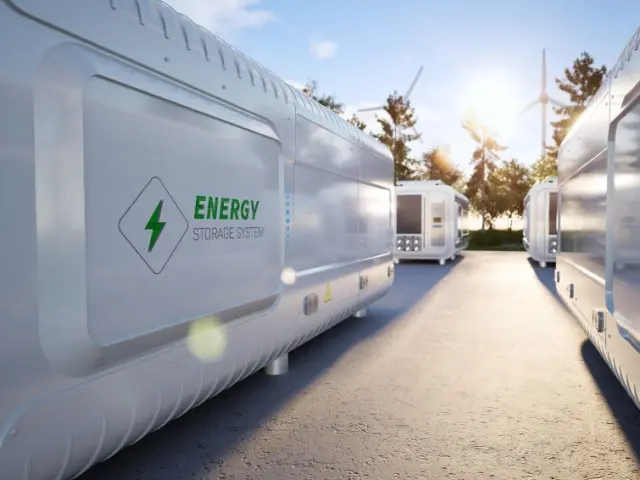
Finally, Boaventura points to energy storage as a possibility for customers seeking to expand self-consumption and reduce dependence on the grid. According to him, the integration of SolarUnit with battery and Smart PCS allows for the storage of some of the surplus energy and its later use during periods of higher demand, increasing the local utilization of generation.
all the content of Canal Solar is protected by copyright law, and partial or total reproduction of this site in any medium is expressly prohibited. If you are interested in collaborating or reusing part of our material, please contact us by email: redacao@canalsolar.com.br.



Comments
Comments are moderated before publication.Comments should be respectful and contribute to a healthy debate. Offensive comments may be removed. The opinions expressed here are those of the authors and do not necessarily reflect the views of the author. Canal Solar.