
• Tuesday, December 16, 2025
Facebook X-twitter Instagram Youtube LinkedIn Spotify
  • GC Solar: 17,95 GW
  • GD Solar: 41,3 GW
  • TOPCon Modules: $0,088/W
  • P-Type Cells: $0,034/W
  • N-Type Cells: $0,032/W
  • HJT Modules: $0,10/W
  • N-Type Wafer: US$0,128/pc
  • Polysilicon: US$ 19,00/kg
  • GC Solar: 17,95 GW
  • GD Solar: 41,3 GW
  • TOPCon Modules: $0,088/W
  • P-Type Cells: $0,034/W
  • N-Type Cells: $0,032/W
  • HJT Modules: $0,10/W
  • N-Type Wafer: US$0,128/pc
  • Polysilicon: US$ 19,00/kg
  • advertise here
  • About us
  • Expedient
logo site solar channel
  • News
    • energy storage
    • Market and Prices
    • Investments & Business
    • Policy and Regulation
  • Articles
    • Batteries
    • Photovoltaic structures
    • Photovoltaic inverters
    • Opinion
  • Renewable
  • Latam
  • Blog
  • Solar Energy Companies
  • Integrators
  • Magazine
    • Magazine Canal Solar
    • Conecta Magazine
  • Events
  • Videos
  • Electric Vehicles
  • Consultancy
  • Academics
  • News
    • energy storage
    • Market and Prices
    • Investments & Business
    • Policy and Regulation
  • Articles
    • Batteries
    • Photovoltaic structures
    • Photovoltaic inverters
    • Opinion
  • Renewable
  • Latam
  • Blog
  • Solar Energy Companies
  • Integrators
  • Magazine
    • Magazine Canal Solar
    • Conecta Magazine
  • Events
  • Videos
  • Electric Vehicles
  • Consultancy
  • Academics
  • News
    • Brazil
    • World
    • Technology and inovation
  • Articles
    • technicians
    • Opinion
  • Blog
  • Solar Energy Companies
  • Integrators
  • Magazine
    • Conecta Magazine
  • Events
  • Videos
  • About Us
  • Advertise Here
  • CS Consulting
  • Canal VE
  • Academics
  • News
    • Brazil
    • World
    • Technology and inovation
  • Articles
    • technicians
    • Opinion
  • Blog
  • Solar Energy Companies
  • Integrators
  • Magazine
    • Conecta Magazine
  • Events
  • Videos
  • About Us
  • Advertise Here
  • CS Consulting
  • Canal VE
  • Academics
logo site solar channel
Home / Articles / Manufacturer's article / Differences between autotransformer and isolating transformer in system

Differences between autotransformer and isolating transformer in system

There are several aspects that are considered between the two types, find out what they are
Follow on Whatsapp
  • Photo by Minuzzi Minuzzi
  • April 3, 2023, at 12:21 PM
3 min 21 sec read
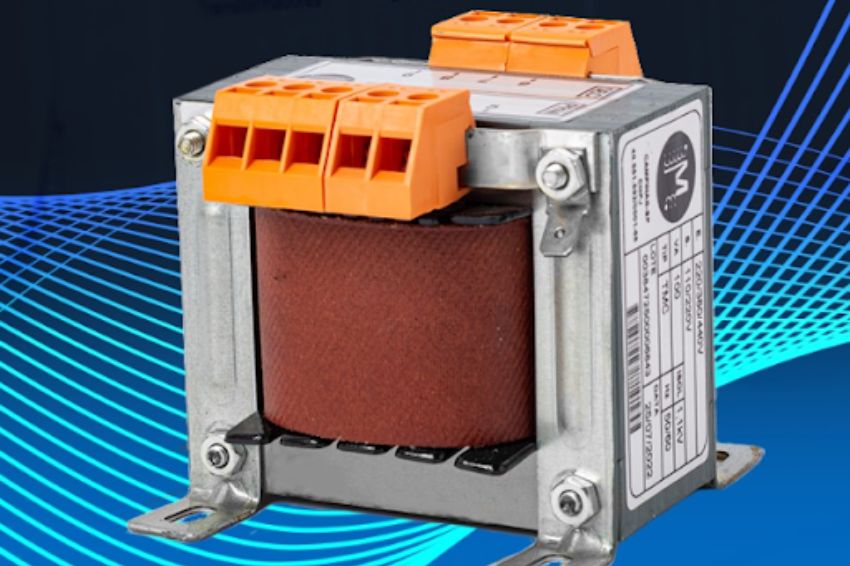
Canal Solar Differences between an autotransformer and an isolation transformer for use in a solar system
Image: Minuzzi/Reproduction

We can say that, basically, the difference between an autotransformer and an isolating transformer is the fact that the autotransformer has a single winding on a laminated core, while the isolating transformer has two separate windings, these being the primary winding and the secondary winding.

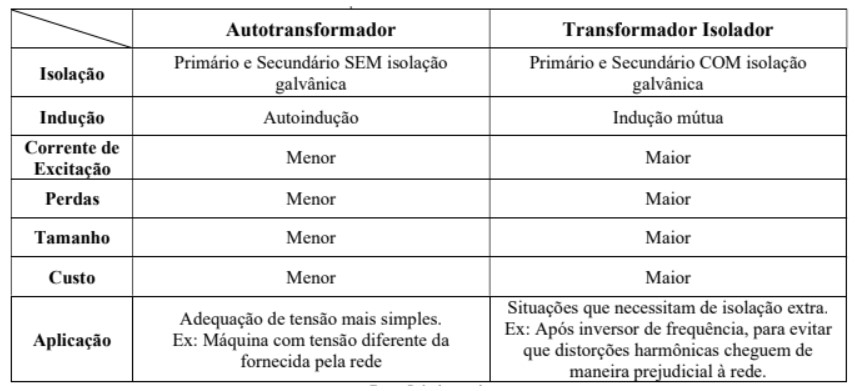
However, there are other aspects that are also considered: type of insulation, induction, excitation current, losses, size, cost and application. The differences can be seen in the table below.

Table 1 – Differences between autotransformer and isolating transformer
The isolation transformer is used when it is necessary to isolate the system from the electrical grid (following a recommendation from ANEEL); when we have two neutrals available (network and inverter), requiring isolated connections between them; to prevent network disturbances that could cause the inverter to disconnect; in networks that have interference from non-linear loads (harmonics), such as rural areas, end of line, among other cases; and systems with more than one inverter.

The isolating transformer has the advantages of isolating and protecting the system from the electrical network; neutrals isolated from each other; greater reliability and security of cargo protection. Regarding the disadvantages of the isolating transformer, we can mention the larger physical size, greater weight, higher cost and greater additional losses.

When we talk about an autotransformer, despite having a smaller size, lower losses and lower price, it has the disadvantage of not filtering, allowing impurities to pass straight through the network and offering greater risks of shock to the installations.

Differences between a solar transformer and a conventional transformer

Solar transformers are designed to be used in photovoltaic energy systems.

To transform solar energy into electrical energy, in addition to photovoltaic panels, a DC-AC inverter is also required and, in some cases, a photovoltaic transformer to make the inverter output compatible with the electrical grid or to provide additional protection, isolating the system photovoltaic from the electrical grid.

The isolating transformer, in addition to keeping the system safe due to its galvanic isolation, is also responsible for adjusting the electrical voltage that exists between the inverter and the electrical network, that is, without it, it is not possible to use solar energy in the sockets.

They are applied when the three-phase photovoltaic solar inverter needs to produce energy on a three-phase network, but with different voltages. For example, 380V three-phase inverter used in 220V three-phase power grid.

The use of this equipment is necessary so that the voltages are adequate. This means that the transformer or autotransformer will transform electrical energy between two circuits, raising the grid voltage level to 380 V, allowing the connection and operation of the inverter.

The opposite process also happens: when the inverter is injecting energy into the grid, the transformer will reduce the voltage to 220 V, adapting the system to the local grid. We should always consult the dealership's recommendation to use the appropriate transformer.

What differentiates a solar transformer from a conventional isolating transformer are the characteristics of its construction. The solar transformer is built and specified with the aim of serving photovoltaic systems. This change occurs in the stacking dimensions, number of turns ratio and type of wire to be used, that is, it covers the characteristics of the transformer design.

This is necessary because in solar transformers, there is a need to reduce losses and optimize no-load consumption in order to improve performance, making the system operation more efficient.


The opinions and information expressed are the sole responsibility of the author and do not necessarily represent the official position of the author. Canal Solar.

Minuzzi ecosystem isolation transformer
Photo by Minuzzi
Minuzzi
Company specializing in the manufacture of transformers
PreviousPrevious
NextNext

An answer

  1. Sidney said:
    2 July 2024 to 15: 20

    I bought a fab autotransformer with 500 VA power (127/220). UPSAI, Since my load IS around 160VA. pirem when turning it on it would get very hot and turn off. In other words, it was 500VA, but it only serves 100VA.

    Reply

Leave a comment Cancel reply

Your email address will not be published. Required fields are marked with *

Comments should be respectful and contribute to a healthy debate. Offensive comments may be removed. The opinions expressed here are those of the authors and do not necessarily reflect the views of the author. Canal Solar.

News from Canal Solar in your Email

Posts

The 2026 Electro Graphics Series integrates electrical, photovoltaic, automation, and BIM projects.

The 2026 Electro Graphics Series integrates electrical, photovoltaic, automation, and BIM projects.

How does the Araymond traceability system enhance installation quality control?

How does the Araymond traceability system enhance installation quality control?

More news

Read More
Solar energy Canal Solar Minuzzi targets the solar skid market and projects 35% expansion in the segment
  • January 26, 2024
Photo by Mateus Badra
Mateus Badra

Minuzzi targets the solar skid market and projects 35% expansion in the segment

Solar energy Canal Solar Hybrid inverters and energy storage are set to gain ground in the solar sector
  • January 12, 2024
Photo by Wagner Freire
Wagner Freire

Hybrid inverters and energy storage should gain ground in the solar sector

Solar energy Canal Solar Choosing larger capacity transformers becomes common practice
  • December 28, 2023
Photo by Mateus Badra
Mateus Badra

Choosing higher capacity transformers becomes common practice

It is a news and information channel about the photovoltaic solar energy sector. Channel content is protected by copyright law. Partial or total reproduction of this website in any medium is prohibited.

Facebook X-twitter Instagram Youtube LinkedIn Spotify

Site Map

Categories

  • News
  • Articles
  • Interviews
  • Consumer Guide
  • Authors
  • Projects
  • Brazil
  • World
  • Technical Articles
  • Opinion Articles
  • Manufacturer Items
  • Electrical Sector
  • Biddings
  • Products

Channels

  • About Us
  • Contact
  • We’re hiring!
  • Privacy
  • Expedient
  • advertise here

Membership and certifications

Copyright © 2025 Canal Solar, all rights reserved. CNPJ: 29.768.006/0001-95 Address: José Maurício Building – Mackenzie Avenue, 1835 – Floor 3, – Vila Brandina, Campinas – SP, 13092-523

We use cookies to make your experience on this site better Find out more about the cookies we use or turn them off in your .

Receive the latest news

Subscribe to our weekly newsletter

Canal Solar
Powered by  GDPR Cookie Compliance
Privacy

This website uses cookies so that we can provide you with the best user experience possible. Cookie information is stored in your browser and performs functions such as recognizing you when you return to our website and helping our team to understand which sections of the website you find most interesting and useful.

Cookies strictly required

Strictly Necessary Cookie should be at all times so that we can save your preferences for cookie settings.

Cookies for third parties

This website uses Google Analytics to collect anonymous information such as the number of visitors to the site, and the most popular pages.

Keeping this cookie enabled helps us to improve our website.