
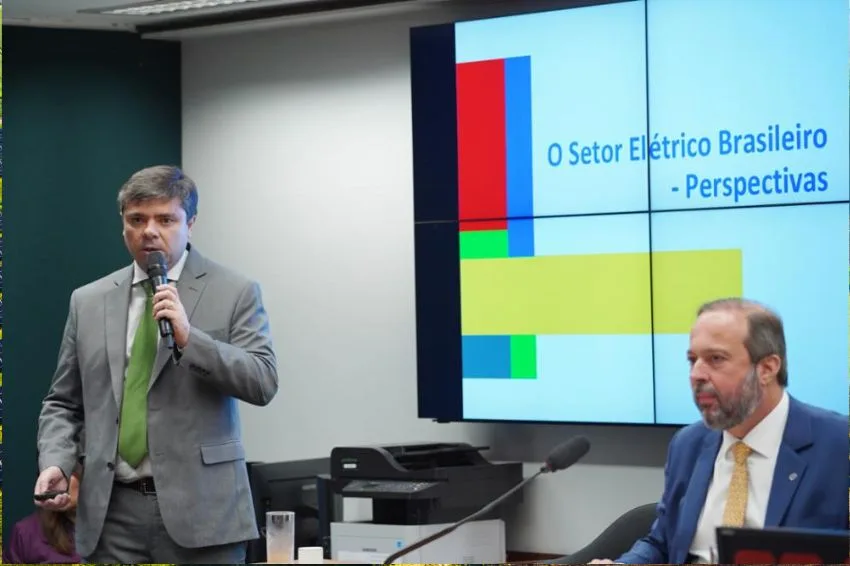
The Secretary of Electric Energy of the MME (Ministry of Mines and Energy), Gentil Nogueira, stated last Friday (6) that the end of the discount on tariffs for use of the transmission and distribution system (TUST and TUSD, respectively) – as provided for in MP (Provisional Measure) 1.300/2025 – is essential for the success of the opening of the Free Energy Market.
He emphasizes, however, that the Ministry does not rule out negotiating transitional rules. “The end of the discount on consumption for the purchase of incentivized energy is a measure that needs to be adopted from a conceptual point of view to open the market,” the secretary declared in an interview with CNN Money.
According to the executive, the current model creates distortions in the market, since the free contracting environment is still restricted to consumers with higher consumption. “Low voltage, when it can go to the free market, will compete for this market together with larger consumers. It makes no sense, in the same energy delivery, for one to get a discount and another not. Therefore, the opening of the market requires a single market”, he explained.
Despite defending the end of subsidies, Nogueira did not rule out the possibility of discussing a new transition rule for discounts applied to incentivized energy, such as solar, wind, PCHs (small hydroelectric plants) and biomass.
Provisional Measure
MP 1.300/2025 establishes that consumers have until December 31, 2025 to submit their contracts to the CCEE (Electric Energy Trading Chamber) and, thus, ensure the temporary maintenance of discounts. After this date, new contracts will no longer be entitled to the subsidy.
“This transition was made within the MP and it respects contracts and legal certainty by allowing these discounts to 'end' at the end of energy contracts already signed, including giving a deadline until December 31, 2025 for those who have not yet submitted contracts to CCEE”, said Nogueira.
This is precisely to ensure that the exit of this discount takes place within legal certainty, according to Nogueira. “It is logical that this could lead to a discussion within the National Congress regarding the transition. I think it is unfeasible not to have a solution to this issue. We need this market to really be a market,” he stressed.
The secretary also signaled openness to adjustments to the transition model. “The transition that was proposed in the Provisional Measure regarding the end of purchase and sale contracts could be replaced by another transaction. This will be discussed within the [joint] committee, if there is eventually another solution that meets the interests of energy consumers who need to see this market efficient and homogeneous for everyone,” he said.
Finally, Nogueira reinforced the government's willingness to engage in dialogue. "Of course, the government is willing to talk and find a way out. There is no way to end these subsidies, but this is an issue that we have to work on, respecting contracts, the entrepreneurs who built their projects counting on these subsidies, but also making our electricity market fairer, so that everyone can buy electricity equally, so that there are no fences," he concluded.
all the content of Canal Solar is protected by copyright law, and partial or total reproduction of this site in any medium is expressly prohibited. If you are interested in collaborating or reusing part of our material, please contact us by email: redacao@canalsolar.com.br.