
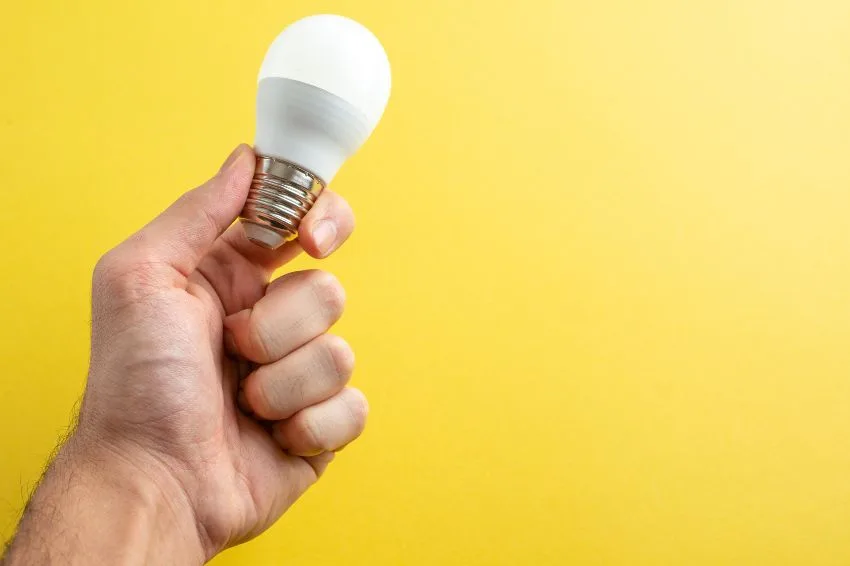
LED lamps and light fixtures sold in Brazil will need to comply with stricter minimum energy efficiency standards, as part of a government measure aimed at improving the performance of equipment available on the market and increasing electricity savings in the coming years.
The change will be implemented gradually starting in 2028 and is part of a strategy to strengthen energy efficiency as a tool to reduce consumption and avoid waste.
According to estimates from the MME (Ministry of Mines and Energy), responsible for updating the rules, the adoption of the new requirements could result in accumulated savings of between 283 and 432 TWh by 2040.
For comparison, the country's total electricity consumption in 2025 was 667,8 TWh, which highlights the magnitude of the potential reduction provided by the measure.
Two steps
The new regulation establishes a phased schedule for industry and commerce to adapt, with the first phase beginning on January 1, 2028, when lamps must have a minimum luminous efficacy of 120 lumens per watt (lm/W).
Luminous efficacy represents the relationship between the amount of light produced and the energy consumed. The higher this indicator, the greater the efficiency of the equipment, meaning more light is obtained for the same electrical consumption.
Products that do not meet this requirement may still be manufactured or imported until December 31, 2027.
Manufacturers and importers will have until June 30, 2028 to sell their inventory, while retailers and wholesalers will be able to sell these products until June 30, 2029.
The second phase comes into effect on January 1, 2030, raising the requirement to 140 lm/W. The transition schedule will be similar, meaning that the manufacture and import of products below this index will be permitted until the end of 2029, while the marketing deadlines extend until June 2030 for manufacturers and importers and until June 2031 for retail and wholesale.
The measure covers the main products.
The new rules cover indoor LED lamps with a control device integrated into the body or base, as well as indoor and outdoor luminaires with integrated, recessed, or independent controls.
The regulation does not establish restrictions regarding the format, size, or color temperature of the equipment, including products with RGB systems for changing the colors of the lighting.
The adoption of more rigorous standards should raise the quality of products available on the Brazilian market and bring national specifications closer to international performance benchmarks.
Specific exceptions
Not all equipment will be subject to the new minimum efficiency standards, such as products intended for specific applications, for example, medical, dental and veterinary equipment, aviation lighting, automotive equipment, vessels, toys, emergency lighting, luminaires with integrated photovoltaic systems, stage lighting for film and television, streetlights, and decorative luminaires. These are pieces of equipment whose technical characteristics make the application of general performance criteria unfeasible.
To qualify for these exceptions, manufacturers must submit technical documentation issued or validated by a laboratory accredited by Inmetro, proving that the product falls within the specified circumstances.
The measure concerning the efficiency of LED products stems from a resolution by the CGIEE (Management Committee for Energy Efficiency Indicators and Levels), published in the June 29th edition of the DOU (Official Gazette of the Union).
all the content of Canal Solar is protected by copyright law, and partial or total reproduction of this site in any medium is expressly prohibited. If you are interested in collaborating or reusing part of our material, please contact us by email: redacao@canalsolar.com.br.