
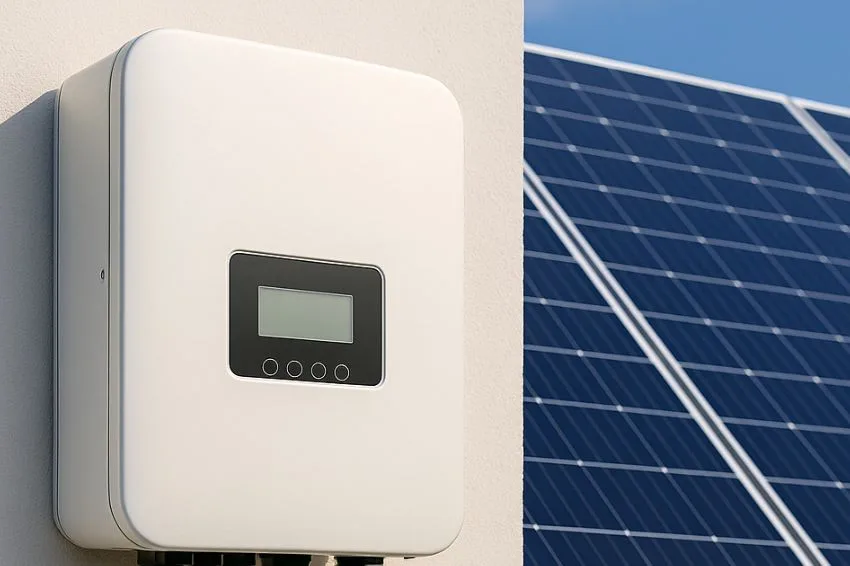
The expectation is that a photovoltaic system will have a long life, generally operating for at least 25 years.
So, what to do when a manufacturing defect is identified within the warranty period of photovoltaic equipment? Who is responsible: the integrator, the distributor or the manufacturer?
The warranty for equipment that makes up a photovoltaic system – solar panels, inverters, cables, support structure, batteries, among others – is defined by article 18 of the CDC (Consumer Protection Code), which establishes that all actors in the production chain are responsible for the warranty of durable goods.
“First, it is important to understand that in the case of a photovoltaic system, we have a warranty on the equipment, provided by the manufacturers, and a warranty on the service, provided by the integrating company. Furthermore, there are two types of warranty: the legal warranty, provided for in the Consumer Protection Code, and the contractual warranty, which is established in a contract between the distributor and the manufacturer, or between the integrator and the distributor,” explains lawyer Lilian Novakoski.
“The legal guarantee, established by the CDC, is 90 days in relation to defects, such as the equipment not working or not turning on, or a module that is not generating energy. The term of the contractual warranty is determined by each distributor, manufacturer or integrator”, adds Lilian.
The contractual warranty typically offered by manufacturers is five years for inverters and 10 years for photovoltaic modules, with the latter also having a 25-year performance guarantee.
Attorney Cássio Ribeiro Avila Júnior, a consumer law specialist, explains the steps that consumers should follow. “It is always important to seek out the person who installed or sold the product to see if they have any suggestions, since they are responsible for delivering and preparing the product 100% as it was sold. If there is no solution, the next step is to seek the assistance of an attorney specialized in consumer law to determine the best path to follow,” advises the attorney.
cheap is expensive
In a legal sense, the answer is clear: the guarantee for photovoltaic equipment belongs to all companies in the chain (integrator, distributor and manufacturers). To avoid headaches, consumers need to consider two questions before purchasing a product or service:
- But, how are commercial negotiations carried out between the person responsible for the guarantee and the consumer?
- What if the distributor closes? What if the manufacturer does not have operations in the national territory?
This way, you will avoid problems and be sure that you will purchase a durable asset from a safe and solid company, which will not abandon it in the event of occurrences such as, for example, an equipment defect. Likewise, the integrator must analyze the companies with which he intends to establish a partnership, researching the reputation of the manufacturer and distributor of the product he plans to use in his projects.
It is important that your decision is based on a broad cost-benefit analysis, considering all important factors, such as the support provided, the coverage of the assistance and the financial health of the company, not only in the price of solar energy equipment. The same must be done by distributors operating in the Brazilian photovoltaic market in relation to the chosen manufacturers.
Pedro Tochetto, executive director of BioWatts, highlights that the choice of partners must be in accordance with the company's mission and must aim to successfully deliver the services provided.
“We chose manufacturers that have greater adherence to deliveries, because when we talk about partnerships, we think of at least 25 years of business. It's basically a marriage, a life. So, in order to be solid, and grow more every day, we need to have partnerships with qualified companies, who have the same thinking as Biowatts, which is to deliver maximum excellence with premium equipment”, he highlights.
The executive also highlights the importance of choosing reliable partners, to prevent losses from being caused to the company and the end customer.
“We had a very serious problem with a customer. We moved our team to a city located 200 km from our headquarters, in Cascavel (PR), to install 180 panels. When we arrived at the installation site and unloaded the photovoltaic panels, we found that 10% of the batch was compromised. We saw that some cells were broken, including the manufacturer's own seal of disapproval. Even so, the manufacturer closed the glass, palletized it and delivered it to the end customer, without discarding it during quality control. This shows that some manufacturers do not have as much respect for their customers and the quality of their products”, reports Tochetto.

“We had to return the team to our company, leaving the customer dissatisfied. However, what brought more perplexity was that when contacting the manufacturer, he didn't even comment, he simply neglected the problem. The situation was only resolved because the distributor took over and replaced the modules. But I incurred losses with the installation, in addition to dealing with my client's dissatisfaction”, he concludes.
Another important point to consider when choosing partners is after-sales, as highlighted by Aldo Teixeira, president of Aldo Solar. According to the executive, all the company's actions must aim at a good commercial relationship, both with manufacturers and integrators, and with the end customer.
“The distributor who intends to work with a certain brand of panel, inverter or other equipment is responsible for technical assistance”, he comments.
“Our resellers have a contract that establishes a partnership rule, a purchase and sale rule and even so that these resellers and installers can make direct sales. One of the points of the contract between Aldo and the reseller is that we are 100% responsible for support, equipment exchange and part replacement, and equipment maintenance, but the call for service provision is made directly to the installer, who is responsible for keeping the system working 100%”, he adds.
Aldo also highlights that it is important for manufacturers to have a base in the country where they sell the product. “A manufacturer structure must exist within Brazilian territory to meet demand, to support warranty requests”, he reinforces.
Felipe Santos, sales manager at module manufacturer JA Solar, advises that consumers evaluate the product and the manufacturer to avoid future headaches. “It is vital to analyze the financial health of the company from which you intend to purchase the equipment, to be sure at the time of purchase that the guarantee given will be fulfilled”, he advises.
“It is very important to evaluate the manufacturers' warranty period, not only the warranty period against manufacturing defects, but also the performance warranty period. Not all manufacturers work with the same level, both in terms of warranty for manufacturing defects and degradation, and this can have a decisive impact when we analyze the useful life of a project and the amount of energy generated by it”, he concludes.
What if the company goes bankrupt?
Lawyer Lilian also explains what happens when a distributor goes bankrupt. “If a distributor goes bankrupt and there are problems caused to the equipment, the consumer ends up being harmed, in this case he can sue whoever installed or manufactured the equipment. The CDC gives this freedom to the consumer,” she explains.
To avoid this type of loss, the specialist reinforces the importance of researching the credibility and financial situation of companies before entering into a partnership, in the case of integrators, or purchasing a photovoltaic system installation service, in the case of the end customer.
Want to better understand the benefits of renewable energy for businesses and homes? Read our articles about solar energy and stay up to date with what's happening in this sector!


Comments (7)
Comments are moderated before publication.Comments should be respectful and contribute to a healthy debate. Offensive comments may be removed. The opinions expressed here are those of the authors and do not necessarily reflect the views of the author. Canal Solar.
WHAT IS THE MAXIMUM TIME A COMPANY HAS TO COLLECT DAMAGED EQUIPMENT AND RETURN A NEW OR REPAIRED EQUIPMENT UNDER WARRANTY?
What Aldo says there is really what happens when someone buys from his company, he takes all the responsibility away from him and passes it on to the integrator, we bought 500 panels and some were cracked inside the pallet, they said that as the customer signed the NF , they have nothing to do with it and you had to check it panel by panel! At Belenergy, GOSolar, they accept the error and reimburse the integrator.
Good morning, photovoltaic plants usually have insurance for one year and an invoice must be issued to the customer for legal guarantees.
Lightning completely damaged our solar energy system and the company does not want to be held responsible. How should I proceed?
In this case, a system damaged by lightning does not qualify for the warranty process. Since the guarantee only applies to manufacturing. The ideal would be to find out if the technical team installed the protection devices for this situation, such as the DC protection box and its components, such as the DPS (surge protection device). If your treatment contained such equipment, but it was not installed, you can take action against the company, as such equipment could have prevented the damage to the equipment.
Another point is that if there is insurance against natural damage, this would be applied and covered for the value of your equipment.
I am installing a photovoltaic system in my home. The seller does not want to issue the invoice (he said that the amounts were agreed without considering the issuance of the invoice. With the issuance he pays tax and thus changes the contracted amount). He told me that the guarantee for the service and the system is the contract registered at the notary's office. I want to know if the contract can really be my guarantee in this case.
My equipment had a problem and 2 months ago they said they would send a technician but so far nothing. Consequently I am having to pay for energy.
Does the person who sold it to me have an obligation to pay my energy bill because it took so long to fix the problem?