
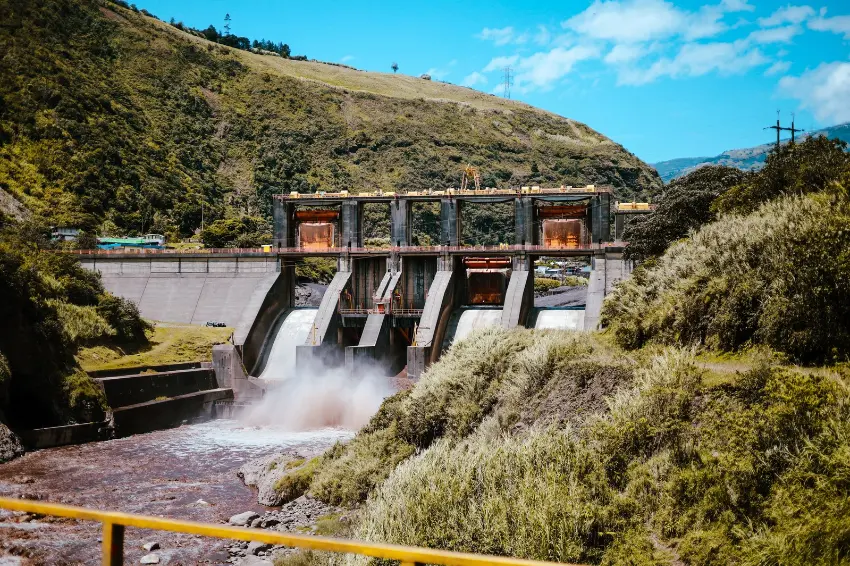
Brazil still has room to expand its hydroelectric generation capacity through small and medium-sized projects, according to a survey by ABRAPCH (Brazilian Association of Small Hydroelectric Plants and Small Hydroelectric Generating Plants), based on data from the Generation Information System of the Brazilian Hydroelectric Power Plants (SIPP). ANEEL (National Electric Energy Agency).
According to the regulatory body, there are 16,9 GW in projects that have already begun environmental studies. If they move forward, these projects could represent approximately R$ 169 billion in investments and more than 1 million jobs during implementation.
The survey is based on a scenario in which the country has approximately 107 GW of installed hydroelectric capacity, but still has about 40% of its hydroelectric potential untapped.
The analysis considers small hydroelectric power plants (PCHs) and hydroelectric plants up to 50 MW. To estimate the jobs, the association used a reference of 60 jobs per megawatt (MW) installed.
Potential spread across the country
The regional distribution of projects shows that the possibility of expansion is not concentrated in a single area. The Central-West region has 5.631 MW inventoried, equivalent to approximately R$ 56,31 billion in potential investments and 338 jobs.
The South region has 4.877 MW, R$ 48,77 billion and approximately 293 jobs, while the Southeast region totals almost 4.370 MW, with R$ 43,70 billion and more than 262 jobs.
The North and Northeast regions complete the survey, with 1.230 MW and approximately 787 MW, respectively. The associated potential investments are R$ 12,30 billion and R$ 7,87 billion, in addition to approximately 74 and 47 jobs.
Among the states, Minas Gerais concentrates 3.039 MW distributed across 221 axes, followed by Goiás, with 2.795 MW across 164 axes; Mato Grosso, with 2.205 MW across 141 axes; and Paraná, with 1.883 MW across 157 axes. Rio Grande do Sul, Santa Catarina, São Paulo, and Mato Grosso do Sul also appear among the highlights.
Investment depends on predictability.
For ABRAPCH, transforming this inventory into new ventures depends on conditions capable of sustaining long-term investments. The vice-president of the organization's board, Epitácio Barzotto, points to legal certainty, environmental predictability, and access to financing as determining factors.
According to him, the capital-intensive nature and decades-long time horizon of the projects make issues such as the stability of regulations, the duration of environmental processes, and the cost of credit particularly relevant.
“Investing in energy generation requires planning, intensive capital investment, and a decades-long vision. Therefore, changes in regulations during projects, excessively lengthy environmental processes, difficulty accessing credit, and high interest rates end up deterring precisely those who are willing to invest in the country's energy development,” he states.
In this context, the association advocates for greater predictability for entrepreneurs. "Investors aren't looking for an absence of rules. They're looking for clear, stable, and predictable rules. Instead of discouraging those who want to produce and invest, Brazil needs to create conditions that allow these investors to continue believing in the country," adds Barzotto.
Global perspective
The organization also places Brazil's potential in an international perspective. The country has approximately 1.600 hydroelectric plants of all sizes in operation, while China has 446 GW installed and about 45 plants, in addition to more than 300 GW in projects under construction, including reversible plants. In the United States, there are 103 GW and approximately 2.250 projects.
The comparison includes smaller countries like Norway, which has 1.791 hydroelectric plants, responsible for about 88% of its annual electricity generation. Austria, with a territory similar in size to Paraná, has 3.260 plants and more than 15 GW, while Germany has approximately 9.400 hydroelectric plants, mostly small-scale.
According to Lucas Pimentel, president of ABRAPCH, this scenario reinforces the existence of space for new projects in Brazil.
"Brazil has water resources, technical expertise, and a national industry prepared to transform this potential into clean energy, jobs, and regional development. We have hundreds of projects that have already begun their environmental studies and that can move forward if there is a clear signal from the government for the expansion of this energy source," he states.
The organization emphasizes, however, that the 16,9 GW mentioned represent an inventory of opportunities, and not automatically authorized projects. Each project still needs to complete the regulatory steps and obtain the respective license.
all the content of Canal Solar is protected by copyright law, and partial or total reproduction of this site in any medium is expressly prohibited. If you are interested in collaborating or reusing part of our material, please contact us by email: redacao@canalsolar.com.br.
Comments
Comments are moderated before publication.Comments should be respectful and contribute to a healthy debate. Offensive comments may be removed. The opinions expressed here are those of the authors and do not necessarily reflect the views of the author. Canal Solar.