
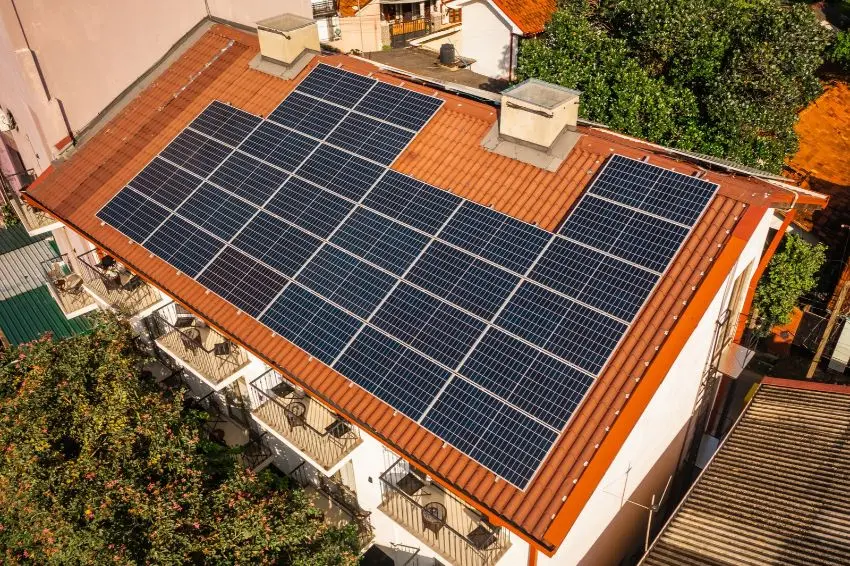
The growth of distributed micro and mini-generation (DMM) is beginning to demand changes in how energy is accounted for in the short-term market. ANEEL (National Electric Energy Agency) is considering allowing distributors to sell surplus solar generation from their networks on the Short-Term Market, using the PLD (Price of Settlement of Differences) as a reference.
The proposal is still under study and has been forwarded to the Federal Attorney's Office at the agency. One of the alternatives being analyzed foresees that the economic result obtained from the liquidation will be reverted to the benefit of consumers or used to contribute to tariff balance.
The problem stems from a situation that did not exist when the current accounting rules for the short-term market were structured. At that time, the presence of MMGD (Minimum Guaranteed Value) in distribution systems was practically non-existent.
The expansion of systems, mainly solar, has altered the flow of energy and caused part of the generation to directly supply the load of distributors.
CCEE
CCEE (Chamber of Electric Energy Commercialization) detailed the problem in a Technical Note that presents a proposal to amend the Commercialization Rules.
The objective is to incorporate MMGD's production into the calculation of total system generation, the calculation of losses in the Basic Network, and the energy balance of the distributors.
One of the problems lies in the surplus energy that is injected into the grid. Under current rules, this generation may not appear as a resource of the distributor in the market's accounting. In certain situations, the consequence is an artificial reduction in the accounted consumption and even the calculation of negative losses in the Basic Network.
CCEE illustrates the effect through examples. In a hypothetical scenario, a distributor receives 1.000 MWh from the Basic Network and has 400 MWh of consumption from a free consumer. Without distributed generation, its accounting consumption would be 600 MWh. With 200 MWh of distributed generation injected into the network, the measured consumption of the Basic Network drops to 800 MWh and the distributor's accounting consumption becomes 400 MWh.
In another scenario, distributed generation reaches 600 MWh and is sufficient to meet the entire captive load of the distributor. In this case, the accounting consumption attributed to the company reaches zero. When generation exceeds the load, a surplus arises that is not recognized as a resource of the distributor under current rules.
Financial impact
CCEE estimated the energy and financial effects of MMGD that were not accounted for by the distributors. Between January 2025 and June 2026, the table in the Technical Note indicates a cumulative financial impact of R$ 394,59 million, associated with an average amount of 98,14 MW during the period.
The monthly figures show a significant acceleration throughout 2025. The estimated impact, which was R$ 1,05 million in January of that year, for example, reached R$ 44,82 million in August.
In 2026, it remained at a high level, reaching R$ 27,79 million in March and R$ 27,20 million in May, before registering R$ 22,71 million in June.
Change affects various rules.
CCEE's proposal is not limited to accounting for the surplus. The design foresees that the effect of MMGD (Minimum Guaranteed Value) will be considered as a resource for distributors and also incorporated into the calculation of losses in the Basic Network. It is also suggested to establish a limit to prevent the total consumption accounted for from assuming negative values.
The proposed adjustments are spread across various modules of the Trading Rules, including Accounting Measurement, Contracts, Energy Balance, Exposure Treatment, Charges, Results Consolidation, Penalties, Reserve Energy, and MCSD (Surplus and Deficit Compensation Mechanism).
In the assessment presented to ANEELThe need for revision tends to grow as MMGD becomes structural in the system and as the migration of consumers to the free market also advances. CCEE itself warns that, without changes, the distortions may widen and affect other market calculations.
The most comprehensive alternative under discussion would therefore allow for assigning economic value to the surplus that is currently not accounted for. According to the legal assessment submitted to the agency, if this approach is adopted, the distributor would not be considered the owner of the generation: it would act as a representative of the regulated market and the SCEE (Electric Energy Compensation System).
The definition, however, still depends on further studies of ANEELThe broader proposal would require technical justification, regulatory impact analysis, and public consultation, while a more restricted alternative could be limited to the accounting recognition of the MMGD effect.
all the content of Canal Solar is protected by copyright law, and partial or total reproduction of this site in any medium is expressly prohibited. If you are interested in collaborating or reusing part of our material, please contact us by email: redacao@canalsolar.com.br.




Comments
Comments are moderated before publication.Comments should be respectful and contribute to a healthy debate. Offensive comments may be removed. The opinions expressed here are those of the authors and do not necessarily reflect the views of the author. Canal Solar.