
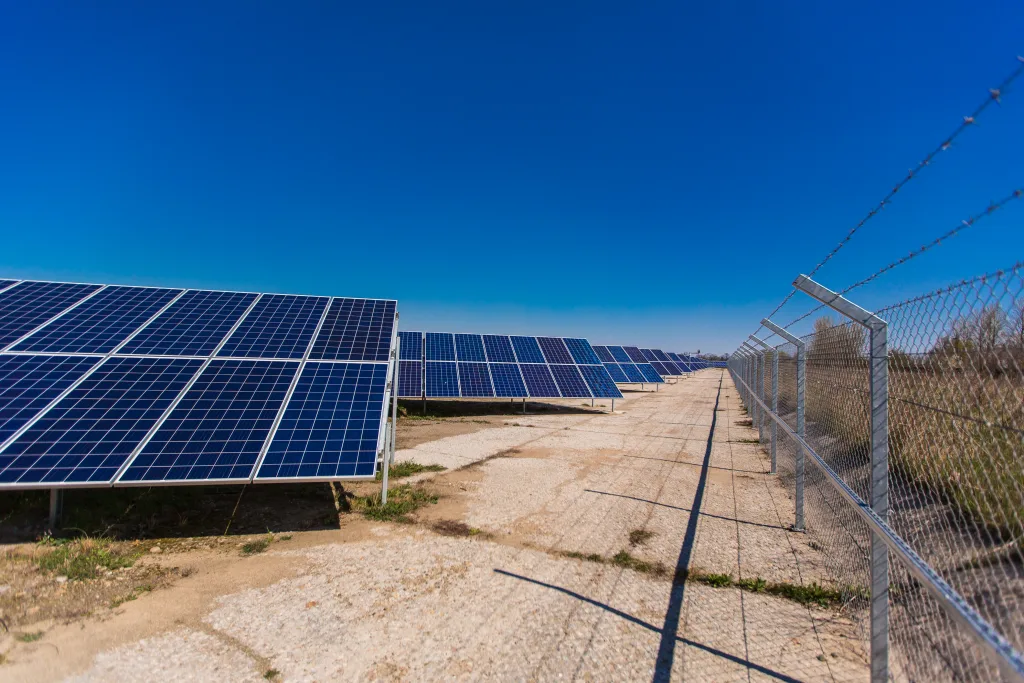
Starting August 1, 2025, all imports from India will be subject to a 25% tariff, as announced by Donald Trump, the US president, on his social media.
The decision, according to a study by PV Tech Market Research, raises immediate concerns among analysts and companies in the US photovoltaic supply chain, at a time when the country is trying to accelerate its energy transition and reduce its dependence on China for solar components.
In recent years, India has consolidated its position as a strategic supplier of photovoltaic cells and modules to the North American market, amid a reconfiguration of global supply chains.
Driven by robust investment in industrial infrastructure and local government incentives, the country has expanded its solar production capacity.
Manufacturers such as Waaree, Vikram Solar, and Premier Energies have been expanding their presence internationally, both through increased exports and by establishing factories in the United States, to meet the growing demand in the North American solar sector.
This movement occurs in a context of tightening trade rules imposed by the US, especially after the implementation of the guidelines of the so-called FEOC (Entity of Foreign Concern), part of the legislative package of the Inflation Reduction Act.
The rule prevents solar generation projects that use components manufactured by companies associated with governments considered adversaries, especially China, from qualifying for federal tax incentives.
Thus, India began to be seen as a viable and strategic alternative to Chinese leadership in the photovoltaic chain, as it can offer scale, quality, and, until now, competitive commercial conditions for the supply of solar equipment to the United States.
According to the study, Indian exports of solar modules to the US exceeded 8 GW in 2024, driven by manufacturers such as Waaree Energies, which also began operating production units on American soil.
However, the new tariff is expected to reduce the competitiveness of the Indian product, increasing its final cost for North American integrators and developers.
The measure comes amid a scenario already under pressure from strict trade policies. Products from Southeast Asian countries, used as alternatives to Chinese inputs, are subject to AD/CVD (antidumping and countervailing duty) tariffs.
The US Department of Commerce also announced new investigations into the possibility of applying AD/CVD tariffs to imports of modules from India, Laos and Indonesia.
If the rates are implemented, India would lose even more space as a strategic supplier to the North American market.
Market impact
The combination of trade barriers can pose an additional challenge to the expansion of solar energy in the United States, increasing costs for installers and limiting the availability of equipment in the short term.
Manufacturers like Premier Energies have been warning about India's importance as a key player in the reorganization of global photovoltaic supply chains.
The impact of the measure, according to the study, will be closely monitored by developers and integrators, especially those that depend on tariff-free supplies to ensure competitiveness in projects benefiting from IRA (Inflation Reduction Act) credits.
all the content of Canal Solar is protected by copyright law, and partial or total reproduction of this site in any medium is expressly prohibited. If you are interested in collaborating or reusing part of our material, please contact us by email: redacao@canalsolar.com.br.




Comments
Comments are moderated before publication.Comments should be respectful and contribute to a healthy debate. Offensive comments may be removed. The opinions expressed here are those of the authors and do not necessarily reflect the views of the author. Canal Solar.