
• Mon, July 13, 2026
Facebook X-twitter Instagram Youtube LinkedIn Spotify
  • GC Solar: 22,51 GW
  • GD Solar: 49,74 GW
  • advertise here
  • About Us
  • Expedient
logo site solar channel
  • News
    • Market & Investments
    • International market
    • Politics & Regulation
    • Projects & Applications
    • Renewable
    • Sustainability & ESG
    • Technology & Innovation
    • Electric Vehicles
  • Articles
    • Opinion Article
    • Manufacturer's Article
    • Technical Article
  • Latam
  • Batteries
  • Blog
  • Solar Energy Companies
    • Integrators
  • Magazine
    • Magazine Canal Solar
    • Conecta Magazine
  • Firmare
  • Courses
  • News
    • Market & Investments
    • International market
    • Politics & Regulation
    • Projects & Applications
    • Renewable
    • Sustainability & ESG
    • Technology & Innovation
    • Electric Vehicles
  • Articles
    • Opinion Article
    • Manufacturer's Article
    • Technical Article
  • Latam
  • Batteries
  • Blog
  • Solar Energy Companies
    • Integrators
  • Magazine
    • Magazine Canal Solar
    • Conecta Magazine
  • Firmare
  • Courses
  • News
    • Market & Investments
    • International market
    • Politics & Regulation
    • Projects & Applications
    • Renewable
    • Sustainability & ESG
    • Technology & Innovation
    • Electric vehicles
  • Articles
    • Opinion
    • technicians
    • Manufacturer Items
  • Latam
  • Blog
  • Solar Energy Companies
  • Integrators
  • Magazine
    • Conecta Magazine
  • About Us
  • Advertise Here
  • CS Consulting
  • Courses
  • International market
  • News
    • Market & Investments
    • International market
    • Politics & Regulation
    • Projects & Applications
    • Renewable
    • Sustainability & ESG
    • Technology & Innovation
    • Electric vehicles
  • Articles
    • Opinion
    • technicians
    • Manufacturer Items
  • Latam
  • Blog
  • Solar Energy Companies
  • Integrators
  • Magazine
    • Conecta Magazine
  • About Us
  • Advertise Here
  • CS Consulting
  • Courses
  • International market
logo site solar channel
Home / News / SP trains will generate energy when braking and return it to the subway's power grid

SP trains will generate energy when braking and return it to the subway's power grid

In an interview with Canal Solar, Lucas Herrera, Latam engineering director at Alstom, explains how this innovation works
Follow on Whatsapp
  • Photo by Caique Amorim Caique Amorim
  • July 22, 2025, at 12:03 am
4 min 44 sec read
SP trains will generate energy when braking and return it to the subway's power grid
Photo: Alstom/Disclosure

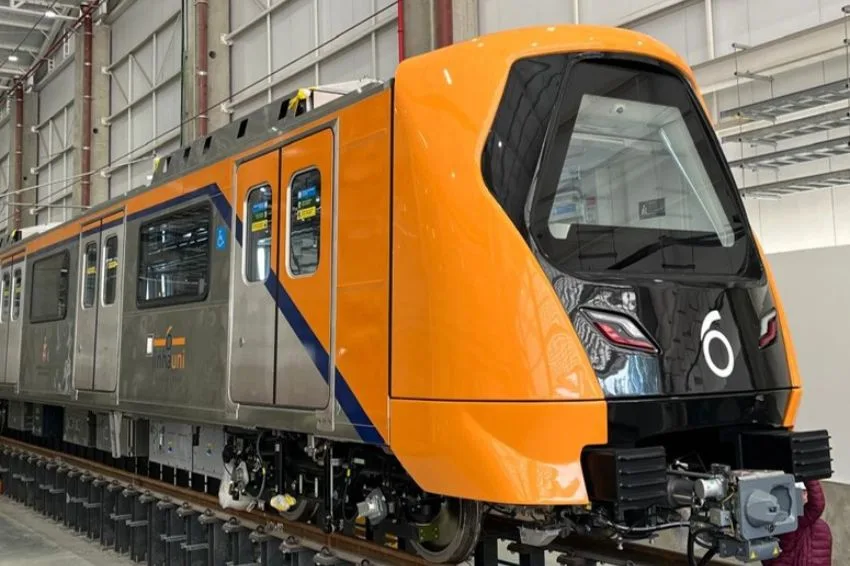
Trains on the future Line 6-Orange of the São Paulo Metro will feature a regenerative braking system capable of capturing the energy generated during deceleration and returning it to the metro's electrical grid.

The technology, considered a milestone in energy efficiency in Brazilian public transportation, reduces electricity consumption and extends the lifespan of mechanical systems, in addition to paving the way for cleaner and more economical urban mobility.

Manufactured by Alstom in the city of Taubaté, São Paulo, the trains are 100% Brazilian and represent the new generation of metro vehicles. The first of them has already been delivered to Pátio Morro Grande, in the northern part of the capital, and marks the beginning of the testing phase of the line, which will be 15,3 km long and connect Brasilândia and São Joaquim, with partial operation scheduled for 2026.

The innovation also brings operational benefits, such as reduced brake wear, reduced noise, and increased thermal efficiency of internal systems. Learn more below:

How much % of kinetic energy can be converted and reused in the efficiency of the train's regenerative braking system?

The electric traction and braking system utilizes advanced technology with high-efficiency inverters of up to 99%. This means that during typical train operation, approximately 50% of the energy used by the train can be regenerated.

How is regenerated energy transferred to other trains? Does the system use a shared DC (direct current) grid, a capacitor bank, or is there temporary storage?

Within the rolling stock, the energy generated by the electric brake can be directed to the 1500 VDC (Volts Direct Current) network, the catenary, provided it is receptive, for example, being consumed by other trains. In cases where the network is not receptive, the generated energy is dissipated within the train itself through resistor banks. The 1500 VDC network is considered receptive if the overhead line's electrical infrastructure (catenary) is capable of receiving and absorbing the electrical energy regenerated by the train during braking, ensuring that the voltage does not exceed its upper limit.

Under what operating conditions is regeneration most effective? Does efficiency vary depending on speed, track gradient, or the number of trains running?

Within the rolling stock, regeneration efficiency is optimized for each point depending on the required effort. During typical operation, in the speed range between 10 and 70 km/h, regenerative braking can account for up to 100% of the required deceleration effort, assuming the 1500 VDC network is receptive. A greater number of trains in circulation will contribute to a more receptive network.

Does regenerative braking have a positive impact on the maintenance of mechanical brake systems? Is there any expectation of a reduction in brake wear or maintenance costs?

Yes, regenerative braking reduces the need for mechanical brake actuation, reducing wear on consumables such as brake pads, and also reducing system utilization, extending its lifespan. During typical operation, in the speed range between 10 and 70 km/h (100 and XNUMX mph), regenerative braking can account for up to XNUMX% of the required deceleration effort.

Is there an energy management system that will control the distribution and use of regenerated energy on the line, such as EMS (Energy Management System) or SCADA (Supervisory Control and Data Acquisition)?

The energy infrastructure is not managed by Alstom. However, the regenerated energy is generally consumed by other trains.

If the regenerated energy isn't immediately "demanded" by other trains, what happens to the excess? Is it dissipated, stored, or returned to the utility grid?

Within the rolling stock, in cases where the network is not receptive, the energy generated is dissipated in the train itself, through resistor banks.

What is the expected annual energy savings provided by the regenerative system?

Energy consumption depends directly on the use of trains in operation (quantity, frequency, etc.). This operation is not managed by Alstom.

SP trains will generate energy when braking and return it to the subway's power grid
Lucas Herrera, Alstom's engineering director for Latin America. Photo: Disclosure

Does stainless steel, the material used in trains, directly impact energy consumption by reducing weight?

This type of material, because it's highly resistant to corrosion, is especially suitable for extreme environmental conditions, such as high humidity, salinity, and temperature variations. Our solutions have been optimized and developed over many years of experience, utilizing high-strength materials and spot welding technology. This results in designs with high structural efficiency and reduced weight. Furthermore, the train interiors feature thermal insulation that increases the efficiency of the air conditioning system, reducing energy consumption.

Was the origin of the regeneration technology used developed in Brazil by Alstom or does it integrate international solutions adapted to the local context?

The Electric Traction and Braking System is technology developed by Alstom, led by our specialized unit located in Charleroi, Belgium, but with the participation of other units around the world, including our team of experts located in Brazil.


all the content of Canal Solar is protected by copyright law, and partial or total reproduction of this site in any medium is expressly prohibited. If you are interested in collaborating or reusing part of our material, please contact us by email: redacao@canalsolar.com.br.


electricity SP Metro trains
Photo by Caique Amorim
Caique Amorim
Journalism student at the Pontifical Catholic University of Campinas. I have experience in producing journalistic material.
PreviousPrevious
NextNext

Leave a comment Cancel reply

Your email address will not be published. Required fields are marked with *

Comments should be respectful and contribute to a healthy debate. Offensive comments may be removed. The opinions expressed here are those of the authors and do not necessarily reflect the views of the author. Canal Solar.

News from Canal Solar in your Email

Posts

Canal Solar - ONS restricted more than 50 GWh of renewable energy during Brazil's World Cup matches.

Brazil's matches in the World Cup resulted in a net loss of more than 50 GWh of renewable energy.

Canal Solar energy is no longer an operational issue for companies; it has become a financial and strategic one, says Liora partner.

Energy is no longer an operational issue for companies; it has become a financial and strategic one, says Liora.

More news

Read More
The non-incidence of ICMS (Brazilian state sales tax) on electricity compensated under the electricity compensation system.

The non-incidence of ICMS (Brazilian state sales tax) on compensated electricity.

Canal Solar - Split Payment of the Tax Reform: Technical documentation of the Public Platform is published.

Split Payment of the Tax Reform: Technical documentation of the Public Platform is published.

Investments in distribution will exceed R$ 257 billion in the next five years, it announces. ANEEL

Investments in distribution will exceed R$ 257 billion in the next five years, it announces. ANEEL

It is a news and information channel about the photovoltaic solar energy sector. Channel content is protected by copyright law. Partial or total reproduction of this website in any medium is prohibited.

Facebook X-twitter Instagram Youtube LinkedIn Spotify

Site Map

Categories

  • News
  • Articles
  • Interviews
  • Consumer Guide
  • Authors
  • Videos
  • Projects
  • Magazine
  • Electric Vehicles

Channels

  • About Us
  • Contact
  • Privacy
  • Quality Policy
  • Work with us
  • Expedient
  • advertise here

Membership and certifications

Copyright © 2026 Canal Solar, all rights reserved. CNPJ: 29.768.006/0001-95 Address: José Maurício Building – Mackenzie Avenue, 1835 – Floor 3, – Vila Brandina, Campinas – SP, 13092-523

We use cookies to make your experience on this site better Find out more about the cookies we use or turn them off in your .

Receive the latest news

Subscribe to our weekly newsletter

Fill in the information above and receive your free copy of Canal Solar magazine.

Canal Solar
Powered by  GDPR Cookie Compliance
Privacy

This website uses cookies so that we can provide you with the best user experience possible. Cookie information is stored in your browser and performs functions such as recognizing you when you return to our website and helping our team to understand which sections of the website you find most interesting and useful.

Cookies strictly required

Strictly Necessary Cookie should be at all times so that we can save your preferences for cookie settings.

Cookies for third parties

This website uses Google Analytics to collect anonymous information such as the number of visitors to the site, and the most popular pages.

Keeping this cookie enabled helps us to improve our website.