
In many solar energy projects, the question arises about what a string box is and why this equipment is so important.
Also called a junction box, the string box may go unnoticed compared to the solar panels or inverter, but it plays a crucial role: connecting and protecting the electrical circuits that come out of the modules.
In practice, it acts as a centralized point that ensures greater safety and efficiency for the system, reducing the risk of electrical failures, facilitating maintenance, and protecting high-value components from damage.
Therefore, understanding its function is essential for both industry professionals and consumers looking to invest in solar energy with reliability and peace of mind. Keep reading to learn all about string boxes!
What is string box?
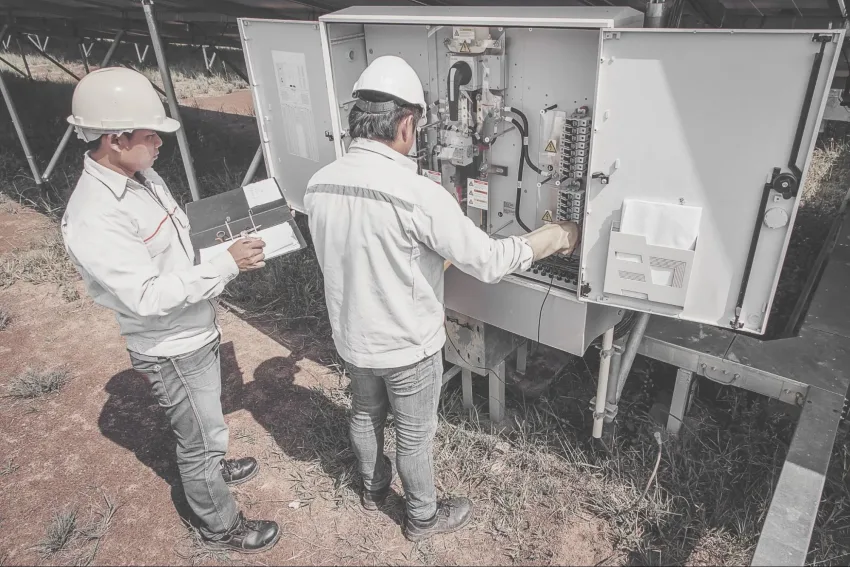
A string box, also called a photovoltaic junction box by ABNT NBR 16690, is an electrical device specifically designed to bring together and protect the connections of solar modules.
In a photovoltaic system, panels are grouped into series circuits called strings. Each string generates direct current (DC) power and must be connected to the inverter in an organized, safe, and efficient manner, as designed.
This is where the string box comes into play: it acts as a central point for these connections, bringing together the different strings into a single output.
In addition to providing organization, the equipment plays an essential role in providing electrical protection against failures that could compromise both the inverter and the entire solar system.
What is the string box for in solar systems?
The main function of the string box is to protect the photovoltaic system against electrical hazards.
In solar energy systems, situations such as overcurrents (electric current above the supported limit) and overvoltages (sudden increase in voltage, often caused by lightning or disturbances in the network) are common.
Without protection, these events can cause serious and even irreversible damage to the inverter, the "heart" of the system. Furthermore, the string box:
- Centralizes connections across multiple strings, simplifying installation and maintenance;
- Performs string parallelism, increasing safety and facilitating connection to the inverter;
- Facilitates fault diagnosis, as it allows you to quickly identify which string has the problem;
- Allows safe disconnection: with the disconnect switch, the technician can disconnect parts of the system to carry out repairs without risks;
In other words, the string box serves both to increase electrical safety and to facilitate the operation and maintenance of solar systems, from small homes to large photovoltaic plants.
What are the main components of a string box?
A string box is made up of different devices that, together, ensure the system's security and functionality. The main ones are:
- Fuses or circuit breakers: Prevent overcurrent from damaging equipment or causing fires. They act as immediate protection barriers, interrupting the circuit in the event of faults, such as reverse current;
- SPD (Surge Protection Device): Protects against overvoltages caused primarily by atmospheric discharges (lightning). It directs excess energy to ground, preventing it from reaching the inverter.
- Disconnector switch (or disconnector circuit breaker): allows you to isolate the system in case of maintenance or emergency, ensuring the safety of technicians;
- Connection buses: organize the cables coming from the strings, make the connection and direct the energy to the string box output;
- Protective housing with appropriate IP rating: The physical structure of the string box needs to be robust, with protection against dust, rain and UV rays, especially in outdoor installations.
Each component has its specific function, but together they ensure that the system operates safely and in compliance with Brazilian and international technical standards.
How does the string box work in practice?
The operation of the string box can be understood as an organized line of defense within a photovoltaic system.
The cables coming from the different solar panel strings reach the string box, where they pass through fuses, DPS and other protection devices.
After this “electrical screening”, the energy leaves in a unified and protected way towards the inverter.
In a practical scenario: imagine a system with four strings of panels. Each string sends its power to the string box, where they are all connected in parallel.
If two of these strings, instead of following the conventional flow from the module to the inverter, feed back into another string, the corresponding fuse will trip, isolating only the affected part and preserving the rest of the system. This occurs because the current has exceeded the limit supported by that string.
Furthermore, if an atmospheric discharge occurs near the installation, the DPS will act immediately, diverting the electrical surge to ground and preventing it from damaging the inverter.
In this way, the string box ensures that only safe and stabilized power flows forward, protecting the most expensive and sensitive components in the system.
Installation and maintenance tips
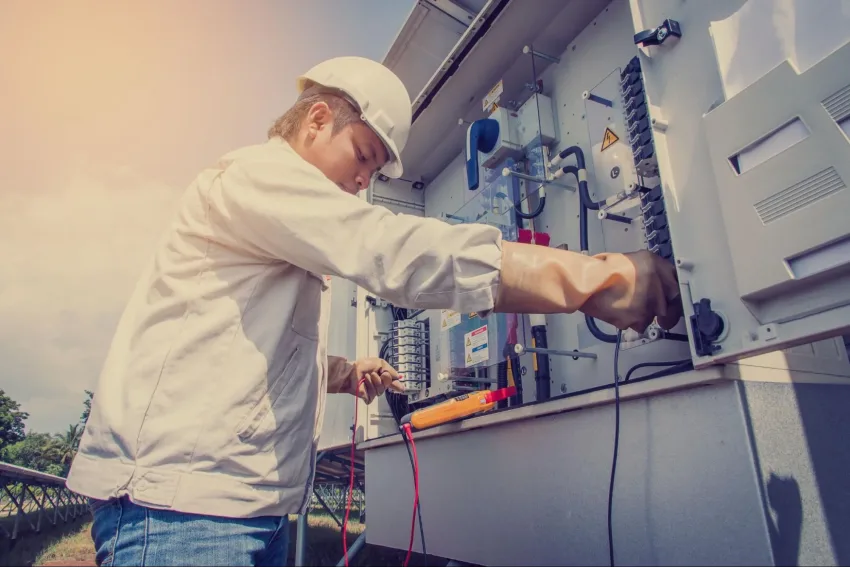
Proper string box installation is crucial to ensuring the efficiency of the photovoltaic system and preventing future failures. Some best practices include:
- Qualified professional: assembly must be carried out by qualified electricians or integrators, with knowledge of photovoltaic systems and ABNT standards;
- Suitable location: Install the string box in areas that are easily accessible for maintenance, but protected from direct sunlight, rain, and excessive humidity. For outdoor locations, it's essential to choose boxes with an IP65 protection rating or higher.
- Correct grounding: An efficient grounding system prevents electric shocks and damage from lightning strikes. Always connect the SPD to the installation's grounding system;
- Well-made connections: Use certified, well-crimped connectors. Poorly made connections can cause excessive heat and fire hazards;
- Periodic inspections: Regularly check fuses, circuit breakers, DPS, and wiring tightness. Preventative maintenance is cheaper and more effective than fixing problems after a serious problem.
- Component replacement: SPDs and fuses are replaceable items. SPDs have a limited lifespan and should be replaced at the end of their lifespan. Fuses should only be replaced after triggering an overcurrent.
Following these guidelines increases system reliability and reduces risks, ensuring that power generation occurs with maximum safety.
Conclusion
The string box should not be seen as just another accessory in a photovoltaic system, but rather as a central element of protection and reliability.
It organizes the connections, protects against overcurrents and electrical surges, and ensures that the energy generated by the modules reaches the inverter in a stable and safe manner.
For professionals, it is a tool that facilitates maintenance and ensures compliance with technical standards.
For consumers, it represents the peace of mind of having a system protected against failures that could generate significant losses.
In short, investing in a good string box (and its correct installation and maintenance) is investing in the longevity, safety and efficiency of solar energy generation.