
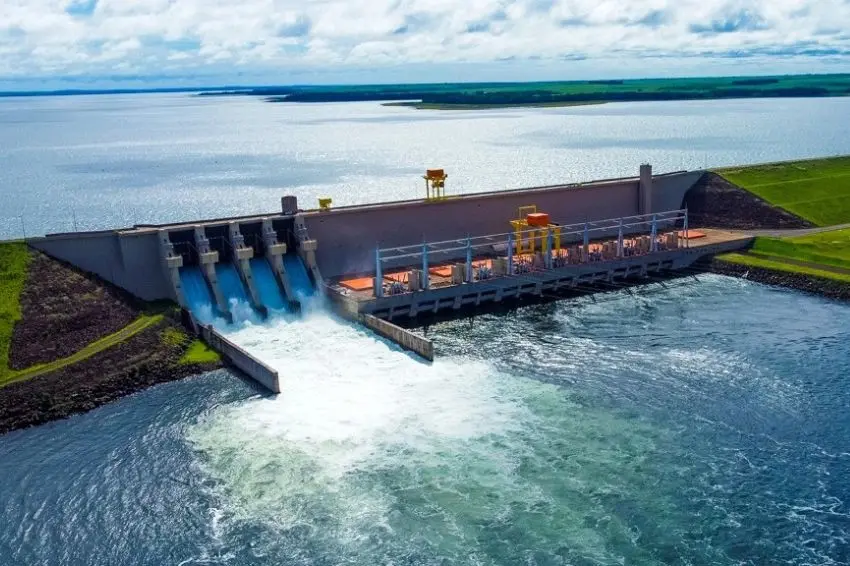
A ANEEL (National Electric Energy Agency) approved the definitive transfer of ownership of the Três Irmãos hydroelectric plant concession, previously linked to Tijoá Participações e Investimentos, to Axia Energia. The decision was published in the DOU (Official Gazette of the Union) this Monday (23).
Located on the lower reaches of the Tietê River in the interior of São Paulo state, the plant has a capacity of 807,5 MW, represented by five installed turbines. Despite being only the 7th largest hydroelectric plant in terms of power located in the state of São Paulo, Três Irmãos has a strategic appeal.
It has space for the installation of three more generating units. In a scenario where resources are needed to meet the demand for power in the SIN (National Interconnected System), the possibility of expansion from an already existing civil structure tends to gain importance in the sector's planning.
The transfer approved by ANEEL This formalizes a new stage in the corporate and regulatory trajectory of the project, which went through a dispute between the former CESP (Companhia Energética de São Paulo), now Auren Energia, and the Federal Government, in a process of re-bidding and lengthy legal controversy over the payment of compensation.
Final stage
In 2025, Eletrobras announced the acquisition of indirect control of Tijoá. The operation received prior approval from... ANEEL In January 2026. In June of that year, the acquisition of Triunfo and Mercúrio's stakes in the holding company Juno was completed, simplifying the corporate structure.
Axia Energia has completed the purchase of the remaining stakes for approximately R$ 256 million, thus acquiring 100% ownership of Três Irmãos. The company stated at the time that the simplified corporate structure eliminated intermediate control structures.
CESP's project combined power generation and navigation.
Construction of the Três Irmãos dam began in July 1980, under the responsibility of CESP, as part of the multi-purpose development plan for the Tietê River basin. From its conception, the complex was designed to fulfill two functions: to produce electricity and to allow the continuation of river navigation despite the difference in water level created by the dam.
This second purpose explains the importance of a set of works associated with the hydroelectric plant. Among them is the Canal The Pereira Barreto pipeline, approximately 9,6 kilometers long, was built to connect the Três Irmãos reservoir on the Tietê River to the Ilha Solteira hydroelectric dam lake on the Paraná River. This connection allows for the integrated operation of the reservoirs and contributes to the region's energy production.
Inaugurated on March 12, 1991, after just over a decade of civil works and electromechanical assembly, including several interruptions due to a lack of resources from CESP, Três Irmãos also houses a lock that allows vessels to overcome the difference in water level caused by the dam.
The structure is considered an important link in the Tietê-Paraná Waterway, enabling navigation between the interior of São Paulo state and areas of the Midwest. In addition to connecting different sections of the waterway, the system facilitates the transport of cargo such as grains, sugar, and fertilizers by river. Its importance, therefore, goes beyond electricity generation.
Refusal to renew led to re-bidding.
The first hydroelectric plant concession contract, lasting 30 years, expired in November 2011. CESP remained responsible for provisional operation while the federal government defined the new conditions for the concessions that were coming to an end.
The scenario changed with Provisional Measure 579, issued in September 2012 and later converted into Law No. 12.783/2013. The initiative sought to reduce energy tariffs by offering the early extension of concessions in exchange for more restrictive economic conditions for power generators.
Among the demands were remuneration based on a quota system, limited to operating and maintenance costs, and compensation calculated on assets that have not yet been amortized or depreciated. In December 2012, the São Paulo state government, which controls CESP, decided not to accept the conditions proposed for Três Irmãos.
The company considered the revenue and compensation figures presented by the Federal Government insufficient, especially given the investments made in the complex, including the canal and locks. With this refusal, the Federal Government declared the reversion of the assets and ordered a new bidding process. Três Irmãos thus became the first large hydroelectric plant to be re-tendered under the rules of Law 12.783/2013.
CESP attempted to legally suspend the bidding process, arguing that the auction could not proceed before the payment of compensation for unamortized reversible assets. However, the preliminary injunctions obtained by the company were overturned by the STJ (Superior Court of Justice) and the STF (Supreme Federal Court).
The consortium took over operations in 2014.
The auction of ANEEL The bidding process took place on March 28, 2014, and received only one proposal. The winner was the Novo Oriente Consortium, formed by Furnas – currently integrated into Axia Energia – with a 49,9% stake, and the Constantinopla Investment Fund, with the remaining 50,1%.
With no competitors, the consortium offered zero discount on the maximum Annual Generation Revenue (RAG) established by the agency, of R$ 108,87 million per year. The contract secured the right to operate the plant for 30 years. To manage the project, Tijoá Participações e Investimentos was created, which assumed commercial operation in October 2014.
Compensation ends dispute that lasted almost ten years.
The re-bidding process, however, did not resolve the conflict between CESP and the Federal Government regarding the value of the investments that should be compensated. In July 2014, the company filed a lawsuit in the Federal Court of Brasília demanding approximately R$ 6,69 billion for the non-depreciated assets of the hydroelectric plant. The claim included multi-purpose works, such as the... Canal of Pereira Barreto and the locks.
The Union recognized a significantly lower value, calculated by ANEEL The amount was approximately R$ 1,7 billion, with a base date of 2012. Part of the disagreement was related to the evaluation methodology and the classification of structures that the government considered intended for navigation or already amortized.
As the process progressed, CESP was privatized in 2018 and acquired by the VTRM consortium, formed by Votorantim Energia and CPP Investments. In 2022, a corporate reorganization gave rise to Auren Energia, which inherited the rights related to the lawsuit. The outcome occurred on December 7, 2022, when the Union and Auren signed an agreement approved by the Court.
The government acknowledged the historic compensation of R$ 1,7 billion, which, adjusted for inflation (Selic rate) throughout the dispute, reached approximately R$ 4,1 billion. The payment was scheduled in 84 monthly installments, using funds from the RGR (Global Reversion Reserve), starting in 2023.
all the content of Canal Solar is protected by copyright law, and partial or total reproduction of this site in any medium is expressly prohibited. If you are interested in collaborating or reusing part of our material, please contact us by email: redacao@canalsolar.com.br.


Comments
Comments are moderated before publication.Comments should be respectful and contribute to a healthy debate. Offensive comments may be removed. The opinions expressed here are those of the authors and do not necessarily reflect the views of the author. Canal Solar.