
• Mon, July 13, 2026
Facebook X-twitter Instagram Youtube LinkedIn Spotify
  • GC Solar: 22,51 GW
  • GD Solar: 49,74 GW
  • advertise here
  • About Us
  • Expedient
logo site solar channel
  • News
    • Market & Investments
    • International market
    • Politics & Regulation
    • Projects & Applications
    • Renewable
    • Sustainability & ESG
    • Technology & Innovation
    • Electric Vehicles
  • Articles
    • Opinion Article
    • Manufacturer's Article
    • Technical Article
  • Latam
  • Batteries
  • Blog
  • Solar Energy Companies
    • Integrators
  • Magazine
    • Magazine Canal Solar
    • Conecta Magazine
  • Firmare
  • Courses
  • News
    • Market & Investments
    • International market
    • Politics & Regulation
    • Projects & Applications
    • Renewable
    • Sustainability & ESG
    • Technology & Innovation
    • Electric Vehicles
  • Articles
    • Opinion Article
    • Manufacturer's Article
    • Technical Article
  • Latam
  • Batteries
  • Blog
  • Solar Energy Companies
    • Integrators
  • Magazine
    • Magazine Canal Solar
    • Conecta Magazine
  • Firmare
  • Courses
  • News
    • Market & Investments
    • International market
    • Politics & Regulation
    • Projects & Applications
    • Renewable
    • Sustainability & ESG
    • Technology & Innovation
    • Electric vehicles
  • Articles
    • Opinion
    • technicians
    • Manufacturer Items
  • Latam
  • Blog
  • Solar Energy Companies
  • Integrators
  • Magazine
    • Conecta Magazine
  • About Us
  • Advertise Here
  • CS Consulting
  • Courses
  • International market
  • News
    • Market & Investments
    • International market
    • Politics & Regulation
    • Projects & Applications
    • Renewable
    • Sustainability & ESG
    • Technology & Innovation
    • Electric vehicles
  • Articles
    • Opinion
    • technicians
    • Manufacturer Items
  • Latam
  • Blog
  • Solar Energy Companies
  • Integrators
  • Magazine
    • Conecta Magazine
  • About Us
  • Advertise Here
  • CS Consulting
  • Courses
  • International market
logo site solar channel
Home / Articles / Manufacturer's Article / Aluminum cables in photovoltaic systems: correct application, safety, and technical feasibility.

Aluminum cables in photovoltaic systems: correct application, safety, and technical feasibility.

More than just replacing copper, the use of aluminum requires attention to design to ensure the safety and performance of the system.
Follow on Whatsapp
  • Photo by Antonio Franco Antonio Franco
  • July 1, 2026, at 09:50 am
4 min 48 sec read
Aluminum cables in photovoltaic systems: correct application, safety, and technical feasibility.
Photo: Disclosure

With the growth of medium and large-scale photovoltaic plants in Brazil, cabling has ceased to be a secondary detail of the project.

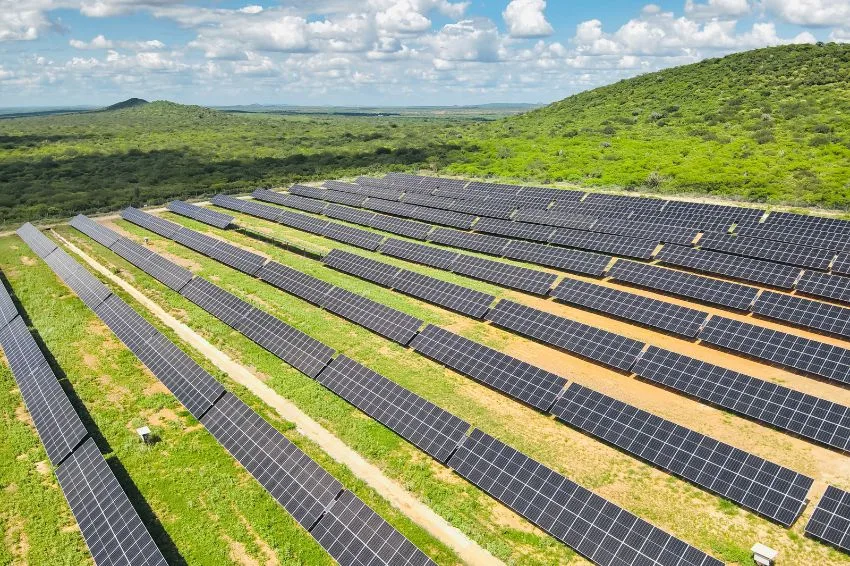
In ground-mounted plants, agribusiness plants, and grid-connected solar parks, the choice of conductor has come to directly influence deployment costs, ease of installation, operational safety, and even the risk of interruptions due to cable theft.

Aluminum, widely used in power transmission and distribution networks, has become a consistent alternative in direct current (DC) and alternating current (AC) circuits of solar power plants.

For integrators, EPCs, and designers, the question is defining where and how to use aluminum to ensure performance in the photovoltaic system. Applications of aluminum in photovoltaic systems (DC and AC sides).

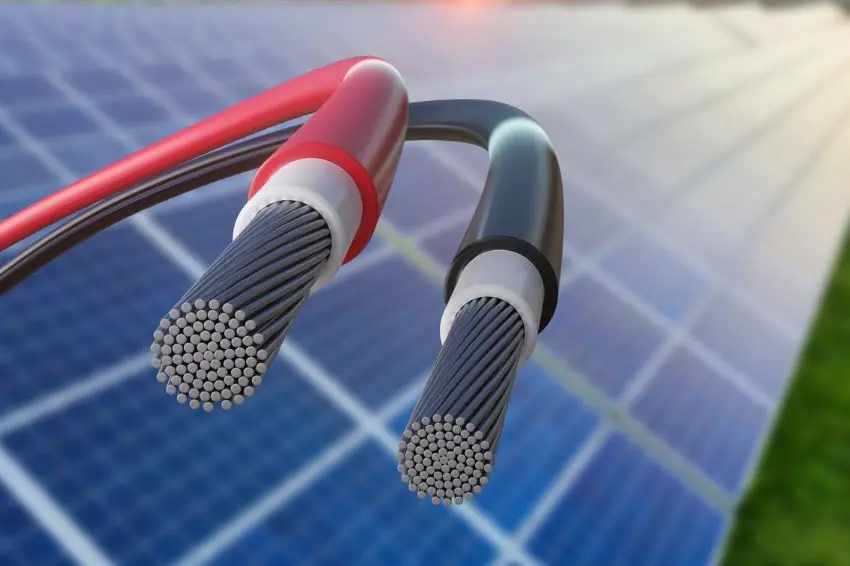
In direct current circuits, from the connection between modules and strings to the connection between string boxes and inverters, aluminum is a viable option with specific, certified flexible solar cables. The lower cost and weight of aluminum are advantageous for large installations, especially over long distances.

The key lies in using appropriate alloys, UV and high-temperature resistant thermoset compounds, and compatible connectors, allowing for cabling cost reductions of up to 50% while maintaining safety.

On the AC side, from the inverter to the switchboards and substations, aluminum is already standard. In solar power plants, this translates to single aluminum photovoltaic cables for 1,8 kVdc (XLPE and ST7) for auxiliary loads, and bare cables (CA, CAA, CAL, CALA, ACAR) in internal overhead networks and grid connection lines.

Thus, aluminum can be present from the module to the substation, provided that the cable type is suitable for the section, installation method, and voltage level. Safety and performance: Using aluminum is not just replacing copper with another metal. The installation method, materials, and connections define the safety and quality of the system.

Challenges such as loosening of connections (creep) when using aluminum are not an obstacle for Neocable, since it uses the 8176 alloy in its flexible cables, which has already been tested in demanding markets such as data centers and distribution networks.

This alloy offers high conductivity and superior mechanical strength, ensuring greater stability and reducing the risk of overheating. This is crucial for photovoltaic systems that operate for years under daily heating and cooling cycles.

The aluminum cables used in power plants are designed to operate at 120°C in Neocable's flexible solar cables and 90°C in continuous operation in single photovoltaic cables, with overload and short-circuit limits in accordance with standards.

The sizing follows the same logic as copper cables, adjusting the cross-section according to the permissible current and voltage drop. In photovoltaic systems, the durability of the cable under prolonged exposure is vital.

Aluminum photovoltaic cables, such as the single XLPE + ST7 and flexible solar cables from Neocable, utilize thermoset compounds with UV protection, suitable for outdoor installation, in trackers, and for direct burial.

At medium voltage levels, cables protected with double (XLPE + HDPE) or triple layer (XLPE + HDPE + semiconductor) insulation withstand pollution, salt spray, and occasional contact with vegetation, reducing outages and maintenance. Testing, certifications, and economic viability.

The technical viability of aluminum is reinforced by tests and certifications. Neocable has its own laboratory, tests 100% of its cables, and is ISO 9001 certified, as well as holding certifications such as that from TÜV Germany for flexible solar cables.

It is approved by utility companies such as Cemig, Equatorial, Neoenergia, CPFL, Energisa, Copel, Celesc, EDP, among others. From an economic standpoint, the use of aluminum can reduce cabling costs by up to 50% compared to copper, in addition to being approximately 50% lighter, which simplifies structures, assembly, and logistics.

An important point to consider is the low risk of theft. Since the resale value of aluminum is much lower than that of copper, the material becomes less attractive, reducing the likelihood of interruptions and replacement costs due to theft in solar power plants, a problem that is becoming increasingly common.

Neocable as an engineering partner in complex projects. With 35 years of history, the group specializes in aluminum cables. It serves the private distribution market, renewable energies (solar, wind, small hydroelectric plants), data centers, electric power utilities, and large-scale projects such as logistics centers and industries, with a consolidated track record in solar and wind farms in Brazil.

For integrators, EPCs, designers, electrical engineers, and technical buyers, this translates into support in defining the aluminum cabling architecture (DC and AC), guidance on installation methods and correction factors, and the combined choice of flexible solar cables, single photovoltaic cables, power cables, and bare cables.

To ensure the project is implemented in the best possible way, the company has an engineering department that assists in all stages of solution development and specification, offering all the necessary technical support.

When aluminum is specified with criteria, it ceases to be merely a lower-cost alternative and becomes an engineering solution for more competitive, safe, and resilient solar power plants. Neocable acts as a strategic partner for demanding photovoltaic projects.

The opinions and information expressed are the sole responsibility of the author and do not necessarily represent the official position of the author. Canal Solar.

solar cables aluminum conductors solar power plants
Photo by Antonio Franco
Antonio Franco
Antonio Franco is the CEO of the Neo Group and leads Neocable, a manufacturer specializing in aluminum electrical cables. He works to strengthen the national industry through investments in innovation, technology, and solutions focused on the efficiency, safety, and reliability of electrical projects.
PreviousPrevious
NextNext

An answer

  1. Alessandro Montanari Leme said:
    2 July 2026 to 04: 06

    If anyone is interested, I have 37 meters of 120mm quadruplex wiring. Just get in touch.
    11 99909-4146

    Reply

Leave a comment Cancel reply

Your email address will not be published. Required fields are marked with *

Comments should be respectful and contribute to a healthy debate. Offensive comments may be removed. The opinions expressed here are those of the authors and do not necessarily reflect the views of the author. Canal Solar.

News from Canal Solar in your Email

Posts

Key features of a good structure for ground-mounted plants

Key features of a good structure for ground-mounted plants

Canal Solar - From market to technology: the evolution of C&I storage, from Dyness' perspective.

From market to technology: the evolution of C&I storage, from Dyness' perspective.

More news

Read More
Canal Solar - Around 300 power plants without permits will have to adapt to the new self-production rules.

Around 300 power plants without permits will have to adapt to the new self-production rules.

When the test fails, the foundation collects the bill:

When the test fails, the foundation bills the price.

When the structure fails, the damage occurs even before generation begins: how to avoid errors that compromise solar power plants.

When the structure fails, the damage occurs even before generation begins: how to avoid errors that compromise solar power plants.

It is a news and information channel about the photovoltaic solar energy sector. Channel content is protected by copyright law. Partial or total reproduction of this website in any medium is prohibited.

Facebook X-twitter Instagram Youtube LinkedIn Spotify

Site Map

Categories

  • News
  • Articles
  • Interviews
  • Consumer Guide
  • Authors
  • Videos
  • Projects
  • Magazine
  • Electric Vehicles

Channels

  • About Us
  • Contact
  • Privacy
  • Quality Policy
  • Work with us
  • Expedient
  • advertise here

Membership and certifications

Copyright © 2026 Canal Solar, all rights reserved. CNPJ: 29.768.006/0001-95 Address: José Maurício Building – Mackenzie Avenue, 1835 – Floor 3, – Vila Brandina, Campinas – SP, 13092-523

We use cookies to make your experience on this site better Find out more about the cookies we use or turn them off in your .

Receive the latest news

Subscribe to our weekly newsletter

Fill in the information above and receive your free copy of Canal Solar magazine.

Canal Solar
Powered by  GDPR Cookie Compliance
Privacy

This website uses cookies so that we can provide you with the best user experience possible. Cookie information is stored in your browser and performs functions such as recognizing you when you return to our website and helping our team to understand which sections of the website you find most interesting and useful.

Cookies strictly required

Strictly Necessary Cookie should be at all times so that we can save your preferences for cookie settings.

Cookies for third parties

This website uses Google Analytics to collect anonymous information such as the number of visitors to the site, and the most popular pages.

Keeping this cookie enabled helps us to improve our website.