
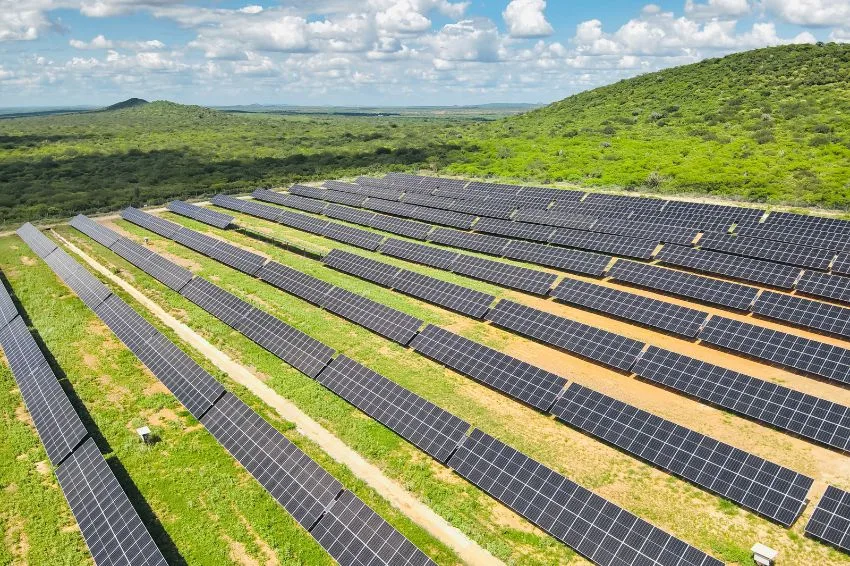
The Brazilian solar energy market has undergone a significant transformation in recent years. The accelerated growth of photovoltaic generation has attracted new manufacturers of structures for ground-mounted power plants, increasing competitiveness and expanding the solutions available to developers, EPC contractors, and investors.
At the same time, the constant pressure to reduce the CAPEX of power plants has driven the development of more economical and efficient solutions. This movement has brought important advances in terms of structural optimization, weight reduction, logistical gains, and simplified assembly. However, it has also highlighted a growing risk: decision-making based solely on the lowest acquisition cost.
Although the structures represent approximately 18% of the CAPEX of a photovoltaic plant, they are responsible for physically supporting all other system components, including modules, inverters, and electrical infrastructure.
Therefore, design, manufacturing, or installation flaws can generate financial impacts far greater than the savings obtained in the purchase.
Impacts on energy generation
One of the factors frequently overlooked during the specification of structures is their direct influence on the energy performance of the power plant.
The height of the modules relative to the ground, known as clearance, influences both the utilization of radiation reflected by the terrain (albedo) and the air circulation under the modules. More efficient ventilation contributes to reducing the operating temperature of the modules, improving their performance and providing generation gains throughout the lifespan of the project.
For this reason, the analysis of the structure must consider not only mechanical and structural aspects, but also its contribution to the overall energy performance of the plant.
The influence of structure on deployment costs.
Foundations are among the main technical and financial challenges in the implementation of ground-mounted power plants. In this context, seemingly simple structural features can have a significant impact on the total cost of the project.
Structures that allow for greater spacing between piles reduce the number of foundations required and, consequently, lower costs related to pile driving, concrete, labor, and equipment mobilization.
Another relevant aspect is the ability to adapt to the terrain. Solutions capable of absorbing variations in slope and natural irregularities minimize the need for earthmoving and land leveling, activities that often represent a significant portion of the total implementation cost.
Designing for the reality of the field.
Unlike controlled industrial environments, the assembly of photovoltaic plants most often takes place in remote locations, exposed to high temperatures, dust, and logistical limitations.
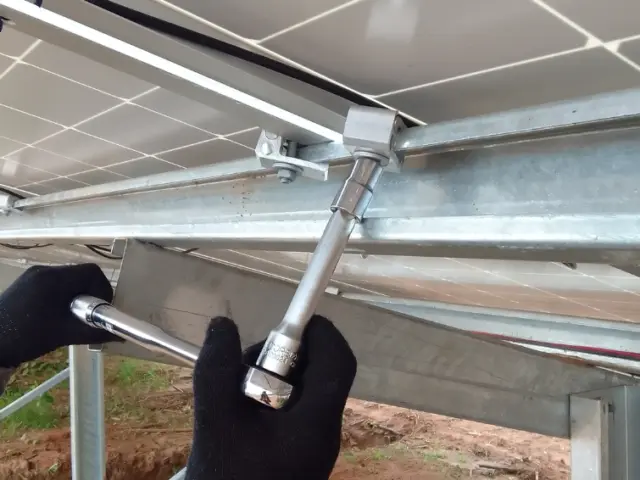
In this scenario, the human factor must be considered during product development. Systems that incorporate adequate tolerances, oblong holes, dimensional adjustments, and features that facilitate alignment make assembly faster and less susceptible to execution errors.
In addition to reducing rework, these features contribute to productivity gains and greater predictability in the implementation schedule.
The importance of engineering support.
Another aspect that deserves attention is the level of technical support provided by the structure's manufacturer. The availability of calculation reports, structural reports, raw material certificates, material traceability, and support during construction are factors that increase the safety of the project and provide greater reliability for investors, designers, and EPC contractors in decision-making.
In an increasingly competitive market, the evaluation of a photovoltaic structure must go beyond the price per kilogram of steel or the final supply cost. Choosing the most suitable solution should consider its impacts on energy performance, foundation costs, assembly productivity, operation, and the longevity of the plant.
The pursuit of cost reduction is legitimate and necessary. However, when carried out without a thorough technical evaluation, it can compromise the very component responsible for ensuring the structural stability and durability of the entire investment made in the plant.
The opinions and information expressed are the sole responsibility of the author and do not necessarily represent the official position of the author. Canal Solar.

Comments (1)
Comments are moderated before publication.Comments should be respectful and contribute to a healthy debate. Offensive comments may be removed. The opinions expressed here are those of the authors and do not necessarily reflect the views of the author. Canal Solar.
Although I'm not in the solar energy industry, I found this article about structures for photovoltaic power plants very important.
I work in the field of agronomy and I intend to specialize in sheep grazing under these facilities... I think it's viable and could be a source of supplementary income.